Global 3PL Fulfilment: A Guide for Australian Fashion DTC Brands Shipping from China
Global 3PL fulfilment helps Australian fashion brands manufacturing in China streamline fulfilment, reduce extra handling, and ship into key markets more flexibly.
Market Guides
June 15, 2026
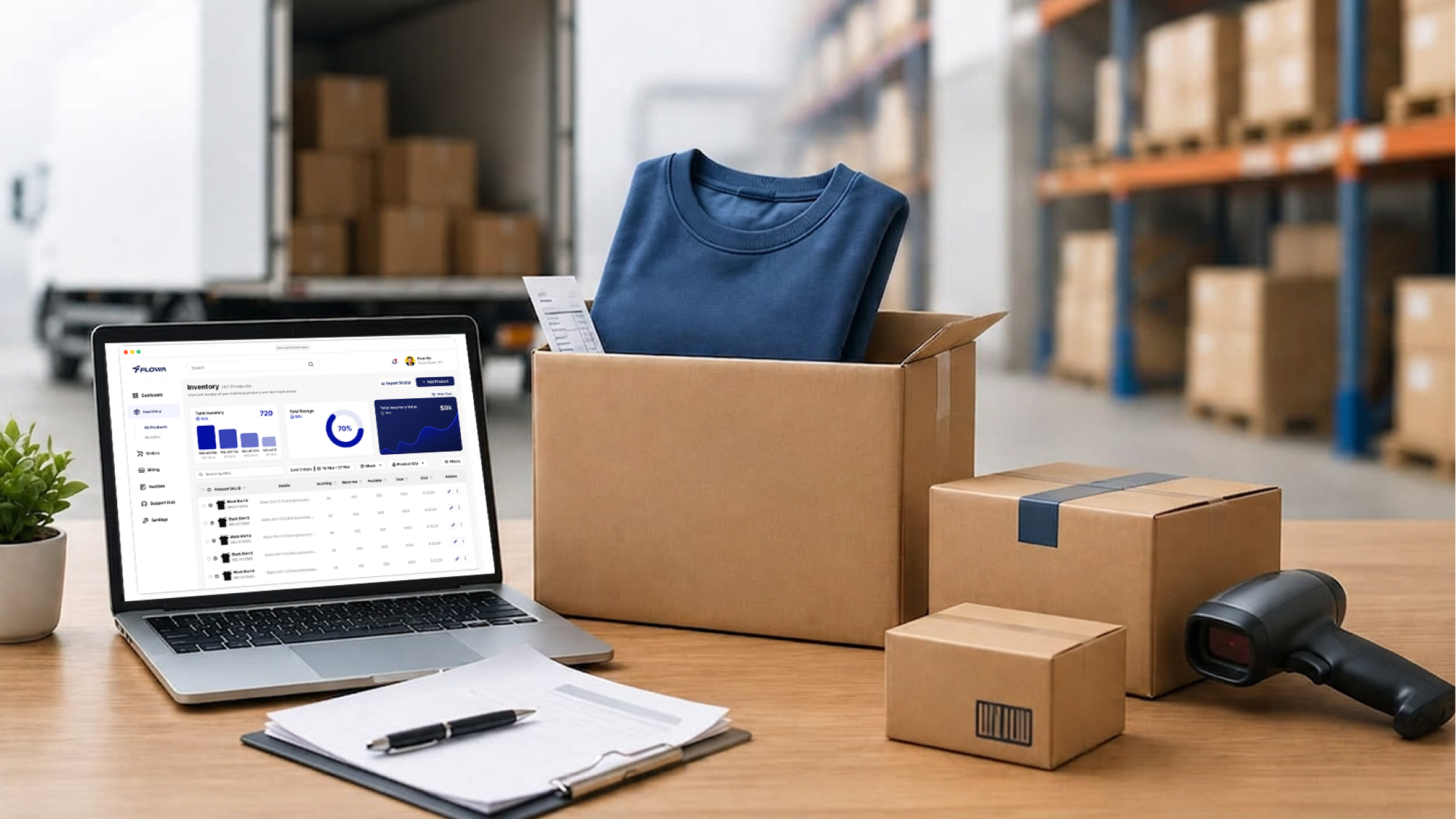
Australian fashion brands that manufacture in China often reach the same point. The product is ready and demand is growing, but moving stock from factory to customer can start eating into time, margin, and operational attention.
That is where a 3PL comes in. A third-party logistics provider handles the physical fulfilment work, including warehousing, pick-and-pack, packaging, shipping, tracking, and exceptions, so your team does not have to manage every step manually.
The growth of the 3PL market also shows how central outsourced logistics has become to e-commerce. According to Fortune Business Insights, the global third-party logistics market was valued at USD 1,238.74 billion in 2025 and is projected to reach USD 2,852.54 billion by 2034, with Asia Pacific holding 51.24% of the market in 2025.
For brands manufacturing in China, however, the fulfilment model matters just as much as the decision to outsource. Shipping inventory to an Australian warehouse before fulfilling orders can add cost, handling, and lead time. By contrast, a 3PL in China keeps inventory closer to production and ships directly to customers across supported markets.
In this blog, we explain what global 3PL fulfilment is, how it works for Australian fashion and DTC brands, what to look for in a provider, and how Flowa Global supports China-based fulfilment into Australia and beyond.
What Is Global 3PL Fulfilment?
A 3PL is short for third-party logistics. It refers to a company that manages fulfilment on behalf of another business.
So, what is a third-party logistics provider in practical terms?
It is the partner that stores your products, receives your orders, picks the right items, packs them, ships them, and updates your store with tracking information.
For e-commerce brands, 3PL services often include:
- Warehousing
- Inventory management
- pick-and-pack
- Order fulfilment
- Packaging support
- Shipping and tracking
- Returns and exception handling
- Billing and reporting
Global 3PL fulfilment goes beyond basic storage and shipping. It helps brands fulfil orders across multiple markets without having to manage every warehouse, carrier, and delivery update on their own.
Some brands do this by using local warehouses in each country. Others use a China-based fulfilment model, where goods are stored close to the factory and shipped directly to customers worldwide.
For Australian fashion brands manufacturing in China, this second model can be especially useful.
Instead of moving stock from a Chinese factory to an Australian warehouse before selling it, brands can store inventory at a China-based fulfilment centre and ship directly to customers in Australia, the UK, Europe, and other supported destinations.
That gives brands a more flexible way to test demand in new markets before committing to local warehousing.
How 3PL Fulfilment Works for Australian Fashion DTC Brands?
The basic fulfilment process is simple.
Your inventory is stored at the 3PL warehouse. When a customer places an order, the order flows into the 3PL warehouse system. The warehouse team then picks, packs, and ships the parcel on your behalf.
For an Australian fashion brand shipping from China, the process usually works like this.
1. Inventory is sent from your factory to the fulfilment centre
Once production is complete, your factory sends finished goods to the 3PL facility.
If your 3PL is based in China, this is usually a domestic freight movement. That means the stock does not need to be exported to Australia before it can be prepared for sale.
At the fulfilment centre, goods are received, checked, barcoded, and added to inventory.
With Flowa Global, goods are typically live and ready to sell within 24 to 48 hours of arrival, subject to inbound volume and any QA hold workflows.
2. Orders sync from your e-commerce store
When a customer places an order through Shopify or another connected sales channel, the order is sent into the 3PL system.
This removes the need for manual spreadsheets, CSV exports, or back-and-forth emails with a warehouse team.
A strong 3PL warehouse system should show what has been ordered, what stock is available, what stock is reserved, and whether any order needs review before dispatch.
3. The order is picked and packed
The warehouse team picks the correct SKU, size, colour, and quantity.
This step is especially important for fashion brands because one wrong variant can lead to a return, refund, replacement shipment, or negative review.
The order is then packed according to your brand rules. This may include branded tissue paper, stickers, inserts, care cards, bundles, or custom packaging.
4. The parcel is shipped
Once packed, the parcel is dispatched through the selected shipping lane.
For supported Australia, UK, and Europe lanes, delivery may take 4 to 7 days depending on destination, parcel weight, service level, and local conditions.
The tracking number is then synced back to your store, so the customer can follow the delivery.
5. Exceptions are flagged early
International shipping can involve delays, customs holds, address issues, or failed delivery attempts.
A capable 3PL provider should surface these issues early. Your team should not find out only after the customer complains.
This is one of the main differences between basic e-commerce order fulfilment and a fulfilment model built around visibility and control.
Why China-Based Fulfilment Supports Global Market Expansion
Many Australian fashion brands start with local fulfilment because it feels familiar.
The brand manufactures in China, imports stock into Australia, stores it locally, and then ships to customers from there. This can work when most customers are in Australia, and demand is predictable.
However, once the brand starts selling into multiple markets, the model can become harder to manage.
For example, if your products are made in China and you want to sell into Australia, the UK, and Europe, you need to decide where the stock should sit before demand is fully proven.
Sending all inventory to Australia may create delays for overseas customers. Splitting inventory across several warehouses may increase cost and complexity. Holding too much stock in the wrong market can also tie up cash.
A 3PL China model gives brands another option.
Inventory stays closer to production. Orders can be fulfilled from one China-side stock pool. The brand can then test multiple markets without setting up local warehouse infrastructure first.
For Australian fashion DTC brands, this can help in three practical ways.
First, it reduces unnecessary inventory movement. Goods move from the factory to the fulfilment centre, then to the customer.
Second, it supports faster market testing. Brands can sell into new destinations before committing stock to a local warehouse.
Third, it gives the brand a clearer way to compare lane economics before scaling.
For example, Flowa Global has an approved Australia-lane example showing savings of up to A$11 per order compared with a traditional route, based on actual data from one apparel brand shipping from China to Australia. Results vary by product type, destination, parcel weight, and service level.
The point is not that every China-based route will be cheaper in every situation. The value is that brands can review the route, cost, speed, and constraints before deciding how to scale.
What a 3PL Partner Handles Behind the Scenes
A 3PL is often described as a pick, pack, and ship provider. In reality, a capable third-party logistics provider manages much more than that.
Behind the scenes, the right partner helps control the daily fulfilment details that affect delivery speed, customer experience, and margin.
Inbound coordination
The 3PL receives goods from your factory or supplier.
For China-based fulfilment, this may include supplier communication, receiving schedules, barcode intake, quantity checks, and discrepancy reporting.
For Australian brands working with Chinese factories, bilingual supplier coordination can help reduce delays and avoid miscommunication.
Inventory management
Inventory visibility is one of the most important parts of any order fulfilment 3PL setup.
Your team should be able to see:
- Stock that is incoming
- Stock that is available
- Stock that is reserved for orders
- Stock that is on QA hold
- Stock that is blocked or awaiting action
This is especially important for fashion brands with multiple sizes, colours, and styles. If inventory data is wrong, your store may sell stock that is not actually available.
Order management
The 3PL receives orders from your e-commerce store and moves them into the fulfilment workflow.
A stronger system should also flag orders that need attention. This could include address errors, out-of-stock items, unusual quantities, or orders that should be reviewed before dispatch.
This approval layer helps prevent avoidable mistakes before the warehouse starts picking.
Shipping and carrier selection
The 3PL selects the shipping lane based on destination, parcel weight, cost, speed, and service level.
Some providers use software to compare route options. In Flowa Global's case, AI recommends routes and flags risks, but your team approves before anything ships.
That distinction matters. AI can support decision-making, but it should not remove human control from fulfilment decisions.
Exceptions and billing
A good 3PL partner should make exceptions visible and costs clear.
If a parcel is delayed, held at customs, or needs redelivery, your team should know what happened and what action is needed.
Billing should also be itemised. Storage, pick-and-pack, outbound shipping, inbound services, packaging, and exception fees should be easy to understand.
For scaling brands, this helps prevent fulfilment costs from becoming a black box.
Warehousing, pick-and-pack, Quality Checks, Packaging, and Shipping Explained
To choose the right 3PL services, it helps to understand what each fulfilment function actually does.
Warehousing
Warehousing is where your products are stored before they are sold.
For fashion brands, warehousing is not just shelf space. Products need to be received accurately, stored properly, counted correctly, and made available for sale at the right time.
If stock counts are wrong, your team may oversell products, reorder too early, or miss sales because sellable stock is not visible.
Storage conditions also matter for apparel. Garments should be handled in a way that protects presentation, especially for premium products, delicate fabrics, and items that need careful packing.
Pick-and-pack
Pick-and-pack is the process of selecting the right item from storage and preparing it for dispatch.
For fashion brands, this step carries more risk because products often come in many variants.
The warehouse team needs to pick the exact size, colour, style, and SKU the customer ordered. After that, the order needs to be packed according to your brand rules.
Those rules may include branded tissue paper, stickers, thank-you cards, care instructions, inserts, gift wrapping, or bundled items.
For fashion DTC brands, packing is part of the customer experience. It should not be treated as an afterthought.
Quality checks
Quality checks help catch product issues before they reach customers.
For apparel, this may include checking colour, size labels, stitching, packaging condition, product consistency, and visible defects.
This matters because one defective batch can be expensive. The cost is not only the refund. It may also include replacement shipping, support time, negative reviews, and lost repeat purchases.
A QA hold workflow allows flagged stock to be reviewed before it is shipped. The brand can then decide whether to approve, hold, rework, or reject the affected items.
Packaging
Packaging is the final physical touchpoint before the customer sees the product.
For fashion brands, the unboxing experience can affect how customers feel about the purchase. A premium item in careless packaging does not create the same impression as one packed consistently with the brand's standards.
A strong 3PL partner should be able to apply packing rules consistently, even during higher-volume periods.
Shipping
Shipping is where speed, cost, and reliability meet.
A parcel going from China to Australia may require a different lane from one going to the UK or Europe. The right option depends on product type, parcel weight, destination, and customer expectations.
This is why lane planning matters. A useful 3PL provider should help brands understand the trade-off between delivery speed, cost, and reliability before the brand commits to a fulfilment model.
Why Do Fashion DTC Brands Need Strong Fulfilment and Quality Control?
Fashion is one of the more complex e-commerce categories to fulfil.
There are more variants to manage. Returns can be higher. Customers care about presentation. Product expectations are visual and personal.
Because of this, fulfilment mistakes can become expensive quickly.
Variant accuracy affects returns
Sending the wrong size or colour is not a small error. It can create a return, a replacement shipment, a refund conversation, and a poor customer experience.
For fashion brands, accuracy needs to happen at the variant level. The warehouse must pick the right style, size, colour, and SKU.
QA protects the margin
Fashion defects are often easier to catch before dispatch than after delivery.
A wrong label, colour mismatch, stitching issue, or damaged item should not be discovered by the customer first.
For QA-sensitive apparel brands, a fulfilment partner should be able to hold flagged goods, provide photo evidence, and let the brand decide what happens next.
Presentation in packaging supports brand trust
If a brand has invested in premium positioning, product photography, packaging, and content, the delivery experience needs to match that standard.
Generic packaging may be acceptable for some products. For premium fashion and accessories, it can weaken the customer's perception at the point of delivery.
Speed matters during launches
Fashion demand is often tied to timing.
A product drop, influencer mention, seasonal campaign, or limited launch can create a short demand window. If the stock is not ready or orders take too long to dispatch, the brand may miss sales that are difficult to recover later.
This is why stock readiness, dispatch speed, and order visibility matter for DTC fashion brands.
What to Look for in a 3PL Partner for Global E-commerce Growth?
Choosing a 3PL provider should not come down to the lowest pick-and-pack fee alone.
The right partner should fit where your products are made, where your customers are, and how your brand operates day to day. For Australian fashion brands manufacturing in China, this means looking beyond basic storage and shipping. You need a fulfilment setup that can support your product complexity, target markets, and growth plans.
Here are the criteria that matter most.
Where inventory is stored relative to production
If your factory is in China and your customers are spread across multiple markets, inventory location matters.
A fulfilment model that keeps stock close to production removes the extra B2B freight leg before orders can be fulfilled. This can affect both cost and the time it takes to get new stock live and ready to sell.
For brands that are still testing demand in Australia, the UK, Europe, or other supported destinations, this can be more practical than committing stock to a local warehouse too early.
Fashion-specific fulfilment capability
Fashion fulfilment is more complex than fulfilling a single-SKU product.
There are sizes, colours, styles, labels, packaging rules, and batch-level issues to manage. A 3PL provider should be able to explain how it handles QA holds, defect checks, labelling requirements, branded packing rules, and variant-level accuracy.
If a provider cannot speak specifically to these areas, it may be running a generic fulfilment operation that was not built for apparel.
Inventory and order visibility
A useful 3PL warehouse system should show inventory states, order status, exceptions, and billing in one place.
Your team should be able to see what stock is incoming, available, reserved, or on QA hold without needing to email the warehouse for an update. This visibility becomes especially important as order volume grows and SKU complexity increases.
Exception handling with clear ownership
International shipping will always produce some exceptions. Parcels can be delayed. Customs holds can happen. Addresses can be entered incorrectly. Delivery attempts can fail.
The key question is how quickly these issues surfaced and who owns the next step.
A strong 3PL provider should be able to explain what happens at each stage, how your team is notified, and who approves any additional cost before it is charged.
Transparent, itemised billing
Fulfilment costs can become difficult to manage when fees are bundled together or applied without notice.
A good 3PL provider should show outbound, inbound, storage, exception, and service fees as separate line items. Any exception fee should also require approval before it is processed, so your team is not surprised by extra charges later.
Corridor experience in your target markets
A provider may handle one shipping corridor well and another poorly
If you are shipping from China into Australia, the UK, or Europe, ask specifically about those lanes. Look at delivery speed, carrier options, customs requirements, and typical exception patterns.
General claims about global coverage are less useful than specific knowledge of the routes your brand actually needs.
The right fit is not always the biggest provider
The best 3PL partner is not necessarily the largest or the cheapest.
It is the one built for your origin model, product type, and target markets. For Australian fashion brands manufacturing in China, that means looking for China-side operations, fashion fulfilment experience, clear warehouse visibility, and direct lanes into your key destinations.
How Flowa Global Supports Australian Fashion DTC Brands with China-Based Fulfilment
For Australian fashion brands that manufacture in China, fulfilment often becomes harder as soon as the brand starts selling beyond one market.
Sending inventory from China to Australia or other countries first may feel familiar, but it also adds another warehouse step before the product reaches the customer. That can mean more handling, more cost, and more time before stock is ready to sell.
Flowa Global offers a different model.
As a China-origin fulfilment and control platform, Flowa Global helps DTC fashion and apparel brands store inventory closer to production and ship directly from China into Australia, the UK, Europe, and other supported markets. In other words, we help brands that already manufacture in China and want a cleaner way to fulfil international orders.
Inventory is sent from the factory to Flowa Global’s fulfilment centre in Shanghai, where goods are received, processed, and prepared for sale. QA checks can be applied where required, and eligible orders can be picked, packed, and dispatched the same day, subject to cut-off times.
For fashion brands, the value is not only speed. Flowa Global also supports apparel QA, branded packing rules, custom unboxing, inventory visibility, exception alerts, and itemised billing.
Our platform also helps brands stay in control of fulfilment decisions. For example, AI can analyse available shipping options, highlight potential delays, and suggest the most suitable fulfilment route based on cost, delivery speed, and destination. The recommendations are presented to the brand's team, which decides whether to proceed.
AI supports decision-making, but your team remains in control of every fulfilment action.
Choosing the Right 3PL Model for China-Based Fulfilment
For Australian fashion DTC brands manufacturing in China, 3PL fulfilment is not just about outsourcing warehouse work. It is about choosing a model that fits where your products are made, where your customers are, and how quickly you want to test new markets.
A 3PL logistics setup in Australia may still work for brands with stable local demand and stock already in Australia. But if your products are made in China and you are selling across multiple markets, a China-based fulfilment model can reduce extra handling, keep inventory closer to production, and give your team better visibility before committing to local warehousing.
The right 3PL partner should support more than storage and shipping. It should help with accurate pick-and-pack, clear stock states, QA workflows, branded packaging, exception alerts, and corridor-level landed-cost visibility.
For fashion brands, these details matter. They affect margin, delivery promises, return rates, and customer trust.
Flowa Global works with Australian fashion and DTC brands that manufacture in China and want a smarter way to fulfil orders in Australia and other key markets before investing in local warehousing.
If you're exploring your options, book a call with our team. We’ll walk you through the best fulfilment lanes for your business, expected delivery times, and a clear landed cost view so you can make confident decisions as you grow.
Disclaimer:
Delivery times, inbound processing, dispatch speed, and cost savings depend on destination, parcel weight, product type, service level, cut-off times, and QA requirements. Not all routes or products qualify for the same delivery window or cost outcome.
Read More
Global 3PL fulfilment with Flowa: a guide for European fashion DTC brands shipping from China
How European fashion brands that manufacture in China can use Flowa to fulfil EU and worldwide orders from one stock pool, with IOSS, the €3 per-item duty and returns explained.
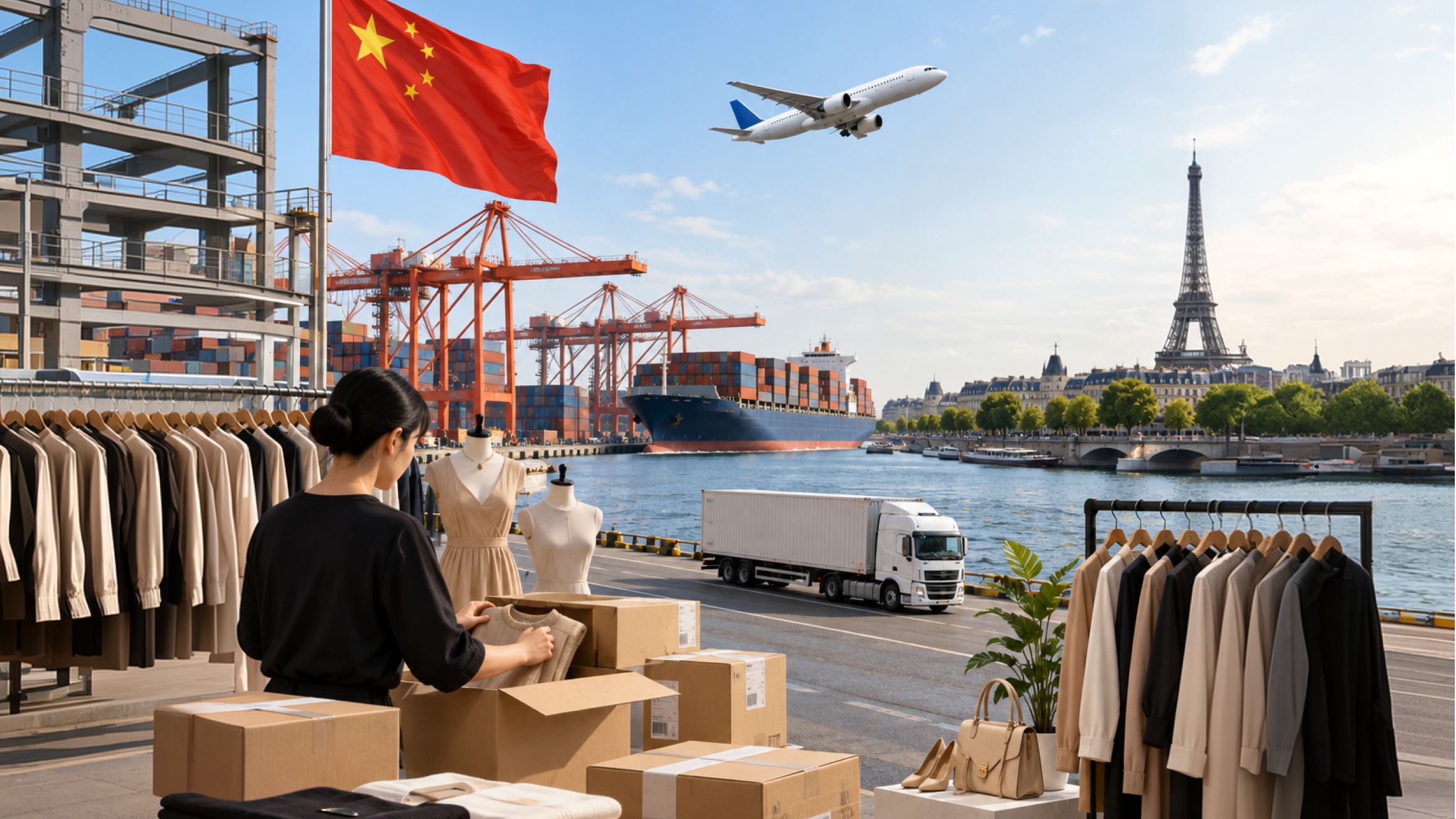
Your jackets are cut and sewn in Guangdong. Your customers are in Lyon, Milan and Rotterdam, and increasingly London and Melbourne. Meanwhile, your stock is on a ship to a warehouse in the Netherlands, waiting to be checked in before anyone can buy it.
That is the default supply chain for a European fashion brand that manufactures in China. It works, but every unit crosses the world twice before it reaches a customer outside the EU, and every new style is committed to a container before you know if it sells. This guide explains the alternative, what changed at the EU border in 2026, and how Flowa runs it from Shanghai.
What is global 3PL fulfilment?
A 3PL (third party logistics provider) stores your stock, picks and packs your orders, and ships them to your customers. Most European brands already use one: a warehouse in the Netherlands, Germany or Poland offering ecommerce fulfilment in Europe by road. Global 3PL fulfilment moves that partner next to your factory instead, and ships each order by air to the destination country, where a local carrier delivers it.
Flowa is a global 3PL built this way. Its fulfilment centre is in Shanghai, close to the factories its brands already use, and it ships to customers across the EU and more than 100 countries. With a regional warehouse, you ship stock first and sell later. With Flowa, you sell first and ship each order as it comes in.
Why China-based fulfilment makes sense when your clothes are made there
For EU customers, an EU warehouse often works well. The problem starts with everyone else.
Brexit turned the UK into an export
A parcel from Rotterdam to Manchester is now an EU export and a UK import. If the goods were made in China, they have crossed customs twice. Shipped direct from China, that order crosses one border.
Every non-EU market adds a second journey
Stock that sailed from China to Europe and then flies on to Australia or Switzerland has travelled around the world for a customer who was a single flight from your factory.
New styles tie up cash before they prove themselves
Every new SKU sent to Europe means committing stock weeks before it goes on sale. Your inventory spends weeks at sea. So does your cash.
Fulfilling from where your clothes are made fixes all three: one stock pool, close to production, reaching the EU and the rest of the world in one journey per order. That is the model Flowa is built around.
Where it doesn't fit: if almost all your demand is in one EU country and your range rarely changes, a regional warehouse will usually serve you well, and we'd tell you so. Flowa earns its place when you sell into several markets, launch often, or want to test new styles without shipping bulk stock first.
How 3PL fulfilment works for European fashion and DTC brands
Here is the set-up for a European brand working with Flowa:
- Your factory delivers finished goods to Flowa in Shanghai, usually a short truck journey rather than a sea voyage. Flowa's bilingual team coordinates with your supplier.
- Your Shopify store stays as it is. Orders sync to Flowa automatically, whether the customer is in Paris, Dublin or Sydney.
- Flowa picks, packs and flies each order to the destination country, then hands it to a local carrier for the last mile.
- Customs is handled per parcel, not per container. For EU orders, that is where IOSS and the per-item duty come in (see below).
Most established brands don't switch overnight, and Flowa doesn't ask them to. The common pattern is hybrid: hero SKUs stay in the existing EU warehouse, while new styles, long-tail sizes and non-EU markets ship from Flowa in China.
For example, a brand might keep its core denim range in its Dutch warehouse and launch a summer capsule from Shanghai. The capsule goes live to customers in France, the UK and Australia on the same day, from the same stock. If it sells, the brand reorders from the factory next door. If it doesn't, there's no stranded stock in Europe to mark down.
Why fashion DTC brands need strong fulfilment and quality control
A single style can run to dozens of size and colour combinations, so a mis-pick is one wrong label away. And under EU consumer rules, online shoppers generally have 14 days to return a purchase without giving a reason. Every wrong size or faulty seam that reaches a customer is a return you could have avoided, plus shipping both ways.
That is why the best place to catch a problem is before the parcel leaves. A defect found at the factory is a fix. The same defect found in Munich is a refund and a review. It is also why Flowa was built for apparel specifically, with checks, packing rules and stock tracking designed around sizes, colours and garments.
What Flowa handles behind the scenes
Stock ready to sell within days
Every item is scanned on arrival rather than estimated by weight, and receiving is recorded on camera. Stock is typically live within 24–48 hours of arrival (depending on QA holds and inbound volume), so a capsule or drop can go on sale the week it lands.
Quality checks before orders ship
Garments are checked at the factory side. Where you specify it, Flowa checks colour, sizing, stitching and labelling, including the fibre composition labels EU rules require, holds anything that fails and sends you photo evidence. Faulty stock goes back to the factory for rework. You decide what happens to held stock, and compliance responsibility stays with your brand.
Branded packing on every order
Your mailers, tissue, inserts and kitting are applied to every order. Rules can be set per destination, so French and German customers can each get inserts in their own language.
Same-day dispatch and local delivery
Orders received before the daily cut-off ship the same day and typically arrive in 3–7 days, depending on destination, parcel weight and service level. A local carrier handles the last mile, labels carry no Chinese text and tracking shows the local carrier, with options varying by destination.
IOSS and the €3 per-item duty: what European brands need to know
What is IOSS? The Import One-Stop Shop lets sellers collect EU VAT at checkout on consignments worth up to €150, so the customer isn't charged at the door. Your IOSS number travels with each parcel's customs data, telling EU customs the VAT is already paid. EU-established businesses can generally register for IOSS in their own member state.
What is the €3 per-item duty? From 1 July 2026 to 1 July 2028, the EU charges €3 per item on consignments worth up to €150 (Council Regulation (EU) 2026/382). Two details matter for fashion brands:
- "Per item" means per customs declaration item, not per garment. Goods with the same tariff classification, description and origin count as one item. Five identical T-shirts cost €3; a T-shirt and a belt cost €6. Check how your carrier declares goods, as this can change the count.
- When your brand or its IOSS set-up is the declarant, the duty is your cost, not your customer's. Build it into your pricing.
Where Flowa fits: Flowa prepares shipping data to fit your IOSS set-up; your brand stays responsible for its VAT and duty obligations. This is general information, not legal or tax advice.
One view of your orders, stock and exceptions
Flowa's platform puts every order, stock level and exception on one screen:
- Stock by state: incoming, reserved, available and on QA hold, for every SKU, size and colour.
- Orders you can still change: edit or cancel orders before they reach the warehouse floor, and approve flagged orders before they are picked.
- Exceptions surfaced early: delays, failed deliveries and customs holds are flagged before your customer has to ask.
- Routing your team approves: Flowa's AI recommends a route and flags risk. Your team approves.
- Clear billing and returns: charges are itemised, exception fees need your approval, and Flowa runs returns to the policy you set.
What to look for in a 3PL partner for global ecommerce growth
Whether you choose Flowa or not, these are the questions worth asking any 3PL before you hand over your stock. Here's how we'd answer them.
Where are quality problems caught?
Flowa: Before anything ships. Garments are checked at the factory side, so a wrong size or a loose seam gets fixed in Shanghai instead of turning up in your customer's returns.
How is stock counted?
Flowa: One item at a time. Every piece is scanned when it arrives, and receiving is recorded on camera, so the numbers on your screen match what's actually on the shelf.
Can you change or hold an order after it's placed?
Flowa: Yes. You can edit or cancel an order right up until it reaches the warehouse floor, and anything flagged waits for your go-ahead before it's picked.
How does their shipping data fit your IOSS set-up?
Flowa: We prepare it to fit the set-up you already have. The VAT obligation stays with your brand, but the paperwork shouldn't be a headache.
Does delivery feel local?
Flowa: It should. A local carrier handles the last mile, the label has no Chinese text, and your customer tracks the parcel with a carrier they recognise.
Do you have to close your current warehouse?
Flowa: Not at all. Most brands keep their bestsellers where they are and use Flowa for new styles and new markets.
What don't they do well?
Flowa: We're not the right fit for heavy goods, liquids or batteries. And Europe is our newest market, so we're still building our customer base there. We'd rather you hear that from us.
How FlowaGlobal supports european fashion DTC brands with China-based global fulfilment
Flowa Global is a cross-border fulfilment and control platform built for fashion brands that manufacture in China. It holds your stock in Shanghai and ships each order direct to customers across the EU and more than 100 countries, from one stock pool and one platform. For a European brand, that means:
- No detour through Europe for UK or Australian orders.
- Garments checked before they ship, not refunded after delivery.
- A local delivery experience, with packing rules set per market.
- The option to run alongside your existing EU warehouse.
We'll be candid: Europe is Flowa's newest market, and our customer base there is still growing. Ask us how we'd run your first EU orders and what we'd measure.
Getting started is low-risk. Most brands are live within 2–3 weeks of their first call, depending on integration and SKU count. Connect your Shopify store, start with a pilot using samples or pre-orders, and there's no long lock-in.
Frequently asked questions
What is a third party logistics provider?
A third party logistics provider, or 3PL, is the team that looks after your orders once they're placed. They store your stock, pick and pack each order, and ship it to your customer, so you don't have to run a warehouse yourself.
Can a 3PL in China fulfil orders for EU customers?
Yes. A 3PL in China, like Flowa, flies each order to the EU country it's going to, and a local carrier delivers it from there. With IOSS in place, EU VAT is collected at checkout on orders up to €150, so your customer has nothing extra to pay when the parcel arrives.
Do EU customers pay the €3 duty at the door?
Not if your brand, or your IOSS set-up, is the one declaring the parcel. In that case the €3 per-item duty is a cost to your brand, so it's worth building into your prices.
Do I have to close my EU warehouse to use Flowa?
No. Most brands keep their bestsellers in their EU warehouse and use Flowa for new styles, long-tail stock and markets outside the EU. You can start small and grow from there.
How long does delivery from China to Europe take with Flowa?
Usually 3–7 days. The exact time depends on where the parcel is going, how much it weighs and the service level you choose.
New to Flowa? Start with What Is Flowa Global?. Based elsewhere? Read our guides for Australian fashion brands. The full onboarding flow is on our process page, or book a call with the Flowa team and we'll map out your markets with you.

What US Tariffs on Australia Mean for Brands Manufacturing in China
Learn how the new 12.5% US tariff affects Australian brands manufacturing in China and when shipping directly from China may be the shorter route.
The latest US tariffs are changing how Australian businesses calculate the cost of selling to American customers.
This matters most if you run an Australian DTC brand, have your products made in China, and sell mainly to customers in the US.
Since 24 July 2026, most goods originating in Australia or China have faced an additional 12.5% US tariff, subject to product exclusions.
For Australian brands with products made in China, this makes the shipping route an important cost consideration. Sending stock through Australia does not change its Chinese origin or reduce the US tariffs that apply. Instead, importing it into Australia first may add duty, GST, another freight leg and local handling costs.
If the US is your main market, shipping directly from China, usually through a China 3PL that runs fulfilment at the production end, may help avoid these additional costs, as well as the administrative burden of recovering eligible Australian duty or GST.
What changed with US tariffs on Australia
On 24 July 2026, the United States introduced an additional 12.5% tariff on most Australian-origin goods.
The tariff was imposed under Section 301 of the Trade Act of 1974 following an investigation into whether different economies prohibit and enforce restrictions on imports made with forced labour. It was directed by a Presidential memorandum dated 23 July 2026 and implemented through a USTR notice published on 28 July 2026.
The same action introduced a 12.5% tariff on goods originating in China and several other economies. Some countries received a 10% rate, while different calculations apply to certain other economies.
Other duties may apply on top of the 12.5% tariff
The new 12.5% is an additional tariff. Depending on the product and its country of origin, other charges may also apply, including:
- the normal US tariff for the product classification
- existing China-related Section 301 duties
- other applicable duties, fees and customs charges
Some goods sit outside it. Products already subject to Section 232 duties are excluded from the 12.5%, and the action carries its own product exclusions.
The final amount therefore needs to be calculated for each SKU.
US tariffs are based on the product’s country of origin
US customs duties are generally based on where the product originated.
They are not determined by:
- where the brand is registered
- where the stock is stored
- the address shown on the parcel
- the country from which the order was dispatched
Under 19 CFR 134.1(b), a product’s country of origin is generally where it was manufactured, produced or grown. Moving it through another country does not change its origin unless sufficient manufacturing takes place there.
If your products are made in China, US customs will generally treat them as Chinese-origin goods, even if they are stored and dispatched from Australia.
How origin is determined for apparel
Textiles and apparel follow specific country-of-origin rules.
Under 19 CFR 102.21, the origin of an apparel product depends on factors such as where it was produced, assembled or knit to shape.
For many garments that are not knit to shape, origin is generally the country where the garment was wholly assembled. In practice, this is often where it was cut and sewn.
A hoodie assembled in China will therefore generally remain a Chinese-origin product when it reaches a US customer, whether it was shipped directly from China or stored in Australia first.
Packing and other minor processes in Australia do not usually change this. Under 19 CFR 102.17, minor handling or processing generally does not change a product’s country of origin.
The following activities would not normally turn a China-made product into an Australian-origin product:
- storing the product
- picking and packing orders
- adding retail packaging
- attaching an Australian return address
- applying a new shipping label
- separating a bulk shipment into individual orders
What routing through Australia adds
Some Australian brands import China-made stock into Australia before sending individual orders to US customers.
This creates an Australian import before the product begins its journey to the US customer.
The Australian import
Many apparel products can attract an Australian customs duty of 5% under Schedule 3 of the Customs Tariff Act 1995. The exact rate depends on the product classification, and some products are duty-free.
Australian GST is also generally charged at 10% of the value of the taxable importation. According to the ATO, this value may include:
- the customs value of the goods
- any applicable customs duty
- certain transport and insurance costs
The US import remains
The product must still clear US customs when it is sent to the customer.
Because it was manufactured in China, US customs will generally continue to treat it as a Chinese-origin product. The applicable US duties would therefore usually be the same whether the order was dispatched directly from China or sent through Australia.
Routing the product through Australia does not reduce the US tariff. It adds an Australian import before the product reaches the US.
Comparing the two routes
Shipping directly from China does not make the US order duty-free. The product must still clear US customs, and all applicable duties must be paid.
However, the direct route removes the need to import the stock into Australia first. It may also remove an additional freight leg, Australian handling and the administration involved in recovering eligible duty or GST.
For an Australian brand with most of its customers in the US, this can create a shorter route with fewer handling and import requirements.
What direct shipping with a China 3PL involves
Removing the Australian import does not remove the operational work. It changes where that work happens.
With a China 3PL, inventory remains close to the factory instead of being consolidated and shipped to Australia. Individual orders are then fulfilled and dispatched directly to US customers.
For an Australian DTC brand manufacturing in China, this usually means:
- stock is received and stored close to production
- each customer order is picked, packed and dispatched from China
- customs information reflects the product’s Chinese origin
- each order follows one international route instead of passing through Australia first
There is a trade-off. Without stock in Australia, local returns, exchanges and wholesale replenishment may take longer unless a separate local arrangement is in place.
Choosing a China 3PL is therefore both a fulfilment and inventory-positioning decision. It is most suitable when a significant share of your demand comes from customers outside Australia.
Can Australian duty and GST be recovered?
Some Australian duty and GST may be recovered or deferred, depending on how the goods are imported and whether the business meets the relevant requirements.
Available options may include:
- GST input tax credits: A GST-registered importer may be able to claim a credit for GST paid on imported goods.
- Duty drawback: Customs duty may be refunded when imported goods are later exported and the relevant requirements are met.
- The Tradex Scheme: Eligible businesses may receive an upfront exemption from duty and GST on goods imported for re-export.
- Bonded storage: Duty may be deferred while goods remain under customs control at a site licensed by the Australian Border Force.
Recovering or deferring these charges does not remove the Australian import process.
Each option has its own eligibility, documentation and stock-tracing requirements. In some cases, the business must pay the charges first, submit a claim later and provide evidence that the same goods were exported.
What happened to the US$800 de minimis exemption
Low-value parcels entering the US are no longer automatically duty-free.
The United States suspended de minimis treatment for goods originating in China and Hong Kong from 2 May 2025. The suspension was extended to goods from all countries from 29 August 2025.
US Customs and Border Protection later moved the suspension into regulation. Two interim final rules published on 24 June 2026 suspended the exemption indefinitely:
- 19 CFR 10.151(b) covers shipments arriving through methods other than the international postal network.
- 19 CFR 145.31(b) covers international mail shipments.
Brands sending parcels valued below US$800 must now plan for:
- the required customs entry
- accurate tariff classification
- correct country-of-origin information
- payment of applicable duties
- an importer of record and, where needed, a licensed customs broker
- whether duties will be included at checkout or collected before delivery
These requirements apply whether the parcel is dispatched from China or Australia.
Sending a China-made product from Australia does not restore the de minimis exemption or make the order duty-free.
What if Australia receives a US tariff exemption?
As of 18 August 2026, Australia had asked the US to reconsider the tariff.
Prime Minister Anthony Albanese said on 14 August 2026 that he had asked the US President to consider a full exemption or, at a minimum, no increase. He said the President had agreed to consider the request.
Any future exemption would depend on its final terms. However, a product manufactured in China would not automatically qualify simply because it is sold by an Australian brand or dispatched from Australia.
Australian brands manufacturing in China should therefore continue planning their US routes based on Chinese origin. This would only change if enough manufacturing took place in Australia for the product to meet the relevant country-of-origin rules.
How to decide your US shipping route
Review these five points before deciding how your next production run will reach US customers.
1. Confirm where each product was made
Record the country of origin for every SKU and keep the documents that support it. Origin affects which US duties apply, so confirm it before calculating your landed costs.
2. Calculate the total US duty for each SKU
Check the normal US tariff, the new 12.5% tariff, any existing China-related duties and any available product exclusions. Ask a licensed customs broker to confirm the calculation for each product category.
3. Compare demand across both markets
Compare your US order volume with demand in Australia.
If most of your customers are in the US, routing every unit through Australia adds an extra step without changing the US duty. If you also have significant Australian demand, local returns or retail replenishment requirements, splitting inventory between the two markets may make more sense than sending everything along the same route.
4. Calculate the full cost of both routes
Include all relevant costs, such as:
- Australian duty and GST
- international freight
- receiving
- storage
- picking and packing
- export handling
- US customs costs
- the administration required to recover eligible Australian charges
Freight rates alone will not show the full cost of each route.
5. Decide how the US customs entry will be handled
Confirm:
- who will act as the importer of record
- whether a licensed customs broker will be appointed
- who will prepare and submit the customs entry
- what bond arrangements apply
- how duties will be paid
- whether the customer could face another payment before delivery
Confirm these arrangements before shipping your first order.
Choose the shorter route to your US customers
Changing the dispatch address does not change where a product was made or remove the US tariffs that apply.
However, brands can decide how many borders, freight legs and handling steps their stock passes through before it reaches the customer.
For an Australian brand with products made in China and customers mainly in the US, shipping directly from China may remove the Australian import, an additional freight leg and local handling.
The route still needs to account for current US duties and customs requirements. It should be assessed by SKU, parcel weight and destination before orders are dispatched.
Flowa is a China 3PL and fulfilment platform for DTC fashion and apparel brands manufacturing in China. It delivers customer orders to more than 100 countries.
For brands selling to the US, Flowa can compare supported, duty-aware routes and prepare a lane-level landed-cost estimate based on your products, parcel weights and destinations. This gives you a clearer view of the expected costs and requirements before you approve dispatch.
Book a call to compare shipping directly from China with routing your stock through Australia.
You can also see how the process and the platform work.
Route availability, delivery times and costs depend on the destination, product type, parcel weight and service level. This article provides general operational information and is not customs, tax or legal advice.
Sources
- Presidential memorandum directing the 2026 Section 301 tariffs, 23 July 2026 (91 FR 47717)
- US Trade Representative, Notice of Actions in Section 301 Investigations, 28 July 2026
- US de minimis suspension for non-postal shipments, CBP interim final rule, 24 June 2026
- US de minimis suspension for mail shipments, CBP interim final rule, 24 June 2026
- 19 CFR 134.1, country-of-origin definition
- 19 CFR 102.21, textile and apparel origin rules
- 19 CFR 102.17, non-qualifying operations
- Prime Minister of Australia, press conference, Parliament House, Canberra, 14 August 2026
- Australian Border Force, Customs Tariff Schedule 3, Chapter 61
- Australian Taxation Office, GST and imported goods
- Australian Border Force, Duty Drawback Scheme
- Australian Government, Tradex Scheme
- Australian Border Force, concession schemes
- 19 CFR 10.151, non-postal de minimis suspension
- 19 CFR 145.31, mail de minimis suspension
Shipping Your Orders to Australia, UK, or Europe? Here’s Everything You Need to Know
What fashion brands need to know before shipping to AU, UK, or EU
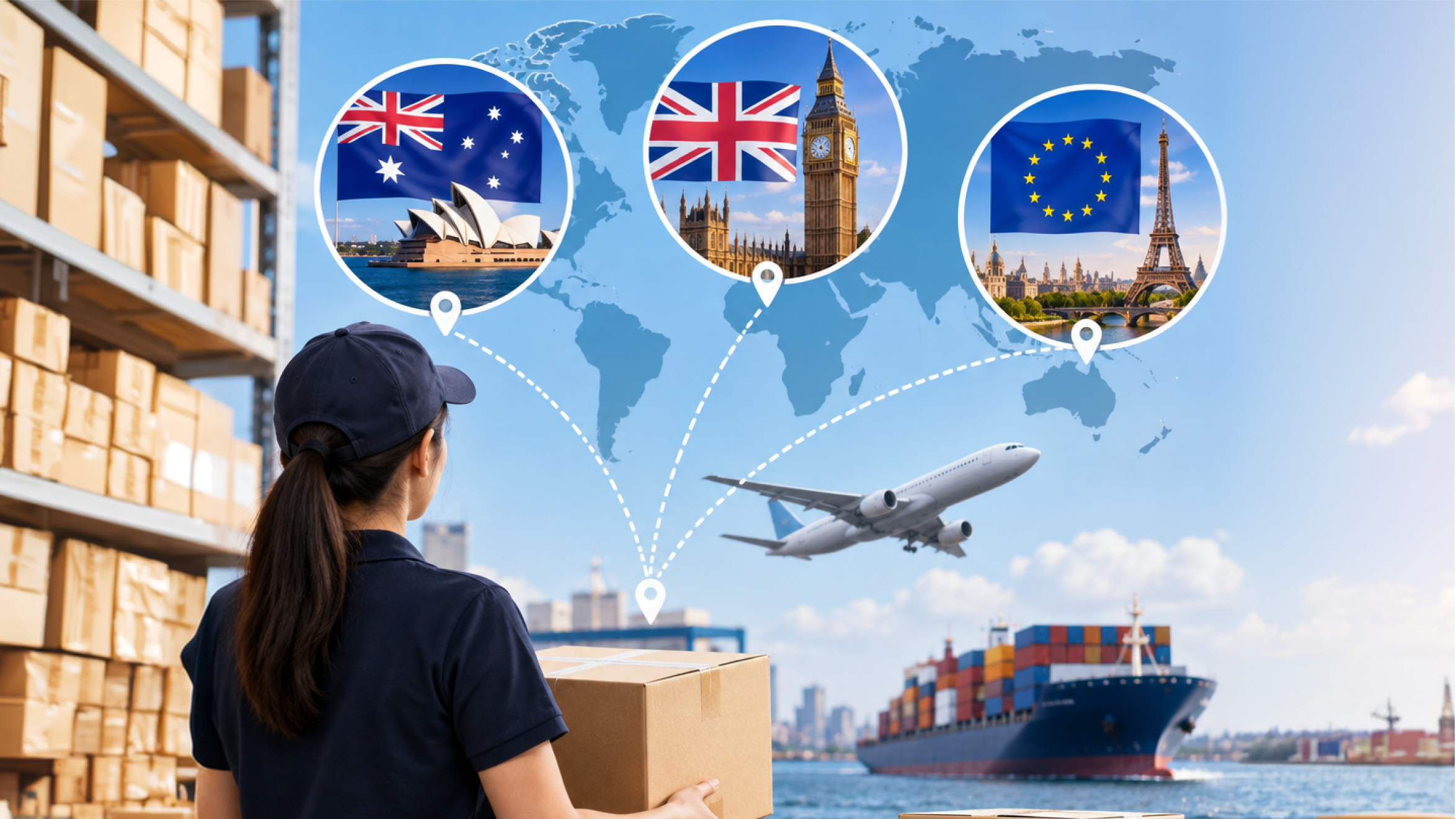
Are you a fashion brand manufacturing in China and shipping, or planning to ship, direct to customers in Australia, the UK, or Europe?
If so, you already know the headaches even if you haven't put a name to all of them yet. Where should stock actually sit before you know a market's going to work? How fast does delivery need to be before customers start abandoning carts? What's actually different about customs from one country to the next? And who tells you when something's gone wrong: your fulfilment partner, or an angry customer on WhatsApp.
This is exactly the gap a 3PL is meant to close, and it's worth understanding properly before you pick one, because the difference between a good fit and a bad one shows up in your margin every single month.
How a 3PL helps fashion brands test markets
A third party logistics provider, or 3PL, is the company that takes fulfilment off your plate. It stores your inventory, receives your orders, picks and packs them, ships them, and keeps you and your customer updated on where they are. That part is fairly standard across the industry: warehousing, pick and pack, packaging, shipping, tracking, exceptions, and billing. Most 3PLs will tell you they do all of it.
The question that actually matters for a brand manufacturing in China isn't what a 3PL does. It's where it does it from.
The instinctive move is to ship finished goods from your factory into a local warehouse (an Australian warehouse if you're selling into Australia, a UK one if you're selling into the UK) and fulfil from there. It feels safe because it's familiar. But it also means your stock takes an extra hop before it's even sellable, and you're committing money and shelf space to a market before you know whether it's actually going to convert.
The alternative is to keep inventory close to where it's made and ship directly from there. Instead of factory, then local warehouse, then customer, it's factory, then fulfilment centre, then customer, with the fulfilment centre sitting in China rather than in each destination country. That one change removes a whole leg of freight, and it means you can test Australia, the UK, and Europe from the same stock pool instead of splitting inventory (and cash) across three separate warehouses before you know which one is worth the investment.
What that actually looks like changes depending on exactly which of those three markets you're shipping into, since the rules, the costs, and what's already handled for you are genuinely different in each. That's worth walking through properly before anything else.
For more information on it, we covered more on this in our blogs. See: Why Is 3PL a Better Alternative to Dropshipping for Fashion Brands?
What's different in Australia, the UK, and Europe, and how Flowa makes it easier
Every market treats imported goods differently, and a 3PL doesn't change who's legally on the hook for any of it. What changes is how much of the groundwork is already done for you and whether you hear about a problem from Flowa first or from a customer.
Australia
Chinese-origin goods may qualify for a reduced duty rate under ChAFTA, the China-Australia Free Trade Agreement. Whether that applies depends on the origin documentation your factory produces, not something you generate yourself, and getting it wrong means paying the standard rate instead.
This is Flowa's founding corridor, and it's also where the factory relationship does the most work for you. Flowa's bilingual operations team is already talking to your factory every day for inbound goods and QA, and that's the same relationship the origin documentation runs through. It isn't a cold ask your team has to make on top of everything else; it's a conversation that's already happening. On this lane, one apparel brand saved up to A$11 per order compared with a traditional route, based on actual data from that brand; results vary by product, destination, and service level. And if a parcel is held at the border for any reason, Flowa's platform flags it before your customer notices.
For a deeper look at what these costs typically run and why they vary so much between providers, see How Much Do 3PL Costs Run for Australian Ecommerce Brands?.
The United Kingdom
The UK is treated as its own corridor, not folded into "Europe", because the rules genuinely aren't the same. Consignments valued up to £135 don't attract customs duty, but UK VAT still applies at 20%, charged at the point of sale rather than at the border. Above £135, both import VAT and duty apply once the parcel arrives.
The detail that catches brands out is who's responsible for collecting that VAT. Marketplaces like Amazon or eBay are treated as the deemed supplier and handle it themselves, but Shopify isn't a deemed supplier, so a brand selling directly through its own store is the seller of record and owes the VAT itself. Flowa can support and help administer that process, but it doesn't remove the obligation that stays with you as the seller. Where Flowa does make a difference is visibility: itemised billing means any VAT or duty related charge shows up as its own line rather than getting buried, and if a shipment is delayed at the border, you hear about it from the platform, not from a customer service ticket.
Europe
A temporary duty of €3 applies per customs declaration item on consignments valued up to €150, and it's worth understanding what "per item" actually means, because it isn't per parcel. Five identical tees sold together in one order count as a single item, so that's €3 total. A tee and a separate accessory in the same order count as two items, so that's €6. Above €150, standard duty rates apply instead.
Who actually pays it matters too. For an order where the brand, or its IOSS holder, is the declarant, the duty is the brand's cost, not something to pass on to the customer at checkout or at the door. Flowa's itemised billing means you can see exactly how many declaration items and how much duty applied to a given order rather than reconciling it after the fact, and the same proactive alerting applies here as everywhere else: a held parcel gets flagged to your team, not just to the customer waiting on it.
We've covered two of the more consequential recent changes: The Latest and Upcoming EU Customs Changes in 2026
None of the above is legal or tax advice. Confirm your specific customs, VAT, and duty obligations with your carrier or adviser.
What Flowa is quietly handling in the background
Once you're actually shipping, the day-to-day is simple on the surface: your factory sends stock to the fulfilment centre, it's live and ready to sell within 24 to 48 hours, orders sync straight from Shopify with nothing manual on your end, and dispatch happens the same day, seven days a week. What makes that actually work is everything underneath it, the parts you don't have to think about.
Inbound coordination
Someone has to talk to your factory: confirm quantities, chase a delayed shipment, and sort out a discrepancy when what arrives doesn't match what was ordered. If that someone is bilingual and already doing it daily, problems get caught before they become your problem. If it's you doing it through a translation app at 11pm, they don't.
Inventory visibility
You should be able to see, at any moment, what's incoming, what's available to sell, what's reserved against an order, and what's sitting on a QA hold, without emailing anyone to ask. For a brand with any real size or colour range, this isn't a nice to have. Sell stock you don't actually have, and you've turned a data problem into a customer service one.
The shipping decision
A parcel going from Shanghai to Sydney needs a different lane from one going to Southampton or Stuttgart. The right call depends on weight, destination, cost, and speed, and it changes often enough that reviewing it manually for every order isn't realistic. This is where AI genuinely earns its place: Flowa's platform recommends routes across 300+ lanes and flags anything risky, and your team approves before a single parcel ships. Support, not autopilot. The system narrows the decision; a person still makes it.
Quality control
Fashion has more ways to go wrong than most categories (wrong size, wrong colour, a stitching fault, a label sewn in upside down), and the cost of one bad batch reaching customers is never just the refund. It's the replacement shipping, the support time, and the review that sits on your product page for a year. A proper QA hold workflow catches this before dispatch, with photo evidence, so you're the one deciding what happens to the flagged stock instead of finding out from a complaint.
Packaging
Packaging matters more for fashion than for almost anything else, too, because the box is the last thing your brand gets to control before the product has to speak for itself. Custom packing rules, tissue paper, cards, and kitting need to be applied consistently, including on your busiest day, not just when someone remembers.
Billing
If you can't tell what you're actually being charged for (storage, pick and pack, exceptions, inbound), fulfilment costs turn into a black box that eats margin quietly. Itemised billing on a set cycle, with every exception fee needing your approval before it's charged, is what keeps that from happening.
None of this is exotic. It's the difference between a 3PL that's actually built for a brand like yours and one that's running generic pick, pack, and ship logic and hoping fashion's quirks don't matter. They do.
Why this matters even more for fashion specifically
Every one of these headaches gets sharper in fashion. You've got more variants than most categories (sizes, colours, sometimes both per style), so accuracy has to happen at SKU level, not just order level. Returns run higher when something's wrong, because customers who buy clothes online are already primed to send things back. And because the product is visual and personal, the presentation has to match the price point. A premium item that turns up in generic packaging undersells itself before the customer's even tried it on.
Speed matters differently too. A drop, a collab, a moment where an influencer mentions you: these create demand spikes measured in hours, not weeks. If your stock isn't live and ready to ship when that happens, you don't get the sale back later. It's just gone.
Where to start
If you're manufacturing in China and weighing up Australia, the UK, or Europe as your next market, or you're already in one and want to add the others without duplicating your whole setup, it's worth actually seeing the lane, the delivery time, and the landed cost for your specific product before you commit to anything. Book a call with our team and we'll walk through what your fulfilment setup actually looks like right now
Delivery times, inbound processing, dispatch speed, cost savings, and duty/VAT treatment depend on destination, parcel weight, product type, service level, cutoff times, QA hold workflows, inbound volume, and the specific rules in force in each market at the time of shipping. Not all routes, lanes, or products qualify for the same delivery window or cost outcome. Route recommendations refer to AI-evaluated shipping options; not all lanes are available for all product types or destinations. This blog is general information, not legal or tax advice; confirm your specific customs, VAT, and duty obligations with your carrier or adviser.

Book a call and get your lane plan, lead time estimates, and onboarding timeline — all in one conversation.