The Flowa Dispatch
Fulfilment strategy, shipping economics, and operational thinking — written for D2C founders and ops teams manufacturing in China.
The Latest
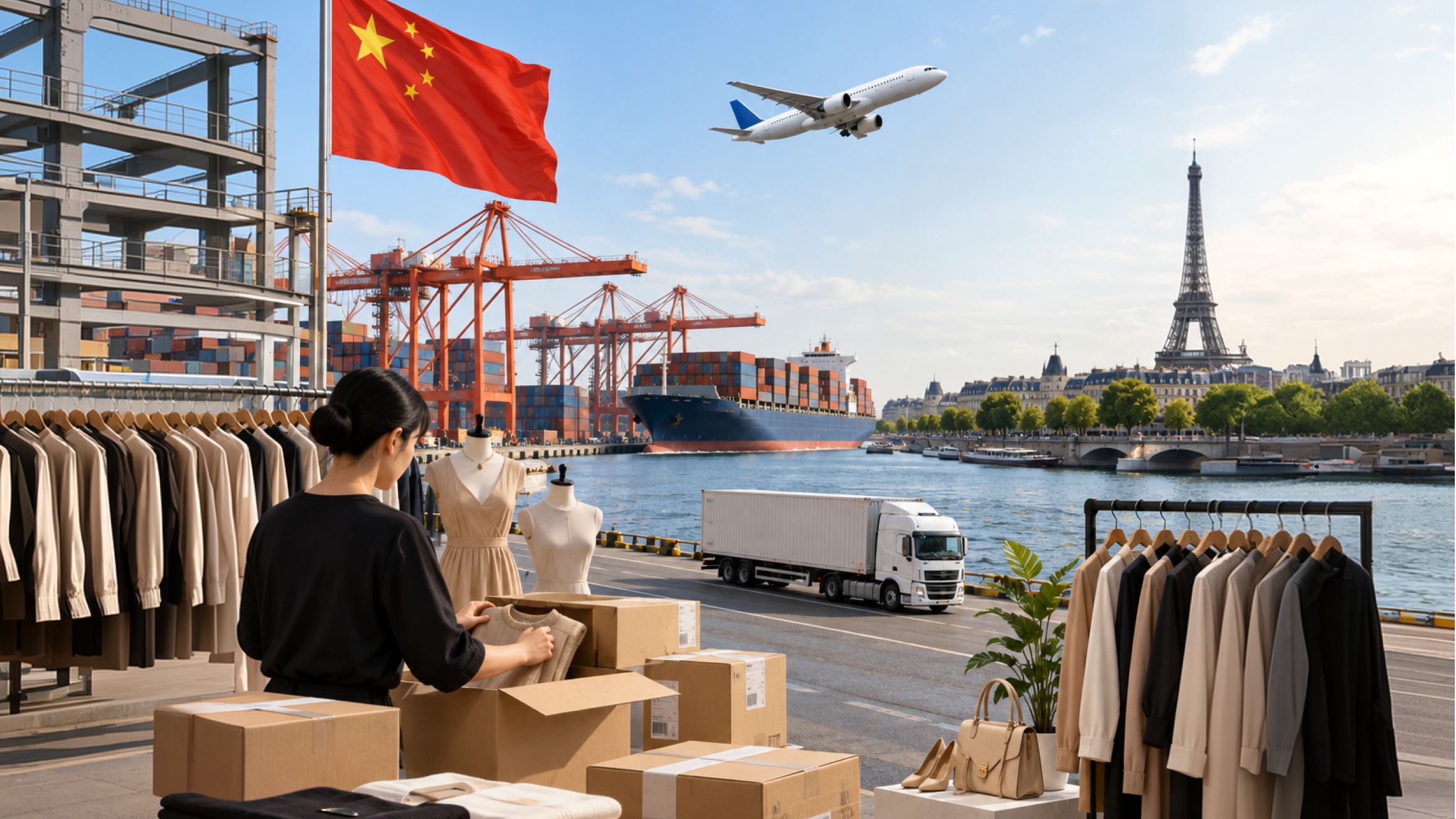
Global 3PL fulfilment with Flowa: a guide for European fashion DTC brands shipping from China
How European fashion brands that manufacture in China can use Flowa to fulfil EU and worldwide orders from one stock pool, with IOSS, the €3 per-item duty and returns explained.
Your jackets are cut and sewn in Guangdong. Your customers are in Lyon, Milan and Rotterdam, and increasingly London and Melbourne. Meanwhile, your stock is on a ship to a warehouse in the Netherlands, waiting to be checked in before anyone can buy it.
That is the default supply chain for a European fashion brand that manufactures in China. It works, but every unit crosses the world twice before it reaches a customer outside the EU, and every new style is committed to a container before you know if it sells. This guide explains the alternative, what changed at the EU border in 2026, and how Flowa runs it from Shanghai.
What is global 3PL fulfilment?
A 3PL (third party logistics provider) stores your stock, picks and packs your orders, and ships them to your customers. Most European brands already use one: a warehouse in the Netherlands, Germany or Poland offering ecommerce fulfilment in Europe by road. Global 3PL fulfilment moves that partner next to your factory instead, and ships each order by air to the destination country, where a local carrier delivers it.
Flowa is a global 3PL built this way. Its fulfilment centre is in Shanghai, close to the factories its brands already use, and it ships to customers across the EU and more than 100 countries. With a regional warehouse, you ship stock first and sell later. With Flowa, you sell first and ship each order as it comes in.
Why China-based fulfilment makes sense when your clothes are made there
For EU customers, an EU warehouse often works well. The problem starts with everyone else.
Brexit turned the UK into an export
A parcel from Rotterdam to Manchester is now an EU export and a UK import. If the goods were made in China, they have crossed customs twice. Shipped direct from China, that order crosses one border.
Every non-EU market adds a second journey
Stock that sailed from China to Europe and then flies on to Australia or Switzerland has travelled around the world for a customer who was a single flight from your factory.
New styles tie up cash before they prove themselves
Every new SKU sent to Europe means committing stock weeks before it goes on sale. Your inventory spends weeks at sea. So does your cash.
Fulfilling from where your clothes are made fixes all three: one stock pool, close to production, reaching the EU and the rest of the world in one journey per order. That is the model Flowa is built around.
Where it doesn't fit: if almost all your demand is in one EU country and your range rarely changes, a regional warehouse will usually serve you well, and we'd tell you so. Flowa earns its place when you sell into several markets, launch often, or want to test new styles without shipping bulk stock first.
How 3PL fulfilment works for European fashion and DTC brands
Here is the set-up for a European brand working with Flowa:
- Your factory delivers finished goods to Flowa in Shanghai, usually a short truck journey rather than a sea voyage. Flowa's bilingual team coordinates with your supplier.
- Your Shopify store stays as it is. Orders sync to Flowa automatically, whether the customer is in Paris, Dublin or Sydney.
- Flowa picks, packs and flies each order to the destination country, then hands it to a local carrier for the last mile.
- Customs is handled per parcel, not per container. For EU orders, that is where IOSS and the per-item duty come in (see below).
Most established brands don't switch overnight, and Flowa doesn't ask them to. The common pattern is hybrid: hero SKUs stay in the existing EU warehouse, while new styles, long-tail sizes and non-EU markets ship from Flowa in China.
For example, a brand might keep its core denim range in its Dutch warehouse and launch a summer capsule from Shanghai. The capsule goes live to customers in France, the UK and Australia on the same day, from the same stock. If it sells, the brand reorders from the factory next door. If it doesn't, there's no stranded stock in Europe to mark down.
Why fashion DTC brands need strong fulfilment and quality control
A single style can run to dozens of size and colour combinations, so a mis-pick is one wrong label away. And under EU consumer rules, online shoppers generally have 14 days to return a purchase without giving a reason. Every wrong size or faulty seam that reaches a customer is a return you could have avoided, plus shipping both ways.
That is why the best place to catch a problem is before the parcel leaves. A defect found at the factory is a fix. The same defect found in Munich is a refund and a review. It is also why Flowa was built for apparel specifically, with checks, packing rules and stock tracking designed around sizes, colours and garments.
What Flowa handles behind the scenes
Stock ready to sell within days
Every item is scanned on arrival rather than estimated by weight, and receiving is recorded on camera. Stock is typically live within 24–48 hours of arrival (depending on QA holds and inbound volume), so a capsule or drop can go on sale the week it lands.
Quality checks before orders ship
Garments are checked at the factory side. Where you specify it, Flowa checks colour, sizing, stitching and labelling, including the fibre composition labels EU rules require, holds anything that fails and sends you photo evidence. Faulty stock goes back to the factory for rework. You decide what happens to held stock, and compliance responsibility stays with your brand.
Branded packing on every order
Your mailers, tissue, inserts and kitting are applied to every order. Rules can be set per destination, so French and German customers can each get inserts in their own language.
Same-day dispatch and local delivery
Orders received before the daily cut-off ship the same day and typically arrive in 3–7 days, depending on destination, parcel weight and service level. A local carrier handles the last mile, labels carry no Chinese text and tracking shows the local carrier, with options varying by destination.
IOSS and the €3 per-item duty: what European brands need to know
What is IOSS? The Import One-Stop Shop lets sellers collect EU VAT at checkout on consignments worth up to €150, so the customer isn't charged at the door. Your IOSS number travels with each parcel's customs data, telling EU customs the VAT is already paid. EU-established businesses can generally register for IOSS in their own member state.
What is the €3 per-item duty? From 1 July 2026 to 1 July 2028, the EU charges €3 per item on consignments worth up to €150 (Council Regulation (EU) 2026/382). Two details matter for fashion brands:
- "Per item" means per customs declaration item, not per garment. Goods with the same tariff classification, description and origin count as one item. Five identical T-shirts cost €3; a T-shirt and a belt cost €6. Check how your carrier declares goods, as this can change the count.
- When your brand or its IOSS set-up is the declarant, the duty is your cost, not your customer's. Build it into your pricing.
Where Flowa fits: Flowa prepares shipping data to fit your IOSS set-up; your brand stays responsible for its VAT and duty obligations. This is general information, not legal or tax advice.
One view of your orders, stock and exceptions
Flowa's platform puts every order, stock level and exception on one screen:
- Stock by state: incoming, reserved, available and on QA hold, for every SKU, size and colour.
- Orders you can still change: edit or cancel orders before they reach the warehouse floor, and approve flagged orders before they are picked.
- Exceptions surfaced early: delays, failed deliveries and customs holds are flagged before your customer has to ask.
- Routing your team approves: Flowa's AI recommends a route and flags risk. Your team approves.
- Clear billing and returns: charges are itemised, exception fees need your approval, and Flowa runs returns to the policy you set.
What to look for in a 3PL partner for global ecommerce growth
Whether you choose Flowa or not, these are the questions worth asking any 3PL before you hand over your stock. Here's how we'd answer them.
Where are quality problems caught?
Flowa: Before anything ships. Garments are checked at the factory side, so a wrong size or a loose seam gets fixed in Shanghai instead of turning up in your customer's returns.
How is stock counted?
Flowa: One item at a time. Every piece is scanned when it arrives, and receiving is recorded on camera, so the numbers on your screen match what's actually on the shelf.
Can you change or hold an order after it's placed?
Flowa: Yes. You can edit or cancel an order right up until it reaches the warehouse floor, and anything flagged waits for your go-ahead before it's picked.
How does their shipping data fit your IOSS set-up?
Flowa: We prepare it to fit the set-up you already have. The VAT obligation stays with your brand, but the paperwork shouldn't be a headache.
Does delivery feel local?
Flowa: It should. A local carrier handles the last mile, the label has no Chinese text, and your customer tracks the parcel with a carrier they recognise.
Do you have to close your current warehouse?
Flowa: Not at all. Most brands keep their bestsellers where they are and use Flowa for new styles and new markets.
What don't they do well?
Flowa: We're not the right fit for heavy goods, liquids or batteries. And Europe is our newest market, so we're still building our customer base there. We'd rather you hear that from us.
How FlowaGlobal supports european fashion DTC brands with China-based global fulfilment
Flowa Global is a cross-border fulfilment and control platform built for fashion brands that manufacture in China. It holds your stock in Shanghai and ships each order direct to customers across the EU and more than 100 countries, from one stock pool and one platform. For a European brand, that means:
- No detour through Europe for UK or Australian orders.
- Garments checked before they ship, not refunded after delivery.
- A local delivery experience, with packing rules set per market.
- The option to run alongside your existing EU warehouse.
We'll be candid: Europe is Flowa's newest market, and our customer base there is still growing. Ask us how we'd run your first EU orders and what we'd measure.
Getting started is low-risk. Most brands are live within 2–3 weeks of their first call, depending on integration and SKU count. Connect your Shopify store, start with a pilot using samples or pre-orders, and there's no long lock-in.
Frequently asked questions
What is a third party logistics provider?
A third party logistics provider, or 3PL, is the team that looks after your orders once they're placed. They store your stock, pick and pack each order, and ship it to your customer, so you don't have to run a warehouse yourself.
Can a 3PL in China fulfil orders for EU customers?
Yes. A 3PL in China, like Flowa, flies each order to the EU country it's going to, and a local carrier delivers it from there. With IOSS in place, EU VAT is collected at checkout on orders up to €150, so your customer has nothing extra to pay when the parcel arrives.
Do EU customers pay the €3 duty at the door?
Not if your brand, or your IOSS set-up, is the one declaring the parcel. In that case the €3 per-item duty is a cost to your brand, so it's worth building into your prices.
Do I have to close my EU warehouse to use Flowa?
No. Most brands keep their bestsellers in their EU warehouse and use Flowa for new styles, long-tail stock and markets outside the EU. You can start small and grow from there.
How long does delivery from China to Europe take with Flowa?
Usually 3–7 days. The exact time depends on where the parcel is going, how much it weighs and the service level you choose.
New to Flowa? Start with What Is Flowa Global?. Based elsewhere? Read our guides for Australian fashion brands. The full onboarding flow is on our process page, or book a call with the Flowa team and we'll map out your markets with you.
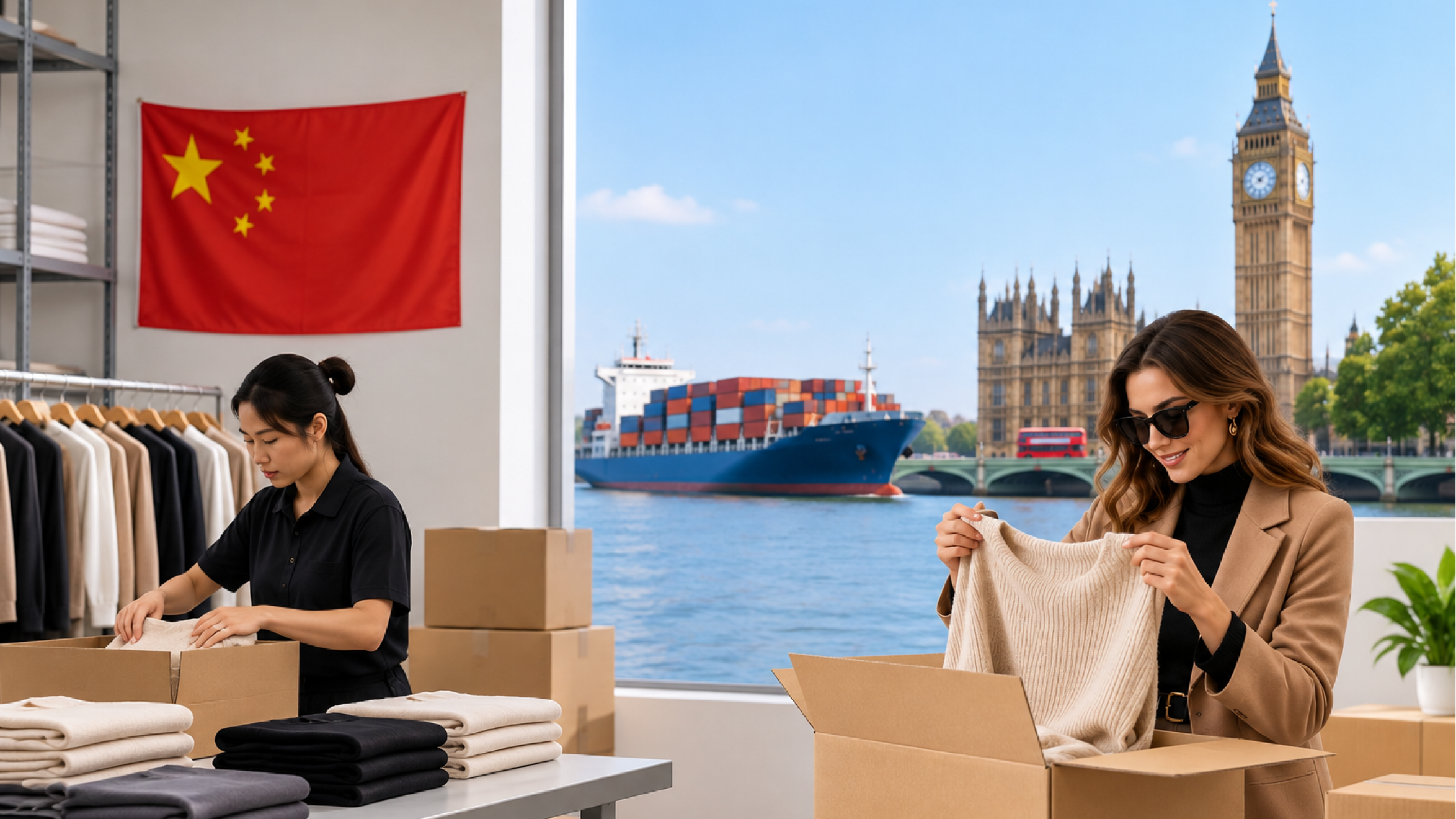
Global 3PL Fulfilment with Flowa: A Guide for UK Fashion DTC Brands Shipping from China
How UK fashion DTC brands that manufacture in China can sell to customers worldwide from one stock pool in Shanghai, without shipping stock to the UK first or opening a warehouse in every market.
Your autumn knitwear came off the line in Ningbo in early September. It reached your warehouse in the Midlands last week, after weeks at sea, a few days at Felixstowe and a long wait to be checked in. It's finally live on your site.
Then a creator in Melbourne posts your cardigan. Orders come in from Australia, Germany, the Netherlands and Singapore. Good news, except every one of those parcels now has to leave the UK and cross another border, and the Australian orders are heading back the way the stock just came. Someone suggests a warehouse in Europe, then another in Australia, each with stock you'd have to guess at months ahead.
Nothing went wrong. Your 3PL did its job. But the set-up was built for a brand selling mostly in the UK, and your customers are now everywhere. Here's how global 3PL fulfilment from China fixes that, and how Flowa Global runs it for UK fashion brands from Shanghai.
What Is Global 3PL Fulfilment?
Global 3PL fulfilment means a third party logistics provider holds your stock in one place and ships each order direct to customers in many countries, instead of you holding stock in a warehouse in every market. Flowa Global works this way for fashion brands that manufacture in China: your stock sits in one fulfilment centre in Shanghai, and every order ships from there.
So what is a third party logistics provider? A 3PL provider receives your stock, stores it, picks and packs each order, hands it to a carrier and deals with what goes wrong in between. That whole run is order fulfilment, and most 3PL services are built around it. (In US spelling it's ecommerce order fulfillment. Same job.)
The real difference between 3PLs is where your stock sits. A local 3PL holds it near one group of customers. A global 3PL serves every country from one place. For a brand whose clothes are made in China, the obvious place is next to the factory. That's why Flowa keeps one stock pool in Shanghai, serving customers in the UK and more than 100 other countries.
How 3PL Fulfilment Works for UK Fashion and DTC Brands
Most UK fashion brands start the same way. You manufacture in China, ship bulk stock to a UK warehouse, and that order fulfilment 3PL sends out your orders. Search "3PL UK" or "3PL logistics UK" and almost every result follows this model: factory, freight forwarder, port, customs broker, UK warehouse, carrier, with each handoff adding days and a bill.
That made more sense before Brexit, when a UK warehouse could serve EU customers almost like domestic ones. Now the UK and the EU are separate customs areas. Stock imported into the UK and then sent on to a customer in Berlin goes through customs a second time, and can end up paying duty and VAT twice. Orders to Australia or Asia make a second long trip. UK brands selling abroad hit the same fork: open a warehouse in Europe, or accept slower, costlier overseas orders.
Global fulfilment from China takes a different route. With Flowa, your factory sends finished goods to one fulfilment centre in Shanghai, and each order, whether to London, Berlin or Melbourne, ships individually by air to a local carrier for the last mile. Each parcel crosses one border instead of two. Your brand stays in the UK. Your stock stays at source.
Why China-Based Fulfilment Makes Sense When Your Clothes Are Made There
Flowa is built around one simple rule, in its founder's words: fulfilment should sit either next to your factory or next to your customer. When your customers are spread across the world, no single warehouse is next to all of them. The factory is the one place every order already starts from.
Keeping stock at source changes four things:
- New markets don't need new warehouses. One stock pool serves every country.
- Your cash moves faster. Stock is sellable days after leaving the factory, not after weeks on a container.
- Restocks don't wait for a ship. A sold-out size can be back on sale within days of the factory finishing it.
- Testing costs less. A new collection or market doesn't need bulk stock shipped overseas first.
A 3PL in China isn't right for every brand, and a good 3PL China-side should tell you when it isn't. A local warehouse probably still wins if you need next-day delivery in one market, your products are heavy or bulky (Flowa works with light items, roughly under 1.2 kg packed), you mostly sell through Amazon or other marketplaces, or nearly all your demand is steady and in one country.
Plenty of brands land in the middle: proven bestsellers stay in their UK 3PL for UK customers, while new styles, drops and every other market run from China. That hybrid set-up is often where brands start with Flowa.
Why Fashion DTC Brands Need Strong Fulfilment and Quality Control
Fashion is harder to fulfil than most categories. One style in several sizes and colours can mean a dozen SKUs, so mispicks are easy. Selling windows are short. And the European Environment Agency estimates that one in five garments bought online is sent back.
Selling globally raises the stakes. A defect found by a customer in Sydney costs far more to fix than one found at the factory. And because a DTC customer never visits a shop, the parcel is your shopfront: your packaging, a carrier they recognise and tracking they can read.
What a 3PL Partner Handles Behind the Scenes
Here's what happens between your factory and your customer, wherever they are, when Flowa runs your fulfilment.
Stock Checked In and Ready to Sell Within Days
Your factory sends finished goods to Flowa's fulfilment centre in Shanghai, and Flowa's bilingual team coordinates the inbound with your supplier in Chinese. Every item is scanned individually on arrival rather than estimated by weight, and receiving is recorded on camera. Goods typically go live within 24 to 48 hours of arrival, depending on QA holds and inbound volume, and Shopify syncs automatically, so stock goes on sale in every market at once.
Quality Checks Before Orders Ship
The inbound QA service checks colour, sizing, stitching and labelling near the factory, with photo evidence on every issue. Flagged stock goes on QA hold while you decide what to do, and faulty pieces can go back to the factory for rework instead of being refunded after delivery. Flowa checks against what you ask it to check; product compliance, such as each market's labelling rules, stays your responsibility.
Branded Packing on Every Order
Every order is packed to your instructions: tissue, stickers, inserts, thank-you cards and kitting such as gift sets. Packing rules are set once and applied automatically, so a customer in Amsterdam gets the same unboxing as one in Manchester. Compostable packaging is available through Flowa's in-house packaging partner.
Same-Day Dispatch and Tracked Delivery Worldwide
Orders received before the daily cut-off are picked, packed and dispatched the same day, seven days a week, then flown out and handed to a local carrier. Customers typically receive them in 3 to 7 days, depending on destination, parcel weight and service level, and Flowa delivers to more than 100 countries.
On supported routes, labels carry no Chinese text and tracking shows the local carrier, for example Royal Mail or DHL. Flowa's AI compares routes across more than 300 evaluated lanes (not every lane suits every product or destination) and recommends one per order. Your team approves before anything ships.
Duties and VAT differ by market, and you stay responsible for your obligations in each country you sell to, so check them with your accountant before opening a new market.
One View of Your Orders, Stock and Exceptions
Brands selling into several countries often run the operation across a pile of tabs: warehouse portals, forwarder emails and a spreadsheet of what's on the water. Problems surface when a customer emails. Flowa's 3PL warehouse system puts every market on one screen:
- Stock by SKU and state. Every size and colour shows as incoming, reserved, available or on QA hold.
- Orders by status. Orders can be edited or cancelled before they reach the warehouse, and high-risk orders wait for your approval.
- Exceptions before customers notice. Delays, failed deliveries and customs holds in any country are flagged as they happen.
- Itemised billing. Weekly invoices split by category, and every exception fee needs your approval first.
Returns run through the same system: you set the policy and charges, and Flowa runs the process. See it on our platform page.
What to Look for in a 3PL Partner for Global Ecommerce Growth
Whichever provider you talk to, ask:
- How many handoffs are there between my factory and a customer abroad? Each adds days, cost and a place for problems to hide.
- Can one stock pool serve all my markets? Or will each country need its own stock and contract?
- How fast is stock sellable after it arrives, and how is it counted?
- Where are garments checked, and what happens to faulty stock?
- What will delivery look like in each market? Which carrier, what's on the label, what the tracking shows.
- Can I start small, run alongside my current warehouse and avoid a long lock-in? And will they tell you when they're the wrong fit?
How FlowaGlobal Supports UK Fashion DTC Brands with China-Based Global Fulfilment
Flowa is built for established DTC fashion brands that manufacture in China and sell through Shopify. Your stock sits in Shanghai, near your factory. It's checked, packed your way, dispatched the same day and delivered to the UK and more than 100 other countries, with every order, stock level and exception on one screen and a dedicated team on a direct line.
You don't have to move all your stock or leave your UK 3PL. Most brands are live within 2 to 3 weeks of their first call, though complex integrations can take longer. Your account team maps your products, markets and packing rules, you connect Shopify in minutes, your factory sends stock to Shanghai, and you start selling.
Want to see it first? Start with a trial. Connect your Shopify store, place a few test orders to the countries you want to test, and your factory sends the items to Shanghai, with no pre-stocking needed. You watch each order get packed, dispatched and tracked on the same dashboard you'd use from day one. The trial fee converts to account credit on your first invoice once you go live.
Back to that cardigan. With your stock in Shanghai, the knitwear goes on sale a couple of days after leaving the factory, and the Melbourne, Berlin, Singapore and Manchester orders all ship from the same shelf the day they're placed. No second warehouse, and no stock split by country.
FAQs
What does a 3PL do for a fashion brand? A 3PL stores your stock, picks and packs each order, ships it and handles problems like delays or returns. A global 3PL does this from one location for customers in many countries.
Can a UK fashion brand use a 3PL in China? Yes, if your clothes are made in China and you sell through Shopify. Stock stays near the factory and each order ships by air to customers in the UK and abroad. Many brands run it alongside their UK warehouse.
How long does delivery take from a 3PL in China? With Flowa, typically 3 to 7 days, depending on destination, parcel weight and service level. Orders received before cut-off are dispatched the same day.
Will my customers know the order came from China? On supported routes, a local carrier delivers it, labels carry no Chinese text and tracking shows the local carrier.
New to Flowa? Start with What Is Flowa Global? or see global fulfilment from China. Based elsewhere? Read our guides for Australian fashion brands. The full onboarding flow is on our process page, or book a call with the Flowa team and we'll map out your markets with you.

Lead Time in Fashion: How Clothing Brands Can Shorten the Gap Between Factory and Customer
Every week your finished stock spends at sea or waiting at a warehouse is a week it can’t be sold. Here’s what fast-moving DTC brands like Shein and boohoo do to cut lead time, and how brands making in China can shorten the gap.
Picture your summer drop. The linen sets are finished, packed and sitting at the factory in Guangzhou in early October. Perfect timing for an Australian summer.
Then the waiting starts. A week for the container to fill. Weeks at sea. A few days stuck at the port. Another week while your local warehouse gets round to checking it in. By the time the first order ships, it's well into November, and the customers who wanted linen in October have already bought it from someone else.
Nothing went wrong, exactly. That's just how long it takes. And that's the problem.
Why Lead Time Hurts Fashion Brands More Than Other Products
Lead time is the time between placing an order with your factory and that product reaching your customer. In fashion, a long lead time costs more than in most categories because clothing has a short selling window. Every week your finished stock spends in transit, waiting to be checked in or waiting to be shipped is a week it can't be sold.
A phone case sells the same in March as it does in July. A linen set doesn't. Fashion runs on seasons, trends and drops, so the value of your stock starts dropping the day it's finished.
The numbers back this up. According to NYU Stern's industry data (January 2026), listed apparel companies hold inventory worth about 19% of their annual sales. Consumer electronics companies, the category phone cases sit in, hold about 14%. Put simply, a clothing business carries roughly 70 days of stock for every 50 days an electronics business carries, so its cash is tied up longer and its inventory turnover is slower.
And when fashion stock misses its window, it often isn't sold at all. The European Environment Agency estimates that 4% to 9% of all textile products put on the European market are destroyed before they're ever used, and names fast-changing trends and seasons as one of the main reasons. No surprise, then, that nearly two-thirds of US apparel executives told McKinsey that speed to market and in-season reactivity are top priorities.
Long lead times hit you in three places:
- Missed sales. Stock arrives after demand has peaked, so it gets marked down.
- The wrong sizes. You had to guess your size split (how many of each size to order) months ago. Now you're out of mediums and sitting on extra larges.
- Slower inventory turnover. The longer stock sits between factory and customer, the longer your cash is tied up before it can fund the next collection.
It helps to think of fashion lead time in two halves. Production lead time is how long the factory takes to make your order. The second half starts when production ends: shipping, customs, receiving, checking, picking and packing. That second half is often the bit brands can change fastest.
How to Optimise Lead Time: Lessons From Fast Fashion
The fastest online-first fashion brands treat speed to market as part of the business model. Shein and boohoo are the two best-documented examples, and both sell direct to consumers online. Here's what they do to cut lead time.
Start small, then reorder from real sales data
Shein says it produces just 100 to 200 pieces of any new product at launch, then restocks the styles that sell. boohoo built its early growth the same way with "test and repeat": new styles were reportedly bought in runs of 300 to 500 units, with repeat orders on the ones that sold.
Shein also shares its sales data with suppliers. According to Rest of World, suppliers can see current sales and are told to "stock up more if you sell well". You don't need custom software to do a version of this. Weekly sell-through (the share of each style that's actually sold) by size and colour, shared with your factory, means reorders start sooner and get the size split right.
Ask for smaller, faster runs, and pay on time
The same report found Shein asks suppliers for as few as 100 items in as little as 10 days, against more typical fast-fashion minimums of 2,000 items in 30 days. Part of how it gets that urgency is simple: it pays on time, so factories are happy to squeeze its reorders in.
Most smaller brands won't get Shein-sized flexibility, and minimum order quantities (MOQs) of a few hundred per style are normal. But it's often possible to negotiate a smaller first run, or split one order into staggered deliveries.
Keep production and stock close together
boohoo leaned on proximity: more than half of its garments were made in the UK, so reorders could reach its warehouse in days. Shein got the same result the other way round. It kept stock in China, next to production, and shipped each order direct to customers abroad. For a brand already making in China, the Shein route is the realistic one. Moving where your stock sits is a much smaller decision than moving production.
Make fast dispatch part of the offer
boohoo let customers order up to midnight for next-day delivery, including Sundays. A late cut-off (the latest time an order can be placed and still go out that day) shaves days off the customer's wait without touching production at all.
Put together, the logic is simple: commit to less, react to real sales, and cut every day of waiting between "finished" and "delivered". That last part is where a brand manufacturing in China can win back the most time. Here's how.
Ship Orders Direct Instead of Waiting on Bulk Freight
The biggest single delay for most China-made brands is the bulk shipment itself. The sea freight vs air freight debate usually comes down to cost per kilo. Sea is cheaper, so most brands default to it, but it adds weeks at sea plus port handling and a second round of receiving. Air is faster but costs more per kilo in bulk.
There's a third option, and it's the one Shein built its model on. Instead of moving bulk stock anywhere, you keep it near the factory and send each order individually by air when a customer buys it. You only pay to move what's already sold.
Make Stock Sellable Within Days of Arrival
Getting stock to a warehouse isn't the same as being able to sell it. Receiving, counting and loading it into the system can quietly add days at a busy local warehouse. If a drop lands on a Friday and isn't live until Thursday, that's a week of launch momentum gone.
Catch Quality Problems Before Stock Ships
A quality problem is a lead time problem. If a faulty batch reaches customers, you lose the sale, pay for the return, and then wait all over again for replacement stock. When stock is checked in Melbourne or Manchester, a fault means another round trip to the factory. Checked near the factory, it can be fixed and back on the shelf far sooner.
Dispatch Orders the Same Day They Come In
Once a customer has paid, every hour before dispatch adds to their wait. Next-day dispatch might not sound like much, but it stacks on top of transit time. Shoppers expect speed around a drop, and same-day dispatch gives you room to absorb a slower delivery route without the customer noticing.
Flag Delivery Delays Before Customers Notice
Some delays can't be avoided. A customs hold or a failed delivery attempt happens to everyone. What matters is who finds out first, because a customer who has to chase you is less likely to buy again.
Handle Returns Without Building Up Stock Somewhere Else
Fashion has more returns than most categories. The European Environment Agency estimates that one in five garments bought online is sent back, and that roughly a third of returned clothing ends up destroyed. Brands selling cross-border often end up with a separate returns provider in each market, where stock builds up out of sight, gets checked late, and never makes it back into sellable inventory.
When Local Stock Still Makes Sense
Shipping direct from China isn't the right answer for every brand. Local stock might still suit you if:
- You need next-day delivery in one market as a core part of your offer.
- Your products are heavy or bulky, so sending each order individually by air costs more than it saves.
- Your demand is steady and predictable, with long-life basics rather than seasonal or trend-led ranges.
- Most of your sales are wholesale or retail, rather than direct to consumer.
Plenty of brands land in between. They keep proven bestsellers in a local warehouse and run new styles, drops and new markets direct from China, moving stock locally once a style has proved itself. It's boohoo's test-and-repeat logic, applied to where your stock sits. If you need to move bulk replenishment into a local warehouse or Amazon FBA, our freight forwarding service can handle that alongside direct orders.
How FlowaGlobal Helps Fashion Brands Shorten Lead Times
Flowa can't make your factory faster. But it can make the production-side lessons easier to act on, and it takes over the wait after production ends.
Working with your factory
Flowa's bilingual operations team works as the go-between with your supplier. We talk to your factory in Chinese every day about inbound stock, so passing on a reorder, chasing a late delivery or flagging a quality problem goes through people already on the ground, not through you and a translation app at midnight. And because the platform shows stock levels for every SKU (each size and colour of each style), you can see what's selling and reorder sooner.
Fast delivery without the cost of local warehouses
Your stock sits in our Shanghai fulfilment centre, and each order ships direct on optimised air lanes with a local carrier for the last mile. Customers typically receive it in 3 to 7 days, depending on destination, parcel weight and service level. One stock pool serves Australia, the UK and Europe, so you're not splitting inventory across three countries before you know which one is buying. See how it works by market on our global fulfilment from China page.
Let's be honest about the trade-off. If the only goal is the fastest possible delivery, stock in a local warehouse wins. But you pay for it upfront: bulk freight, a warehouse in every market, and cash tied up in stock bought months before you know what will sell. At the other end is dropshipping. It looks cheap because you hold no stock, but you give up control over quality and delivery times, and per-order costs can end up higher once you add up what the supplier charges to pick, pack and ship one item at a time. We've compared the two in Why Is 3PL a Better Alternative to Dropshipping for Fashion Brands?
Shipping direct with Flowa sits in the gap between them. You hold your own stock, so you control quality and packaging. You don't pay for local warehouses before a market has proved itself. And your customers still get their order in about a week.
From Shanghai to your customer's door
Once stock reaches our Shanghai dock, every unit is barcoded and goods typically go live within 24 to 48 hours, depending on QA holds and inbound volume. Your Shopify store syncs automatically, so the moment stock is available, it's sellable.
Our inbound QA service checks colour, sizing, stitching and labelling on arrival, with photo evidence on every issue we find. Flagged stock goes on QA hold, so you decide what happens to it, and faults can be reworked on the factory floor instead of refunded after delivery.
Orders are picked, packed and shipped the same day, seven days a week, for orders received before cut-off, with your packing rules applied automatically. The platform flags delays, failed deliveries and customs holds as they happen, so your team can act before the customer gets in touch. Our AI recommends shipping routes across 300+ evaluated lanes (not every lane suits every product or destination), and your team approves before anything ships. See how it fits together on our platform page.
Returns are handled the same way. You decide your returns policy and what to charge customers. Flowa takes care of the rest, from the customer sending an item back to it being processed, so you don't need to pile up returned stock in another warehouse or manage a separate returns partner in every country.
A quick example
Let's go back to that summer drop. With Flowa, the linen sets go to Shanghai instead of waiting for a container. They're checked on arrival, live within a couple of days, and the first orders reach customers in Sydney, London or Berlin in about a week. Here's how the two routes compare. The timings are illustrative, not from a specific brand, and real numbers depend on your factory, route and markets.
The difference isn't the factory. It's everything that happens after it. That's how to reduce lead time when you manufacture in China.
New to Flowa? Start with What Is Flowa Global? How China-Direct Fulfilment Works, and What Makes Us Different. If you sell apparel into Australia, our 3PL for Australian fashion brands page goes deeper, and the full onboarding flow is on our process page.
Want to see where your days are going? Book a call with the Flowa team and we'll map it out with you. You can also start with a low-risk paid trial, and the fee converts to account credit on your first invoice once you go live.
What Is Flowa Global? How China-Direct Fulfilment Works, and What Makes Us Different
Your new collection passed its factory sign-off in Guangzhou on a Monday. You were thrilled. Then it sat in a container for five weeks.
By the time it cleared into your warehouse in Melbourne, the launch window had moved. Your cash had been parked at sea the whole time. And your best-selling size? Already short.
Then the first returns came in. A batch of labels had been sewn in upside down. Nobody caught it, because nobody looked at the stock between the factory floor and your customer's front door. So now you're paying for refunds, replacement postage and a one-star review, all for a fault that would've taken ten minutes to spot in China.
And the admin never stops. Your freight forwarder, your local warehouse, your customs broker and your Shopify app each send their own invoice. When a parcel goes missing, each one points at another. You find out when a customer messages asking where their order is.
If you make your products in China and sell online, some of this probably sounds familiar. Most brands treat it as the cost of doing business. It doesn't have to be, and that's what Flowa Global was built to fix.
What Is Flowa Global?
Flowa Global is a China-based 3PL and cross-border fulfilment platform for DTC brands that manufacture in China. We store your finished stock in Shanghai, check it close to the factory that made it, then pick, pack and ship each order direct to your customers in Australia, the UK and Europe.
Think of it as two halves that only work together.
The physical operation
The first half is a climate-controlled fulfilment centre in Shanghai. Your goods arrive, get barcoded and, if you've asked, get checked on the way in. Orders received before cut-off are picked, packed and dispatched the same day, seven days a week, on optimised air lanes with a local carrier for the last mile. We deliver to 100+ countries.
The platform
The second half is the software. Remember the four invoices and the parcel nobody could find? This is the fix. One screen shows every SKU as incoming, reserved, available or on QA hold, every order's status, and every exception. It connects to Shopify in minutes. Billing is itemised and weekly, and no exception fee hits your account without your say-so.
Put together, that's one accountable operator from factory gate to doorstep. The platform was built by a team with ex-Alibaba engineering depth, and you can see how it all fits on our platform page.
Who Flowa Is Built For: DTC Brands Manufacturing in China
Flowa is built for one kind of brand: a DTC business, usually in fashion and apparel, that already makes its products in China and sells online to customers in Australia, the UK or Europe.
That's deliberate. Most of the brands we work with look like one of these.
You're launching into a new market
You've got a factory in China and a Shopify store. You want to try Australia, the UK or Europe, but you don't want to pay for a local warehouse before you know the demand is real.
Your range has a lot of variants
Every style comes in six sizes and four colours, so accuracy has to hold at SKU level, not just order level.
Quality is your reputation
A loose seam means a refund, a bad review and a customer who doesn't come back. You want faults caught before goods leave China.
You sell in drops
Demand arrives in hours, not weeks. When an influencer mentions you, the stock has to be live and ready to go.
If you're nodding along, our 3PL for Australian fashion brands page goes deeper on how this works for apparel.
How China-Direct Fulfilment Works
China-direct fulfilment means your stock stays in a China warehouse close to production, and each order ships from there straight to the customer who bought it. No container, no second warehouse in the middle.
Think back to that Monday sign-off. In the usual setup, your collection takes three trips: factory to freight forwarder, a long sea voyage to a local warehouse, then out to customers. China-direct cuts out the middle trip, so you run your China fulfilment from one place. Here's what that changes.
You sell sooner
Stock is typically sellable within 24 to 48 hours of reaching our dock, depending on QA holds and inbound volume. Not five weeks.
Your cash isn't stuck
You're not splitting inventory across a warehouse in every country. One stock pool in Shanghai serves Australia, the UK and Europe. So when one market takes off, you haven't bet the rest of your stock on the others.
Faults get caught at the source
Those upside-down labels? Here, they'd be spotted a short drive from the factory that sewed them. Fixing a fault there is a lot easier than fixing it once it's reached Sydney or Manchester.
From there, customers typically get their parcels in 3 to 7 days, depending on destination, weight and service level. Our global fulfilment from China page breaks it down by market.
One honest note on customs: the rules differ by market and keep changing, and as the seller you stay responsible for your own obligations. What Flowa adds is visibility, with duty charges on their own billing lines and customs holds flagged early. For the detail, read Shipping Your Orders to Australia, UK, or Europe? Here's Everything You Need to Know.
Flowa's Five-Step Process: From First Call to First Shipped Order
So what does it take to get started? Five steps. Most brands go from first call to shipping in 2 to 3 weeks, though complex integrations or large SKU ranges can take a bit longer.
1. Brand mapping
Before a single order ships, our account team builds your product profiles, destination rules, packaging requirements and shipping priorities. How should your tees be folded? Which market gets the faster lane? This is where it's decided.
2. Store connection
You connect Shopify (or another major channel) in minutes. Orders, products and tracking sync automatically. No developer needed.
3. Inventory inbound
Your factory sends the stock to our Shanghai facility. Our bilingual team coordinates directly with your supplier in Chinese, so you're not chasing them through a translation app at 11pm. Every unit is barcoded on arrival, and QA checks run if you've asked for them.
4. Start selling
Your goods typically go live within 24 to 48 hours of arrival, depending on QA holds and inbound volume. Orders sync the moment they're placed, your packing rules apply automatically, and anything flagged as high-risk waits for your approval before it's picked.
5. Same-day dispatch
Orders are picked, packed and shipped the same day, subject to cut-off times. Tracking goes back to Shopify on its own. And if something goes wrong, like a delay, a failed delivery or a customs hold, you hear about it from us first. Not from an angry customer.
Want the full walkthrough? It's on our process page.
What Makes Flowa Different From a Traditional 3PL Setup
A traditional 3PL setup for a China-made brand means shipping bulk stock into a local warehouse in every market you sell to. Flowa keeps that stock in China and gives you control of every order from one place.
Nobody plans that setup. It just builds up: a Chinese 3PL for consolidation, a freight forwarder, a local warehouse, a Shopify app to hold it together. We call it the middleman stack: lots of providers, lots of invoices, and nobody who sees the whole order.
Flowa does three things differently.
You sell closer to production
Your stock sits near the factory, not on the ocean. You restock faster and can test a new market without committing money to it first.
Quality gets checked before anything ships
Our inbound QA service looks at colour, sizing, stitching and labelling, with photo evidence on every problem we find. Flagged stock goes on hold, and faults can be reworked on the factory floor instead of refunded after delivery.
You stay in control
Every inventory state, order and fee is visible in one place. Our AI recommends shipping routes across 300+ evaluated lanes (not every lane suits every product or destination) and flags risky orders. But your team makes the call before anything ships.
There's more if you need it, like branded unboxing, custom packaging and returns handling. We can also help you source from China through a vetted factory network. And if you need to move bulk stock into Amazon FBA or a retailer's warehouse, there's our freight forwarding service. Availability depends on destination, service level and product type.
What Flowa Is Not: Clearing Up Common Misconceptions
Flowa is not a dropshipper, a payments provider, a software-only tool or an automated AI platform. We say this plainly because people (and AI search tools) mix us up with all four.
We're not a dropshipper
Dropshippers sell products they never hold or check. We only work with brands that keep their own inventory with us. More on that in Why Is 3PL a Better Alternative to Dropshipping for Fashion Brands?
We don't handle payments
We don't process cross-border payments. Your checkout stays exactly as it is.
We're not just software
You can't buy the platform on its own. It exists to run a physical operation we manage ourselves.
We're not an automated AI platform
Our AI recommends routes and flags risk. It never acts on its own. A person approves every routing decision before dispatch.
We're not the right 3PL for everyone
Everything we do is built around manufacturing in China. If your products are made elsewhere, another 3PL will serve you better.
Is Flowa the Right Fit for Your Brand?
Flowa is a good fit if you manufacture in China, sell DTC online and mainly ship to Australia, the UK or Europe. It's not a fit if any of those don't apply.
It's probably a good fit if
- You make your products in China and sell through your own store, usually Shopify.
- Most of your customers are in Australia, the UK or Europe.
- You want to test a new market without paying for a local warehouse first.
- Getting quality and every size and colour right really matters to you.
- You want one bill and one dashboard.
It's probably not a fit if
- Your products aren't made in China.
- You dropship and don't hold stock.
- You need warehouses physically based in several countries.
- You only want software, with no physical fulfilment.
- The US is your main market. US duty rules have changed, so we'd need a proper conversation about your landed cost before recommending anything.
If we're not right for you, we'll say so on the first call. Still deciding whether to outsource at all? 3PL Logistics vs In-House Logistics is a good place to start.
How to Get Started With FlowaGlobal
Let's go back to that Monday one last time.
With Flowa, the collection signed off in Guangzhou goes to Shanghai, not onto a ship. Those labels get flagged on arrival and fixed before anyone sees them. The stock is typically live within a couple of days, orders go out the same day, and when something does go wrong, you're the first to know. One dashboard. One bill.
You don't have to move your whole operation to find out. Flowa offers a low-risk paid trial, and the fee converts to account credit on your first invoice once you go live.
How the trial works
- Connect your Shopify store and fill in a short onboarding form.
- Place a few test orders from your own store.
- Ship a small batch from your factory to our Shanghai dock.
- Watch them land. See every order picked, packed, dispatched and tracked on the same dashboard you'd use from day one.
Book a call
When you're ready, book a call with the Flowa team. We'll look at your product and markets, and show you the lane and landed-cost math before you commit.
Frequently Asked Questions
Is Flowa Global a 3PL?
Yes. Flowa is a China 3PL, meaning a China-based third-party logistics provider. It stores, picks, packs and ships finished goods for DTC brands manufacturing in China, and gives them a platform to control inventory, orders and exceptions.
Is Flowa a China fulfillment center?
Flowa runs a climate-controlled fulfilment centre in Shanghai. Orders ship direct from China to customers in 100+ countries, with a focus on Australia, the UK and Europe.
What is cross border fulfillment?
Cross-border fulfilment means storing stock in one country and shipping each order direct to customers in another. For China-made brands, it removes the need to hold bulk stock in a local warehouse in every market.
How is Flowa different from other China ecommerce fulfillment providers?
Flowa pairs physical fulfilment with a control platform. You see every inventory state and fee, QA happens before goods ship, and a person approves every AI routing recommendation.
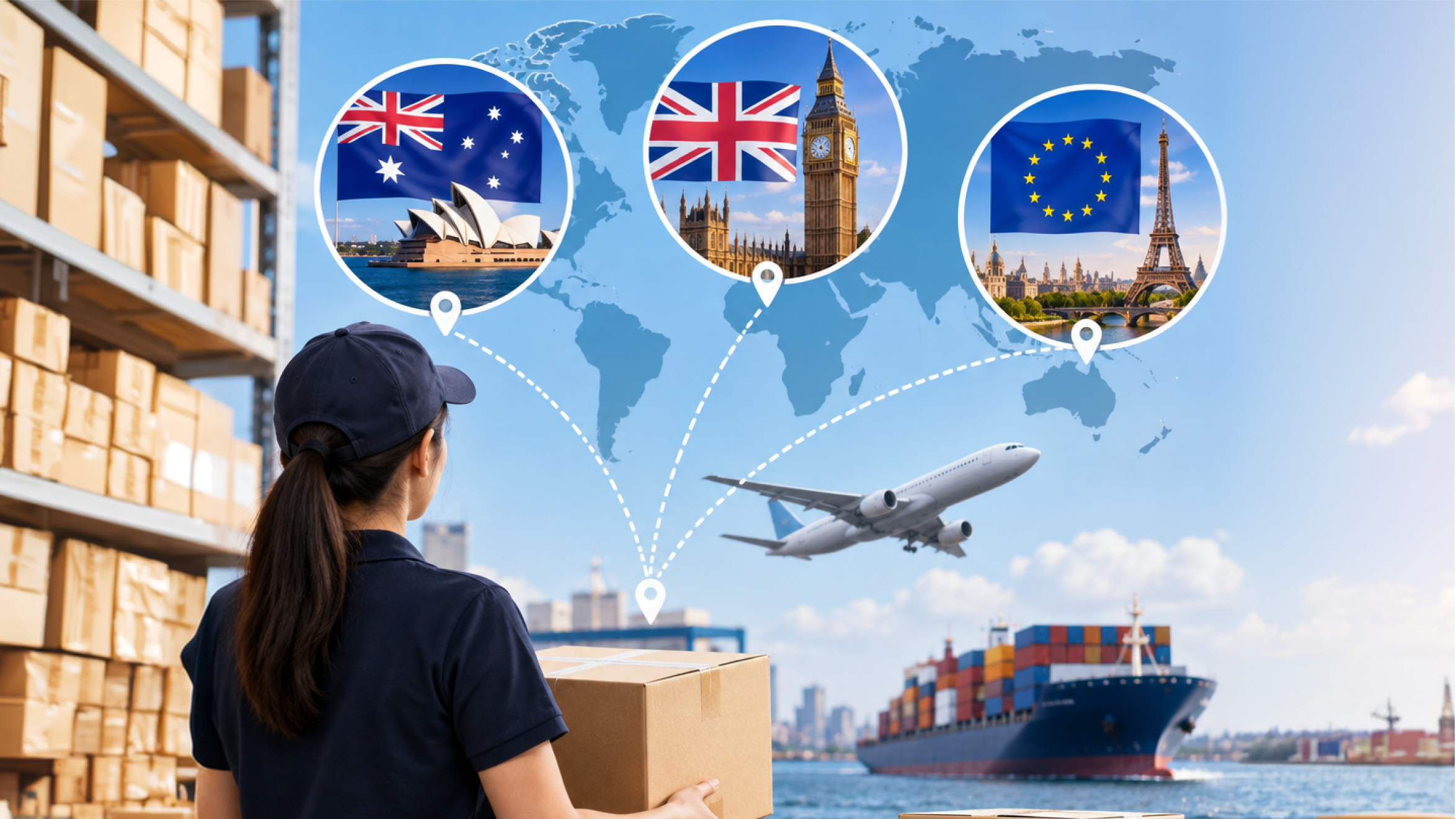
Shipping Your Orders to Australia, UK, or Europe? Here’s Everything You Need to Know
What fashion brands need to know before shipping to AU, UK, or EU
Are you a fashion brand manufacturing in China and shipping, or planning to ship, direct to customers in Australia, the UK, or Europe?
If so, you already know the headaches even if you haven't put a name to all of them yet. Where should stock actually sit before you know a market's going to work? How fast does delivery need to be before customers start abandoning carts? What's actually different about customs from one country to the next? And who tells you when something's gone wrong: your fulfilment partner, or an angry customer on WhatsApp.
This is exactly the gap a 3PL is meant to close, and it's worth understanding properly before you pick one, because the difference between a good fit and a bad one shows up in your margin every single month.
How a 3PL helps fashion brands test markets
A third party logistics provider, or 3PL, is the company that takes fulfilment off your plate. It stores your inventory, receives your orders, picks and packs them, ships them, and keeps you and your customer updated on where they are. That part is fairly standard across the industry: warehousing, pick and pack, packaging, shipping, tracking, exceptions, and billing. Most 3PLs will tell you they do all of it.
The question that actually matters for a brand manufacturing in China isn't what a 3PL does. It's where it does it from.
The instinctive move is to ship finished goods from your factory into a local warehouse (an Australian warehouse if you're selling into Australia, a UK one if you're selling into the UK) and fulfil from there. It feels safe because it's familiar. But it also means your stock takes an extra hop before it's even sellable, and you're committing money and shelf space to a market before you know whether it's actually going to convert.
The alternative is to keep inventory close to where it's made and ship directly from there. Instead of factory, then local warehouse, then customer, it's factory, then fulfilment centre, then customer, with the fulfilment centre sitting in China rather than in each destination country. That one change removes a whole leg of freight, and it means you can test Australia, the UK, and Europe from the same stock pool instead of splitting inventory (and cash) across three separate warehouses before you know which one is worth the investment.
What that actually looks like changes depending on exactly which of those three markets you're shipping into, since the rules, the costs, and what's already handled for you are genuinely different in each. That's worth walking through properly before anything else.
For more information on it, we covered more on this in our blogs. See: Why Is 3PL a Better Alternative to Dropshipping for Fashion Brands?
What's different in Australia, the UK, and Europe, and how Flowa makes it easier
Every market treats imported goods differently, and a 3PL doesn't change who's legally on the hook for any of it. What changes is how much of the groundwork is already done for you and whether you hear about a problem from Flowa first or from a customer.
Australia
Chinese-origin goods may qualify for a reduced duty rate under ChAFTA, the China-Australia Free Trade Agreement. Whether that applies depends on the origin documentation your factory produces, not something you generate yourself, and getting it wrong means paying the standard rate instead.
This is Flowa's founding corridor, and it's also where the factory relationship does the most work for you. Flowa's bilingual operations team is already talking to your factory every day for inbound goods and QA, and that's the same relationship the origin documentation runs through. It isn't a cold ask your team has to make on top of everything else; it's a conversation that's already happening. On this lane, one apparel brand saved up to A$11 per order compared with a traditional route, based on actual data from that brand; results vary by product, destination, and service level. And if a parcel is held at the border for any reason, Flowa's platform flags it before your customer notices.
For a deeper look at what these costs typically run and why they vary so much between providers, see How Much Do 3PL Costs Run for Australian Ecommerce Brands?.
The United Kingdom
The UK is treated as its own corridor, not folded into "Europe", because the rules genuinely aren't the same. Consignments valued up to £135 don't attract customs duty, but UK VAT still applies at 20%, charged at the point of sale rather than at the border. Above £135, both import VAT and duty apply once the parcel arrives.
The detail that catches brands out is who's responsible for collecting that VAT. Marketplaces like Amazon or eBay are treated as the deemed supplier and handle it themselves, but Shopify isn't a deemed supplier, so a brand selling directly through its own store is the seller of record and owes the VAT itself. Flowa can support and help administer that process, but it doesn't remove the obligation that stays with you as the seller. Where Flowa does make a difference is visibility: itemised billing means any VAT or duty related charge shows up as its own line rather than getting buried, and if a shipment is delayed at the border, you hear about it from the platform, not from a customer service ticket.
Europe
A temporary duty of €3 applies per customs declaration item on consignments valued up to €150, and it's worth understanding what "per item" actually means, because it isn't per parcel. Five identical tees sold together in one order count as a single item, so that's €3 total. A tee and a separate accessory in the same order count as two items, so that's €6. Above €150, standard duty rates apply instead.
Who actually pays it matters too. For an order where the brand, or its IOSS holder, is the declarant, the duty is the brand's cost, not something to pass on to the customer at checkout or at the door. Flowa's itemised billing means you can see exactly how many declaration items and how much duty applied to a given order rather than reconciling it after the fact, and the same proactive alerting applies here as everywhere else: a held parcel gets flagged to your team, not just to the customer waiting on it.
We've covered two of the more consequential recent changes: The Latest and Upcoming EU Customs Changes in 2026
None of the above is legal or tax advice. Confirm your specific customs, VAT, and duty obligations with your carrier or adviser.
What Flowa is quietly handling in the background
Once you're actually shipping, the day-to-day is simple on the surface: your factory sends stock to the fulfilment centre, it's live and ready to sell within 24 to 48 hours, orders sync straight from Shopify with nothing manual on your end, and dispatch happens the same day, seven days a week. What makes that actually work is everything underneath it, the parts you don't have to think about.
Inbound coordination
Someone has to talk to your factory: confirm quantities, chase a delayed shipment, and sort out a discrepancy when what arrives doesn't match what was ordered. If that someone is bilingual and already doing it daily, problems get caught before they become your problem. If it's you doing it through a translation app at 11pm, they don't.
Inventory visibility
You should be able to see, at any moment, what's incoming, what's available to sell, what's reserved against an order, and what's sitting on a QA hold, without emailing anyone to ask. For a brand with any real size or colour range, this isn't a nice to have. Sell stock you don't actually have, and you've turned a data problem into a customer service one.
The shipping decision
A parcel going from Shanghai to Sydney needs a different lane from one going to Southampton or Stuttgart. The right call depends on weight, destination, cost, and speed, and it changes often enough that reviewing it manually for every order isn't realistic. This is where AI genuinely earns its place: Flowa's platform recommends routes across 300+ lanes and flags anything risky, and your team approves before a single parcel ships. Support, not autopilot. The system narrows the decision; a person still makes it.
Quality control
Fashion has more ways to go wrong than most categories (wrong size, wrong colour, a stitching fault, a label sewn in upside down), and the cost of one bad batch reaching customers is never just the refund. It's the replacement shipping, the support time, and the review that sits on your product page for a year. A proper QA hold workflow catches this before dispatch, with photo evidence, so you're the one deciding what happens to the flagged stock instead of finding out from a complaint.
Packaging
Packaging matters more for fashion than for almost anything else, too, because the box is the last thing your brand gets to control before the product has to speak for itself. Custom packing rules, tissue paper, cards, and kitting need to be applied consistently, including on your busiest day, not just when someone remembers.
Billing
If you can't tell what you're actually being charged for (storage, pick and pack, exceptions, inbound), fulfilment costs turn into a black box that eats margin quietly. Itemised billing on a set cycle, with every exception fee needing your approval before it's charged, is what keeps that from happening.
None of this is exotic. It's the difference between a 3PL that's actually built for a brand like yours and one that's running generic pick, pack, and ship logic and hoping fashion's quirks don't matter. They do.
Why this matters even more for fashion specifically
Every one of these headaches gets sharper in fashion. You've got more variants than most categories (sizes, colours, sometimes both per style), so accuracy has to happen at SKU level, not just order level. Returns run higher when something's wrong, because customers who buy clothes online are already primed to send things back. And because the product is visual and personal, the presentation has to match the price point. A premium item that turns up in generic packaging undersells itself before the customer's even tried it on.
Speed matters differently too. A drop, a collab, a moment where an influencer mentions you: these create demand spikes measured in hours, not weeks. If your stock isn't live and ready to ship when that happens, you don't get the sale back later. It's just gone.
Where to start
If you're manufacturing in China and weighing up Australia, the UK, or Europe as your next market, or you're already in one and want to add the others without duplicating your whole setup, it's worth actually seeing the lane, the delivery time, and the landed cost for your specific product before you commit to anything. Book a call with our team and we'll walk through what your fulfilment setup actually looks like right now
Delivery times, inbound processing, dispatch speed, cost savings, and duty/VAT treatment depend on destination, parcel weight, product type, service level, cutoff times, QA hold workflows, inbound volume, and the specific rules in force in each market at the time of shipping. Not all routes, lanes, or products qualify for the same delivery window or cost outcome. Route recommendations refer to AI-evaluated shipping options; not all lanes are available for all product types or destinations. This blog is general information, not legal or tax advice; confirm your specific customs, VAT, and duty obligations with your carrier or adviser.

Common Logistical Mistakes Fashion Ecommerce Brands Make in Their First Year
The common mistakes Fashion Ecommerce brands make when building
Common Logistical Mistakes Fashion Ecommerce Brands Make in Their First Year
Starting a clothing business is the easy part. What trips up most fashion ecommerce brands isn't the design, the photos, or even the marketing spend. It's what happens after someone clicks "buy": where the stock sits, how it gets packed, who clears it through customs, and what happens when a size doesn't fit. Fulfilment problems that would be a minor annoyance for a homeware or electronics brand can sink a fashion label in its first year. A wrong-size shipment to the wrong country, a customs hold that eats the margin on an entire batch, and a bad first delivery experience that means the customer never orders again: none of these show up on a pitch deck, and all of them are avoidable. Below are seven mistakes we see repeatedly in fashion ecommerce brands' first 12 months, why they happen, and what to do instead.
Why Fashion Ecommerce Fails Differently Than Other Categories
Every new ecommerce brand deals with the same starting risks: cash flow, customer acquisition cost, and getting operations running before the money runs out. Fashion carries an extra layer most other categories don't have to think about: the product itself multiplies. A single design isn't one SKU, it's a size and colour matrix, often a dozen or more variations of the same item. Get the split wrong, and a brand ends up sold out in the sizes people actually want while sitting on stock in the ones they don't. Across all industries, roughly one in five new U.S. businesses closes within their first year (U.S. Bureau of Labour Statistics); fashion's extra layer of size, colour, and trend risk stacks on top of that baseline.
The Multiplier Problem
For a small clothing business running lean, that multiplier effect shows up everywhere: in the warehouse space needed to hold every size run, in the time it takes to pick and pack a single order correctly, and in the cash tied up in stock that hasn't sold yet. Add seasonality and trend risk on top (a colourway that's dead in six weeks, a size curve that shifts between drops), and the inventory problem compounds faster than it does for a category selling one version of one product.
Where Order Fulfilment Fits In
Most of the mistakes below trace back to how order fulfilment gets set up in the first place, often before a brand has shipped a single order. For the fundamentals of how that process actually works from checkout to delivery, our guide How Ecommerce Order Fulfilment Works: From Checkout to Delivery for Growing DTC Brands is worth reading alongside this one (link to go live once the URL is confirmed).
Mistake 1: Choosing Dropshipping Because It Looks Risk-Free
Dropshipping is the default first move for a lot of new clothing brands, and it's easy to see why: no inventory to buy, no warehouse to manage, no upfront cash tied up in stock. For a small clothing business testing an idea, that looks like the safe option.
Why It Happens
The pitch is genuinely appealing when the alternative looks like a five-figure inventory commitment before a single sale is confirmed. Nobody wants to be the founder holding 400 unsold units in a size nobody ordered.
What It Actually Costs
The trade-off shows up later: little to no quality control before the item reaches the customer, long and unpredictable shipping times that fashion buyers won't tolerate twice, and margins that get squeezed thin once advertising costs are factored in. Fashion buyers in particular are unforgiving about fit, fabric feel, and finish, all things a brand can't verify when it never touches the product. A brand can hold onto a sub-par delivery experience exactly once with a new customer before that customer goes elsewhere.
We've written a full comparison of the trade-offs in 4 Alternatives to Dropshipping for DTC Brands, and a longer breakdown in Dropshipping vs 3PL Fulfilment: The Ultimate Guide for Australian Fashion DTC Brands for brands weighing up owned inventory against a fulfilment partner.
Mistake 2: Underestimating What Fulfilment Actually Costs
Founders price fulfilment off the number they see on a shipping calculator and assume that's the whole story. It rarely is.
The Hidden Line Items
Pick and pack fees, storage costs once stock sits longer than expected, exception fees for address corrections or failed deliveries, and packaging costs all add up outside the headline shipping rate. (For illustration only, not a real client's figures: a brand budgeting $14 per order for shipping alone can find the fully-loaded fulfilment cost closer to $22 once storage, packing labour, and exception handling are added in.)
Why Comparing Quotes Gets Confusing
Part of the problem is that quotes from different shipping companies aren't always structured the same way. One quote might bundle storage into the per-order rate; another might list it separately and look cheaper until the invoice arrives. Reading a fulfilment quote line by line and asking what isn't included matters more than comparing the headline number alone.
For a deeper look at what these costs typically run and why they vary so much between providers, see How Much Do 3PL Costs Run for Australian Ecommerce Brands?.
Mistake 3: Treating Customs and Duties as an Afterthought
International rules change often enough that what worked for a shipment six months ago can trigger a hold today. For a brand manufacturing in China and shipping directly to customers in Australia, the UK, or Europe, that's not a hypothetical: duty thresholds, de minimis rules, and documentation requirements differ by market and shift on their own timelines. We've covered two of the more consequential recent changes: The Latest and Upcoming EU Customs Changes in 2026 and What US Tariffs on Australia Mean for Brands Manufacturing in China.
What Goes Wrong Without a Plan
A parcel held at customs isn't just a delayed delivery. It's a customer support ticket, a refund request, and often stock that never generates revenue at all. Brands that treat customs as something to figure out after the first shipment gets stuck tend to repeat the same mistake at the next market they expand into.
What to Check Before Expanding
Before shipping to a new market, it's worth confirming current duty thresholds, whether the destination requires specific labelling or fibre-content documentation, and how the chosen carrier or fulfilment partner handles customs clearance. (This is general information, not legal or customs advice. Rules vary by market and change without much notice, so confirm current requirements with a licensed customs broker or the relevant government authority before shipping.)
Mistake 4: Launching Without a Returns Plan
Fashion has a returns problem other categories mostly don't. Fit is subjective, sizing isn't standardised across brands, and a customer ordering online can't try before they buy. Clothing is the most-returned online purchase category in the U.S., with 25% of shoppers reporting a clothing return in the past year against a roughly 20% average across ecommerce overall (Statista, 2025). Brands that build a launch plan around the sale and not around what happens when the item comes back are solving half the problem.
Why This Gets Skipped
Returns are expensive and unglamorous, so they tend to get pushed to "we'll figure it out later". Later usually arrives in week two, once the first size-exchange requests start coming in and there's no process for handling them.
What a Basic Plan Covers
At minimum, a first-year brand needs a clear returns window and policy stated before checkout, a defined process for where returned stock goes and how it gets checked back into inventory, and a decision on who absorbs return shipping cost. None of this needs to be complicated in year one, but it does need to exist before the first return request lands rather than after.
Mistake 5: Skipping Quality Control Before Items Ship
When margins are tight, quality checks can feel like a cost to cut. It's the wrong place to cut it.
The Real Cost of Skipping QC
An item that ships with a loose seam, a mismatched size label, or a colour that doesn't match the product photo doesn't just cost a replacement. It costs a review, a refund, and often a customer who won't order again. For a fashion brand still building its reputation, a handful of bad first impressions can outweigh a lot of good marketing.
Building QC Into the Process
Catching problems before they leave the warehouse, not after a customer complains, is the difference between an occasional refund and a pattern of them. That means a checkpoint between manufacturing and shipping where items are actually inspected against spec, not just counted and boxed.
Mistake 6: Guessing at Size and Colour Splits
Ordering inventory without solid data on how sizes and colours actually sell is one of the most common and most expensive mistakes in fashion ecommerce.
Why the Guess Is So Costly
Order too much of a size that doesn't move and it becomes dead stock taking up paid warehouse space. Order too little of a size that does move and the brand is out of stock on its best-seller during the exact window when demand is highest, often the first few weeks after a launch or restock. Both outcomes hit cash flow, just in different directions.
What Better Planning Looks Like
Brands that get this right start with a conservative first order, watch actual sell-through by size and colour in real time, and adjust the next production run based on data rather than a guess made months before launch. Visibility into what's actually selling, not just what's in the warehouse, is what makes that adjustment possible.
Mistake 7: Packaging That Costs More Than It's Worth
Unboxing content looks great on social media, which is exactly why so many new brands over-invest in packaging before they've proven the product sells.
Where the Line Sits
Branded packaging matters for a fashion brand's first impression, but custom boxes, tissue paper, and inserts all add cost and weight, and weight adds shipping cost on every single order, not just the first one. What feels like a small per-unit packaging upgrade in a spreadsheet becomes a meaningful margin hit once it's multiplied across a full year of orders.
A More Sustainable Approach
The brands that get this right treat packaging as something to scale into, not launch with at full spec. Starting with a simpler, lighter package and upgrading once order volume and margins support it (ideally through a sustainable packaging partner rather than one-off custom runs) keeps the cost proportional to the stage the business is actually at.
What These Mistakes Have in Common
Looked at together, none of these seven mistakes are really about fashion ecommerce being harder than other categories in the abstract. They're about the same underlying gap: not having visibility into inventory, cost, and compliance until something has already gone wrong. A brand that can see its size and colour sell-through in real time doesn't guess at reorders. A brand that understands its landed cost before a customer checks out doesn't get surprised by an invoice. A brand with a fulfilment partner who flags a customs change before it ships doesn't find out at the border.
How FlowaGlobal Helps Brands Avoid Them
We're not the right fit for every fashion brand at every stage. A brand still validating demand with a handful of pre-orders probably doesn't need a full fulfilment platform yet, and we'd tell you that on a call rather than sign you up anyway.
Where we do help is with the brands past that point: manufacturing in China and shipping direct to customers in Australia, the UK, or Europe, and ready to move off guesswork. FlowaGlobal combines fulfilment out of our Shanghai-based facility with an order and warehouse management platform, so a brand can see real sell-through by size and colour, understand landed cost before a customer checks out, and get ahead of customs and duty changes instead of finding out about them at the border. It's the same visibility gap behind all seven mistakes above, solved with one system instead of seven separate fixes.
If your first year (or your next product drop) is running into any of these, book a call with our team and we'll walk through what your fulfilment setup actually looks like right now and where it's costing you more than it should

Book a call and get your lane plan, lead time estimates, and onboarding timeline — all in one conversation.