Lead Time in Fashion: How Clothing Brands Can Shorten the Gap Between Factory and Customer
Every week your finished stock spends at sea or waiting at a warehouse is a week it can’t be sold. Here’s what fast-moving DTC brands like Shein and boohoo do to cut lead time, and how brands making in China can shorten the gap.
Ecommerce Growth
October 9, 2026

Picture your summer drop. The linen sets are finished, packed and sitting at the factory in Guangzhou in early October. Perfect timing for an Australian summer.
Then the waiting starts. A week for the container to fill. Weeks at sea. A few days stuck at the port. Another week while your local warehouse gets round to checking it in. By the time the first order ships, it's well into November, and the customers who wanted linen in October have already bought it from someone else.
Nothing went wrong, exactly. That's just how long it takes. And that's the problem.
Why Lead Time Hurts Fashion Brands More Than Other Products
Lead time is the time between placing an order with your factory and that product reaching your customer. In fashion, a long lead time costs more than in most categories because clothing has a short selling window. Every week your finished stock spends in transit, waiting to be checked in or waiting to be shipped is a week it can't be sold.
A phone case sells the same in March as it does in July. A linen set doesn't. Fashion runs on seasons, trends and drops, so the value of your stock starts dropping the day it's finished.
The numbers back this up. According to NYU Stern's industry data (January 2026), listed apparel companies hold inventory worth about 19% of their annual sales. Consumer electronics companies, the category phone cases sit in, hold about 14%. Put simply, a clothing business carries roughly 70 days of stock for every 50 days an electronics business carries, so its cash is tied up longer and its inventory turnover is slower.
And when fashion stock misses its window, it often isn't sold at all. The European Environment Agency estimates that 4% to 9% of all textile products put on the European market are destroyed before they're ever used, and names fast-changing trends and seasons as one of the main reasons. No surprise, then, that nearly two-thirds of US apparel executives told McKinsey that speed to market and in-season reactivity are top priorities.
Long lead times hit you in three places:
- Missed sales. Stock arrives after demand has peaked, so it gets marked down.
- The wrong sizes. You had to guess your size split (how many of each size to order) months ago. Now you're out of mediums and sitting on extra larges.
- Slower inventory turnover. The longer stock sits between factory and customer, the longer your cash is tied up before it can fund the next collection.
It helps to think of fashion lead time in two halves. Production lead time is how long the factory takes to make your order. The second half starts when production ends: shipping, customs, receiving, checking, picking and packing. That second half is often the bit brands can change fastest.
How to Optimise Lead Time: Lessons From Fast Fashion
The fastest online-first fashion brands treat speed to market as part of the business model. Shein and boohoo are the two best-documented examples, and both sell direct to consumers online. Here's what they do to cut lead time.
Start small, then reorder from real sales data
Shein says it produces just 100 to 200 pieces of any new product at launch, then restocks the styles that sell. boohoo built its early growth the same way with "test and repeat": new styles were reportedly bought in runs of 300 to 500 units, with repeat orders on the ones that sold.
Shein also shares its sales data with suppliers. According to Rest of World, suppliers can see current sales and are told to "stock up more if you sell well". You don't need custom software to do a version of this. Weekly sell-through (the share of each style that's actually sold) by size and colour, shared with your factory, means reorders start sooner and get the size split right.
Ask for smaller, faster runs, and pay on time
The same report found Shein asks suppliers for as few as 100 items in as little as 10 days, against more typical fast-fashion minimums of 2,000 items in 30 days. Part of how it gets that urgency is simple: it pays on time, so factories are happy to squeeze its reorders in.
Most smaller brands won't get Shein-sized flexibility, and minimum order quantities (MOQs) of a few hundred per style are normal. But it's often possible to negotiate a smaller first run, or split one order into staggered deliveries.
Keep production and stock close together
boohoo leaned on proximity: more than half of its garments were made in the UK, so reorders could reach its warehouse in days. Shein got the same result the other way round. It kept stock in China, next to production, and shipped each order direct to customers abroad. For a brand already making in China, the Shein route is the realistic one. Moving where your stock sits is a much smaller decision than moving production.
Make fast dispatch part of the offer
boohoo let customers order up to midnight for next-day delivery, including Sundays. A late cut-off (the latest time an order can be placed and still go out that day) shaves days off the customer's wait without touching production at all.
Put together, the logic is simple: commit to less, react to real sales, and cut every day of waiting between "finished" and "delivered". That last part is where a brand manufacturing in China can win back the most time. Here's how.
Ship Orders Direct Instead of Waiting on Bulk Freight
The biggest single delay for most China-made brands is the bulk shipment itself. The sea freight vs air freight debate usually comes down to cost per kilo. Sea is cheaper, so most brands default to it, but it adds weeks at sea plus port handling and a second round of receiving. Air is faster but costs more per kilo in bulk.
There's a third option, and it's the one Shein built its model on. Instead of moving bulk stock anywhere, you keep it near the factory and send each order individually by air when a customer buys it. You only pay to move what's already sold.
Make Stock Sellable Within Days of Arrival
Getting stock to a warehouse isn't the same as being able to sell it. Receiving, counting and loading it into the system can quietly add days at a busy local warehouse. If a drop lands on a Friday and isn't live until Thursday, that's a week of launch momentum gone.
Catch Quality Problems Before Stock Ships
A quality problem is a lead time problem. If a faulty batch reaches customers, you lose the sale, pay for the return, and then wait all over again for replacement stock. When stock is checked in Melbourne or Manchester, a fault means another round trip to the factory. Checked near the factory, it can be fixed and back on the shelf far sooner.
Dispatch Orders the Same Day They Come In
Once a customer has paid, every hour before dispatch adds to their wait. Next-day dispatch might not sound like much, but it stacks on top of transit time. Shoppers expect speed around a drop, and same-day dispatch gives you room to absorb a slower delivery route without the customer noticing.
Flag Delivery Delays Before Customers Notice
Some delays can't be avoided. A customs hold or a failed delivery attempt happens to everyone. What matters is who finds out first, because a customer who has to chase you is less likely to buy again.
Handle Returns Without Building Up Stock Somewhere Else
Fashion has more returns than most categories. The European Environment Agency estimates that one in five garments bought online is sent back, and that roughly a third of returned clothing ends up destroyed. Brands selling cross-border often end up with a separate returns provider in each market, where stock builds up out of sight, gets checked late, and never makes it back into sellable inventory.
When Local Stock Still Makes Sense
Shipping direct from China isn't the right answer for every brand. Local stock might still suit you if:
- You need next-day delivery in one market as a core part of your offer.
- Your products are heavy or bulky, so sending each order individually by air costs more than it saves.
- Your demand is steady and predictable, with long-life basics rather than seasonal or trend-led ranges.
- Most of your sales are wholesale or retail, rather than direct to consumer.
Plenty of brands land in between. They keep proven bestsellers in a local warehouse and run new styles, drops and new markets direct from China, moving stock locally once a style has proved itself. It's boohoo's test-and-repeat logic, applied to where your stock sits. If you need to move bulk replenishment into a local warehouse or Amazon FBA, our freight forwarding service can handle that alongside direct orders.
How FlowaGlobal Helps Fashion Brands Shorten Lead Times
Flowa can't make your factory faster. But it can make the production-side lessons easier to act on, and it takes over the wait after production ends.
Working with your factory
Flowa's bilingual operations team works as the go-between with your supplier. We talk to your factory in Chinese every day about inbound stock, so passing on a reorder, chasing a late delivery or flagging a quality problem goes through people already on the ground, not through you and a translation app at midnight. And because the platform shows stock levels for every SKU (each size and colour of each style), you can see what's selling and reorder sooner.
Fast delivery without the cost of local warehouses
Your stock sits in our Shanghai fulfilment centre, and each order ships direct on optimised air lanes with a local carrier for the last mile. Customers typically receive it in 3 to 7 days, depending on destination, parcel weight and service level. One stock pool serves Australia, the UK and Europe, so you're not splitting inventory across three countries before you know which one is buying. See how it works by market on our global fulfilment from China page.
Let's be honest about the trade-off. If the only goal is the fastest possible delivery, stock in a local warehouse wins. But you pay for it upfront: bulk freight, a warehouse in every market, and cash tied up in stock bought months before you know what will sell. At the other end is dropshipping. It looks cheap because you hold no stock, but you give up control over quality and delivery times, and per-order costs can end up higher once you add up what the supplier charges to pick, pack and ship one item at a time. We've compared the two in Why Is 3PL a Better Alternative to Dropshipping for Fashion Brands?
Shipping direct with Flowa sits in the gap between them. You hold your own stock, so you control quality and packaging. You don't pay for local warehouses before a market has proved itself. And your customers still get their order in about a week.
From Shanghai to your customer's door
Once stock reaches our Shanghai dock, every unit is barcoded and goods typically go live within 24 to 48 hours, depending on QA holds and inbound volume. Your Shopify store syncs automatically, so the moment stock is available, it's sellable.
Our inbound QA service checks colour, sizing, stitching and labelling on arrival, with photo evidence on every issue we find. Flagged stock goes on QA hold, so you decide what happens to it, and faults can be reworked on the factory floor instead of refunded after delivery.
Orders are picked, packed and shipped the same day, seven days a week, for orders received before cut-off, with your packing rules applied automatically. The platform flags delays, failed deliveries and customs holds as they happen, so your team can act before the customer gets in touch. Our AI recommends shipping routes across 300+ evaluated lanes (not every lane suits every product or destination), and your team approves before anything ships. See how it fits together on our platform page.
Returns are handled the same way. You decide your returns policy and what to charge customers. Flowa takes care of the rest, from the customer sending an item back to it being processed, so you don't need to pile up returned stock in another warehouse or manage a separate returns partner in every country.
A quick example
Let's go back to that summer drop. With Flowa, the linen sets go to Shanghai instead of waiting for a container. They're checked on arrival, live within a couple of days, and the first orders reach customers in Sydney, London or Berlin in about a week. Here's how the two routes compare. The timings are illustrative, not from a specific brand, and real numbers depend on your factory, route and markets.
The difference isn't the factory. It's everything that happens after it. That's how to reduce lead time when you manufacture in China.
New to Flowa? Start with What Is Flowa Global? How China-Direct Fulfilment Works, and What Makes Us Different. If you sell apparel into Australia, our 3PL for Australian fashion brands page goes deeper, and the full onboarding flow is on our process page.
Want to see where your days are going? Book a call with the Flowa team and we'll map it out with you. You can also start with a low-risk paid trial, and the fee converts to account credit on your first invoice once you go live.
Read More
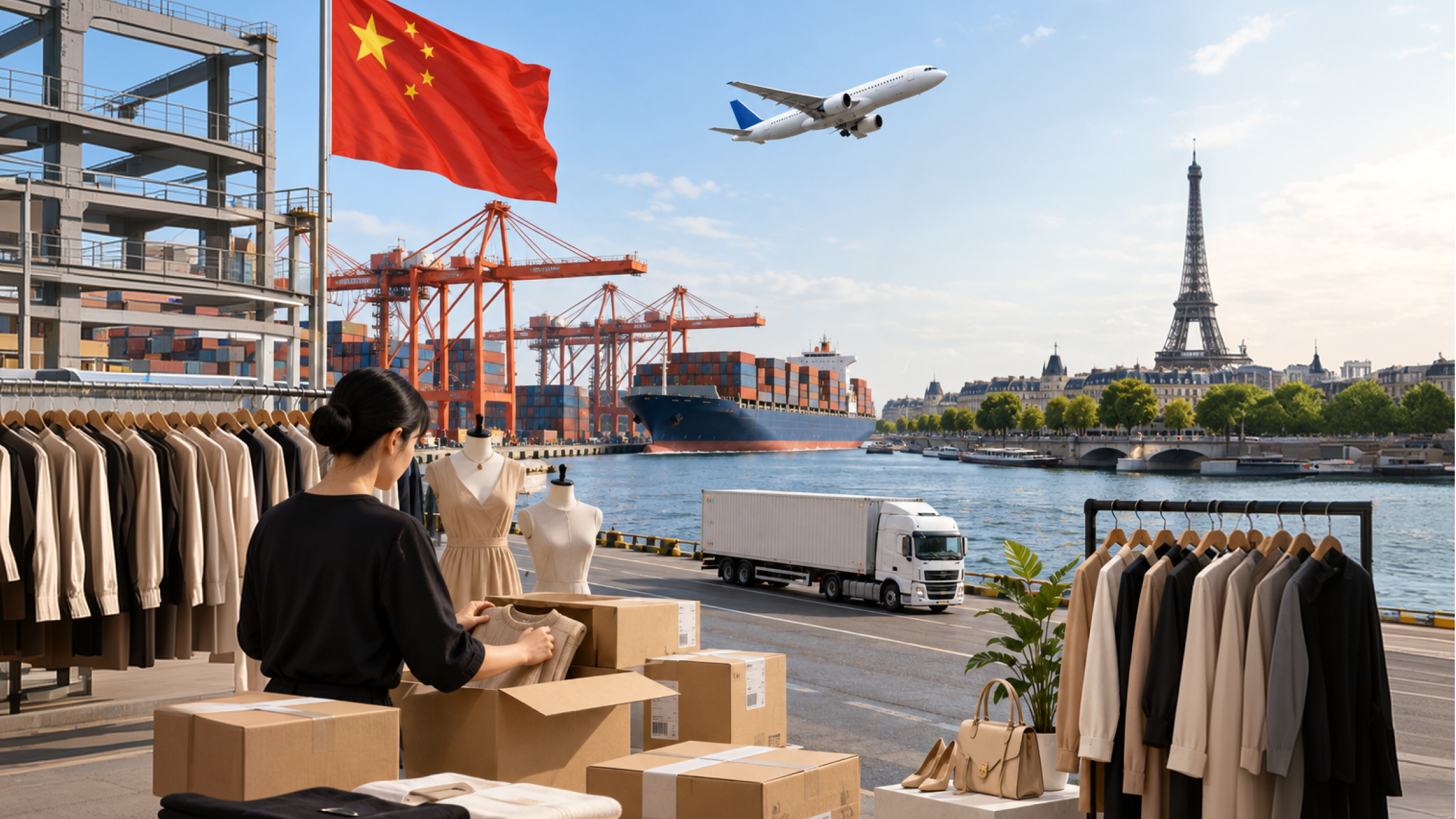
Global 3PL fulfilment with Flowa: a guide for European fashion DTC brands shipping from China
How European fashion brands that manufacture in China can use Flowa to fulfil EU and worldwide orders from one stock pool, with IOSS, the €3 per-item duty and returns explained.
Your jackets are cut and sewn in Guangdong. Your customers are in Lyon, Milan and Rotterdam, and increasingly London and Melbourne. Meanwhile, your stock is on a ship to a warehouse in the Netherlands, waiting to be checked in before anyone can buy it.
That is the default supply chain for a European fashion brand that manufactures in China. It works, but every unit crosses the world twice before it reaches a customer outside the EU, and every new style is committed to a container before you know if it sells. This guide explains the alternative, what changed at the EU border in 2026, and how Flowa runs it from Shanghai.
What is global 3PL fulfilment?
A 3PL (third party logistics provider) stores your stock, picks and packs your orders, and ships them to your customers. Most European brands already use one: a warehouse in the Netherlands, Germany or Poland offering ecommerce fulfilment in Europe by road. Global 3PL fulfilment moves that partner next to your factory instead, and ships each order by air to the destination country, where a local carrier delivers it.
Flowa is a global 3PL built this way. Its fulfilment centre is in Shanghai, close to the factories its brands already use, and it ships to customers across the EU and more than 100 countries. With a regional warehouse, you ship stock first and sell later. With Flowa, you sell first and ship each order as it comes in.
Why China-based fulfilment makes sense when your clothes are made there
For EU customers, an EU warehouse often works well. The problem starts with everyone else.
Brexit turned the UK into an export
A parcel from Rotterdam to Manchester is now an EU export and a UK import. If the goods were made in China, they have crossed customs twice. Shipped direct from China, that order crosses one border.
Every non-EU market adds a second journey
Stock that sailed from China to Europe and then flies on to Australia or Switzerland has travelled around the world for a customer who was a single flight from your factory.
New styles tie up cash before they prove themselves
Every new SKU sent to Europe means committing stock weeks before it goes on sale. Your inventory spends weeks at sea. So does your cash.
Fulfilling from where your clothes are made fixes all three: one stock pool, close to production, reaching the EU and the rest of the world in one journey per order. That is the model Flowa is built around.
Where it doesn't fit: if almost all your demand is in one EU country and your range rarely changes, a regional warehouse will usually serve you well, and we'd tell you so. Flowa earns its place when you sell into several markets, launch often, or want to test new styles without shipping bulk stock first.
How 3PL fulfilment works for European fashion and DTC brands
Here is the set-up for a European brand working with Flowa:
- Your factory delivers finished goods to Flowa in Shanghai, usually a short truck journey rather than a sea voyage. Flowa's bilingual team coordinates with your supplier.
- Your Shopify store stays as it is. Orders sync to Flowa automatically, whether the customer is in Paris, Dublin or Sydney.
- Flowa picks, packs and flies each order to the destination country, then hands it to a local carrier for the last mile.
- Customs is handled per parcel, not per container. For EU orders, that is where IOSS and the per-item duty come in (see below).
Most established brands don't switch overnight, and Flowa doesn't ask them to. The common pattern is hybrid: hero SKUs stay in the existing EU warehouse, while new styles, long-tail sizes and non-EU markets ship from Flowa in China.
For example, a brand might keep its core denim range in its Dutch warehouse and launch a summer capsule from Shanghai. The capsule goes live to customers in France, the UK and Australia on the same day, from the same stock. If it sells, the brand reorders from the factory next door. If it doesn't, there's no stranded stock in Europe to mark down.
Why fashion DTC brands need strong fulfilment and quality control
A single style can run to dozens of size and colour combinations, so a mis-pick is one wrong label away. And under EU consumer rules, online shoppers generally have 14 days to return a purchase without giving a reason. Every wrong size or faulty seam that reaches a customer is a return you could have avoided, plus shipping both ways.
That is why the best place to catch a problem is before the parcel leaves. A defect found at the factory is a fix. The same defect found in Munich is a refund and a review. It is also why Flowa was built for apparel specifically, with checks, packing rules and stock tracking designed around sizes, colours and garments.
What Flowa handles behind the scenes
Stock ready to sell within days
Every item is scanned on arrival rather than estimated by weight, and receiving is recorded on camera. Stock is typically live within 24–48 hours of arrival (depending on QA holds and inbound volume), so a capsule or drop can go on sale the week it lands.
Quality checks before orders ship
Garments are checked at the factory side. Where you specify it, Flowa checks colour, sizing, stitching and labelling, including the fibre composition labels EU rules require, holds anything that fails and sends you photo evidence. Faulty stock goes back to the factory for rework. You decide what happens to held stock, and compliance responsibility stays with your brand.
Branded packing on every order
Your mailers, tissue, inserts and kitting are applied to every order. Rules can be set per destination, so French and German customers can each get inserts in their own language.
Same-day dispatch and local delivery
Orders received before the daily cut-off ship the same day and typically arrive in 3–7 days, depending on destination, parcel weight and service level. A local carrier handles the last mile, labels carry no Chinese text and tracking shows the local carrier, with options varying by destination.
IOSS and the €3 per-item duty: what European brands need to know
What is IOSS? The Import One-Stop Shop lets sellers collect EU VAT at checkout on consignments worth up to €150, so the customer isn't charged at the door. Your IOSS number travels with each parcel's customs data, telling EU customs the VAT is already paid. EU-established businesses can generally register for IOSS in their own member state.
What is the €3 per-item duty? From 1 July 2026 to 1 July 2028, the EU charges €3 per item on consignments worth up to €150 (Council Regulation (EU) 2026/382). Two details matter for fashion brands:
- "Per item" means per customs declaration item, not per garment. Goods with the same tariff classification, description and origin count as one item. Five identical T-shirts cost €3; a T-shirt and a belt cost €6. Check how your carrier declares goods, as this can change the count.
- When your brand or its IOSS set-up is the declarant, the duty is your cost, not your customer's. Build it into your pricing.
Where Flowa fits: Flowa prepares shipping data to fit your IOSS set-up; your brand stays responsible for its VAT and duty obligations. This is general information, not legal or tax advice.
One view of your orders, stock and exceptions
Flowa's platform puts every order, stock level and exception on one screen:
- Stock by state: incoming, reserved, available and on QA hold, for every SKU, size and colour.
- Orders you can still change: edit or cancel orders before they reach the warehouse floor, and approve flagged orders before they are picked.
- Exceptions surfaced early: delays, failed deliveries and customs holds are flagged before your customer has to ask.
- Routing your team approves: Flowa's AI recommends a route and flags risk. Your team approves.
- Clear billing and returns: charges are itemised, exception fees need your approval, and Flowa runs returns to the policy you set.
What to look for in a 3PL partner for global ecommerce growth
Whether you choose Flowa or not, these are the questions worth asking any 3PL before you hand over your stock. Here's how we'd answer them.
Where are quality problems caught?
Flowa: Before anything ships. Garments are checked at the factory side, so a wrong size or a loose seam gets fixed in Shanghai instead of turning up in your customer's returns.
How is stock counted?
Flowa: One item at a time. Every piece is scanned when it arrives, and receiving is recorded on camera, so the numbers on your screen match what's actually on the shelf.
Can you change or hold an order after it's placed?
Flowa: Yes. You can edit or cancel an order right up until it reaches the warehouse floor, and anything flagged waits for your go-ahead before it's picked.
How does their shipping data fit your IOSS set-up?
Flowa: We prepare it to fit the set-up you already have. The VAT obligation stays with your brand, but the paperwork shouldn't be a headache.
Does delivery feel local?
Flowa: It should. A local carrier handles the last mile, the label has no Chinese text, and your customer tracks the parcel with a carrier they recognise.
Do you have to close your current warehouse?
Flowa: Not at all. Most brands keep their bestsellers where they are and use Flowa for new styles and new markets.
What don't they do well?
Flowa: We're not the right fit for heavy goods, liquids or batteries. And Europe is our newest market, so we're still building our customer base there. We'd rather you hear that from us.
How FlowaGlobal supports european fashion DTC brands with China-based global fulfilment
Flowa Global is a cross-border fulfilment and control platform built for fashion brands that manufacture in China. It holds your stock in Shanghai and ships each order direct to customers across the EU and more than 100 countries, from one stock pool and one platform. For a European brand, that means:
- No detour through Europe for UK or Australian orders.
- Garments checked before they ship, not refunded after delivery.
- A local delivery experience, with packing rules set per market.
- The option to run alongside your existing EU warehouse.
We'll be candid: Europe is Flowa's newest market, and our customer base there is still growing. Ask us how we'd run your first EU orders and what we'd measure.
Getting started is low-risk. Most brands are live within 2–3 weeks of their first call, depending on integration and SKU count. Connect your Shopify store, start with a pilot using samples or pre-orders, and there's no long lock-in.
Frequently asked questions
What is a third party logistics provider?
A third party logistics provider, or 3PL, is the team that looks after your orders once they're placed. They store your stock, pick and pack each order, and ship it to your customer, so you don't have to run a warehouse yourself.
Can a 3PL in China fulfil orders for EU customers?
Yes. A 3PL in China, like Flowa, flies each order to the EU country it's going to, and a local carrier delivers it from there. With IOSS in place, EU VAT is collected at checkout on orders up to €150, so your customer has nothing extra to pay when the parcel arrives.
Do EU customers pay the €3 duty at the door?
Not if your brand, or your IOSS set-up, is the one declaring the parcel. In that case the €3 per-item duty is a cost to your brand, so it's worth building into your prices.
Do I have to close my EU warehouse to use Flowa?
No. Most brands keep their bestsellers in their EU warehouse and use Flowa for new styles, long-tail stock and markets outside the EU. You can start small and grow from there.
How long does delivery from China to Europe take with Flowa?
Usually 3–7 days. The exact time depends on where the parcel is going, how much it weighs and the service level you choose.
New to Flowa? Start with What Is Flowa Global?. Based elsewhere? Read our guides for Australian fashion brands. The full onboarding flow is on our process page, or book a call with the Flowa team and we'll map out your markets with you.
Why Is 3PL a Better Alternative to Dropshipping for Fashion Brands?
Looking for an alternative to dropshipping? Learn how 3PL fulfilment gives fashion brands greater control without local warehouses.
Summary: Dropshipping can help fashion brands test an idea, but it offers limited control over inventory, product quality, packaging and delivery. For brands manufacturing in China, a 3PL provides a way to own inventory and manage fulfilment without immediately setting up warehouses in every market.
Cross-border demand has created a significant opportunity. According to DHL, 70% of shoppers worldwide buy from retailers in other countries. However, customers have clear expectations once they reach checkout. DHL also found that 81% will abandon a purchase if their preferred delivery option is unavailable.
For fashion brands, delivery is only one part of the experience. Customers also expect the correct size, colour and style to arrive in good condition and with the presentation shown online.
That becomes difficult when a dropshipping supplier controls the stock, checks, packaging and dispatch process.
Wanting more control does not mean bringing fulfilment in-house or opening warehouses in every market.
This is where a 3PL provides another route. You own the inventory and decide how it should be checked, handled and packed, while the provider manages receiving, storage and dispatch.
For brands manufacturing in China, the inventory can remain close to production and serve customers across supported markets. This gives the brand greater control without allocating inventory or paying for warehouse space in each country before demand is proven.
This article looks at why a 3PL is a better alternative to dropshipping for fashion brands and the commercial situations where the model becomes especially useful.
For a detailed explanation of how the two models work, read our separate guide to dropshipping vs 3PL fulfilment.
Where a 3PL makes the difference
The advantage of using a 3PL is not limited to storing and dispatching inventory. It gives fashion brands greater control over the operational details that shape the customer experience.
That includes knowing which variants are ready to sell, checking products before dispatch, applying consistent packaging rules, preparing stock for launches and serving multiple markets from one inventory pool. The following areas show where that additional control matters most.
Gain more control without managing fulfilment yourself
The biggest change when moving from dropshipping to a 3PL is not simply where the parcel is packed. It is who controls the decisions behind the order.
Under dropshipping, the supplier controls the inventory and fulfils orders through its own process. Your brand sells the product but may have limited influence over what happens between checkout and delivery.
With 3PL fulfilment, the inventory belongs to your brand. The provider carries out the physical work according to your agreed requirements.
Your brand can decide:
- Which units are available for sale
- What should be checked when inventory arrives
- Which products should be placed on hold
- How orders should be packed
- Which inserts or labels should be included
- Which supported delivery route should be used
- What should happen when an order is delayed
You gain greater control without hiring warehouse staff, leasing storage space or building an internal fulfilment operation.
This is why a 3PL is a stronger alternative for fashion brands that want more control without managing fulfilment themselves.
Know what is ready to sell
Fashion inventory becomes complicated quickly.
One style may have several sizes and colours. A brand with ten designs, five sizes and four colours is not managing only ten products. It may be managing 200 individual variants.
A combined stock total cannot show whether the sizes customers want are available or ready to sell.
A suitable 3PL platform should show which units are:
- Incoming
- Available
- Reserved
- On hold
This gives the brand a clearer view at SKU and variant level.
For example, the platform may show that a black dress is available in medium but running low in small. It can also separate sellable inventory from units waiting for inspection or another decision.
This visibility supports better replenishment planning. Instead of ordering more stock based on a combined total, the brand can see which sizes and colours are selling and which are not.
For a variant-heavy fashion range, this can help reduce stock-outs in popular sizes and excess stock in slower-moving variants.
Catch specified problems before dispatch
A product problem becomes more expensive at every stage of its journey.
If an incorrect label is found near the factory, the affected units may be held and corrected before dispatch. If the same problem is discovered after delivery, it can create a refund, return shipment, support request and poor review.
A China-based 3PL can complete specified inbound checks when products arrive from the factory.
Depending on the service agreed, these checks may cover:
- Size
- Colour
- Stitching
- Labelling
- Visible defects
- Packing requirements
If a specified problem is found, the affected units can be placed on hold while the brand decides whether they should be reworked, returned to the factory or removed from sale.
The 3PL does not replace the factory’s production quality process. It provides another control point before the product begins its international journey.
For fashion brands, identifying a problem at this stage is far better than finding out through a customer complaint.
Keep packaging consistent
When fulfilment remains with the supplier, packaging options may be limited or applied inconsistently.
One order may include the correct insert, while another uses a different mailer or arrives without the intended presentation.
A 3PL allows packing rules to become part of the fulfilment process.
These rules may cover:
- Labels
- Stickers
- Thank-you cards
- Promotional inserts
- Product bundles
- Gift packaging
- Other presentation requirements
This is particularly important for premium fashion and accessories brands, where packaging supports the value and positioning of the product.
Every parcel should look and feel as though it came from the same brand.
Prepare stock before demand arrives
Fashion demand does not always build gradually.
A creator partnership, seasonal collection or product drop can generate a sharp increase in orders within a short period. The brand may spend weeks building interest, but the strongest sales window can last only a few days.
If inventory is still moving to an overseas warehouse or waiting to be manually recorded, the brand may miss that window.
Holding stock with a 3PL creates a shorter path between production and sale.
This helps drop-led brands prepare their inventory before a launch and begin fulfilment as soon as orders arrive.
Use one stock pool across markets
Expanding internationally creates an inventory allocation problem.
A brand may know that customers are interested in Australia, the UK and Europe. It may not know how much of each size and colour every market will need.
Sending stock to separate local warehouses requires that decision to be made in advance.
If demand does not match the forecast, one warehouse may run out of a popular size while another holds units that are not selling. Moving stock between locations creates another cost and another delay.
A 3PL offers a different structure.
The inventory can remain in one managed stock pool until customer orders determine where it needs to go. Instead of assigning every unit to a country in advance, the brand can dispatch it to a supported destination after the sale.
This is especially useful for brands entering a new market without enough local demand to justify dedicated warehousing.
It can also support brands selling through several channels. Individual parcels can fulfil DTC orders, while larger shipments can replenish retailers, distribution centres or other fulfilment providers where the required services are available.
A 3PL can work before order volumes are high
There is no universal order number that tells a fashion brand when it should consider a 3PL.
Higher volumes can improve fulfilment economics, but volume is not the only reason to use one.
A 3PL may become relevant when a brand:
- Has its products manufactured in China
- Is launching into a new country
- Manages several sizes, colours or styles
- Needs specified checks before dispatch
- Is preparing for a planned drop
- Wants branded packing from its first orders
- Does not want to run an internal warehouse operation
The decision should reflect the level of control the brand needs, not only the number of orders it processed last month.
A brand entering a new market may need a clear delivery plan before demand is proven. A drop-led brand may need inventory ready before a campaign begins. A premium brand may need packaging and product checks from its first order.
How Flowa applies this model
For fashion brands that manufacture in China, 3PL fulfilment involves more than storing and dispatching stock. Brands also need products to be received and prepared close to production, clear visibility across every SKU and variant, and a way to manage orders across multiple markets.
Flowa brings these functions together through a China-based fulfilment centre and an inventory and order management platform.
When inventory arrives, each unit is recorded by SKU and variant. Agreed inbound checks and branded packing requirements can then be applied before the stock is released for sale. Standard inventory is typically available within 24 to 48 hours of arrival,* while orders received before the relevant cut-off are dispatched the same day.*
Through the platform, brands can see which units are incoming, available, reserved or on hold, while also managing orders and delivery exceptions. Flowa provides AI-assisted route recommendations across +300 lanes*, but the brand reviews and approves the route before dispatch. Brands can also test the process before committing to a full launch.
A fulfilment model built for growth
Moving to a 3PL is not simply a change in who packs and ships the order. It gives the brand greater control over inventory, product checks, packaging and delivery.
For fashion brands ready to purchase and hold their own inventory, a 3PL provides a stronger alternative to dropshipping without requiring the brand to manage fulfilment internally.
When production is already in China, keeping the fulfilment operation close to the factory can also make it easier to prepare inventory, respond to demand across different markets and address specified product issues before dispatch.
Book a call to discuss your products and target markets and receive a lane-level landed-cost estimate.
You can also see how Flowa works or explore the platform.
*Inventory availability within 24 to 48 hours applies to standard inbound and remains subject to QA holds and inbound volume at the time of receipt. Same-day dispatch applies to orders received before the relevant cut-off.
This article provides general operational information and is not customs, tax or legal advice.
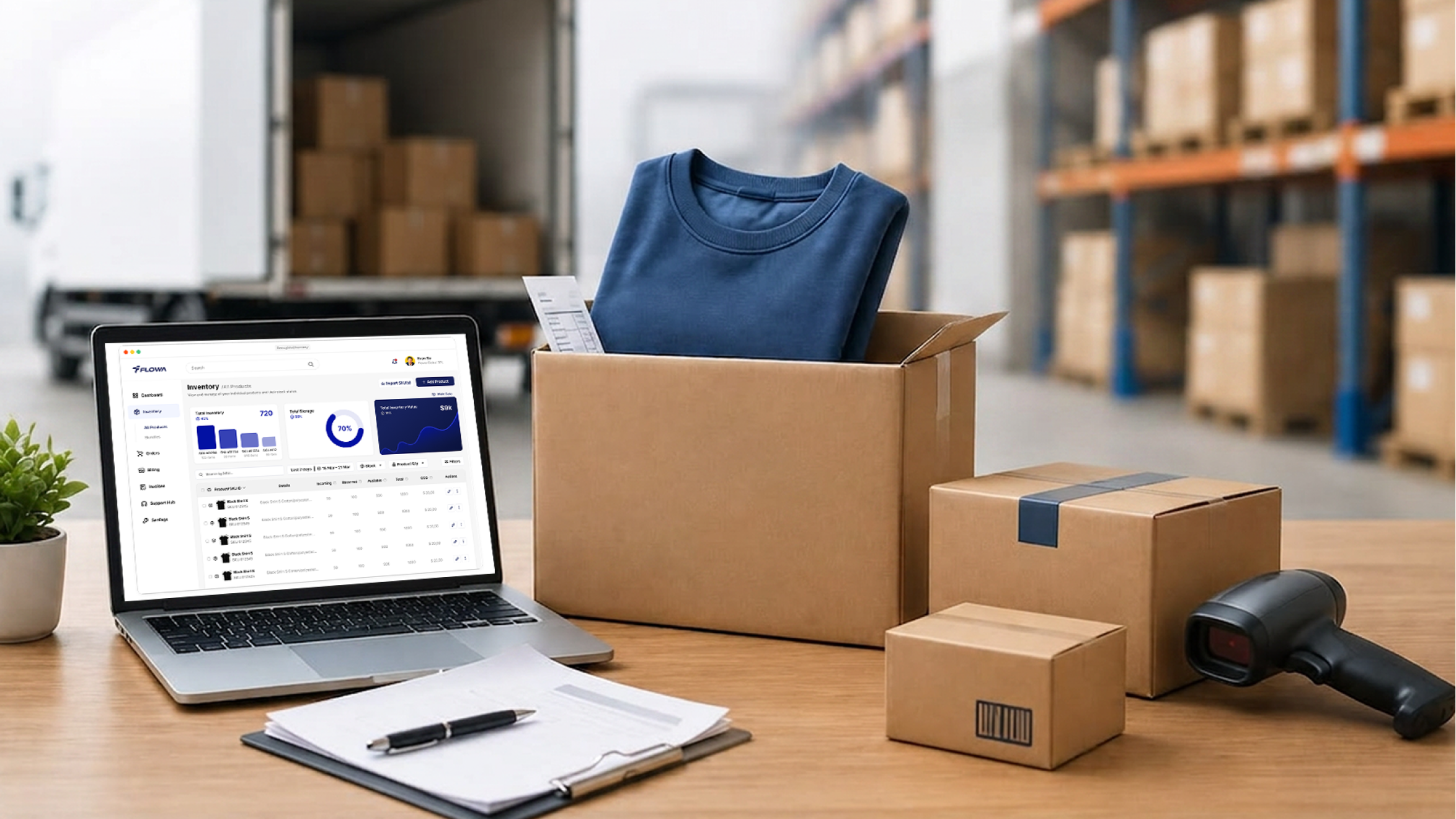
Global 3PL Fulfilment: A Guide for Australian Fashion DTC Brands Shipping from China
Global 3PL fulfilment helps Australian fashion brands manufacturing in China streamline fulfilment, reduce extra handling, and ship into key markets more flexibly.
Australian fashion brands that manufacture in China often reach the same point. The product is ready and demand is growing, but moving stock from factory to customer can start eating into time, margin, and operational attention.
That is where a 3PL comes in. A third-party logistics provider handles the physical fulfilment work, including warehousing, pick-and-pack, packaging, shipping, tracking, and exceptions, so your team does not have to manage every step manually.
The growth of the 3PL market also shows how central outsourced logistics has become to e-commerce. According to Fortune Business Insights, the global third-party logistics market was valued at USD 1,238.74 billion in 2025 and is projected to reach USD 2,852.54 billion by 2034, with Asia Pacific holding 51.24% of the market in 2025.
For brands manufacturing in China, however, the fulfilment model matters just as much as the decision to outsource. Shipping inventory to an Australian warehouse before fulfilling orders can add cost, handling, and lead time. By contrast, a 3PL in China keeps inventory closer to production and ships directly to customers across supported markets.
In this blog, we explain what global 3PL fulfilment is, how it works for Australian fashion and DTC brands, what to look for in a provider, and how Flowa Global supports China-based fulfilment into Australia and beyond.
What Is Global 3PL Fulfilment?
A 3PL is short for third-party logistics. It refers to a company that manages fulfilment on behalf of another business.
So, what is a third-party logistics provider in practical terms?
It is the partner that stores your products, receives your orders, picks the right items, packs them, ships them, and updates your store with tracking information.
For e-commerce brands, 3PL services often include:
- Warehousing
- Inventory management
- pick-and-pack
- Order fulfilment
- Packaging support
- Shipping and tracking
- Returns and exception handling
- Billing and reporting
Global 3PL fulfilment goes beyond basic storage and shipping. It helps brands fulfil orders across multiple markets without having to manage every warehouse, carrier, and delivery update on their own.
Some brands do this by using local warehouses in each country. Others use a China-based fulfilment model, where goods are stored close to the factory and shipped directly to customers worldwide.
For Australian fashion brands manufacturing in China, this second model can be especially useful.
Instead of moving stock from a Chinese factory to an Australian warehouse before selling it, brands can store inventory at a China-based fulfilment centre and ship directly to customers in Australia, the UK, Europe, and other supported destinations.
That gives brands a more flexible way to test demand in new markets before committing to local warehousing.
How 3PL Fulfilment Works for Australian Fashion DTC Brands?
The basic fulfilment process is simple.
Your inventory is stored at the 3PL warehouse. When a customer places an order, the order flows into the 3PL warehouse system. The warehouse team then picks, packs, and ships the parcel on your behalf.
For an Australian fashion brand shipping from China, the process usually works like this.
1. Inventory is sent from your factory to the fulfilment centre
Once production is complete, your factory sends finished goods to the 3PL facility.
If your 3PL is based in China, this is usually a domestic freight movement. That means the stock does not need to be exported to Australia before it can be prepared for sale.
At the fulfilment centre, goods are received, checked, barcoded, and added to inventory.
With Flowa Global, goods are typically live and ready to sell within 24 to 48 hours of arrival, subject to inbound volume and any QA hold workflows.
2. Orders sync from your e-commerce store
When a customer places an order through Shopify or another connected sales channel, the order is sent into the 3PL system.
This removes the need for manual spreadsheets, CSV exports, or back-and-forth emails with a warehouse team.
A strong 3PL warehouse system should show what has been ordered, what stock is available, what stock is reserved, and whether any order needs review before dispatch.
3. The order is picked and packed
The warehouse team picks the correct SKU, size, colour, and quantity.
This step is especially important for fashion brands because one wrong variant can lead to a return, refund, replacement shipment, or negative review.
The order is then packed according to your brand rules. This may include branded tissue paper, stickers, inserts, care cards, bundles, or custom packaging.
4. The parcel is shipped
Once packed, the parcel is dispatched through the selected shipping lane.
For supported Australia, UK, and Europe lanes, delivery may take 4 to 7 days depending on destination, parcel weight, service level, and local conditions.
The tracking number is then synced back to your store, so the customer can follow the delivery.
5. Exceptions are flagged early
International shipping can involve delays, customs holds, address issues, or failed delivery attempts.
A capable 3PL provider should surface these issues early. Your team should not find out only after the customer complains.
This is one of the main differences between basic e-commerce order fulfilment and a fulfilment model built around visibility and control.
Why China-Based Fulfilment Supports Global Market Expansion
Many Australian fashion brands start with local fulfilment because it feels familiar.
The brand manufactures in China, imports stock into Australia, stores it locally, and then ships to customers from there. This can work when most customers are in Australia, and demand is predictable.
However, once the brand starts selling into multiple markets, the model can become harder to manage.
For example, if your products are made in China and you want to sell into Australia, the UK, and Europe, you need to decide where the stock should sit before demand is fully proven.
Sending all inventory to Australia may create delays for overseas customers. Splitting inventory across several warehouses may increase cost and complexity. Holding too much stock in the wrong market can also tie up cash.
A 3PL China model gives brands another option.
Inventory stays closer to production. Orders can be fulfilled from one China-side stock pool. The brand can then test multiple markets without setting up local warehouse infrastructure first.
For Australian fashion DTC brands, this can help in three practical ways.
First, it reduces unnecessary inventory movement. Goods move from the factory to the fulfilment centre, then to the customer.
Second, it supports faster market testing. Brands can sell into new destinations before committing stock to a local warehouse.
Third, it gives the brand a clearer way to compare lane economics before scaling.
For example, Flowa Global has an approved Australia-lane example showing savings of up to A$11 per order compared with a traditional route, based on actual data from one apparel brand shipping from China to Australia. Results vary by product type, destination, parcel weight, and service level.
The point is not that every China-based route will be cheaper in every situation. The value is that brands can review the route, cost, speed, and constraints before deciding how to scale.
What a 3PL Partner Handles Behind the Scenes
A 3PL is often described as a pick, pack, and ship provider. In reality, a capable third-party logistics provider manages much more than that.
Behind the scenes, the right partner helps control the daily fulfilment details that affect delivery speed, customer experience, and margin.
Inbound coordination
The 3PL receives goods from your factory or supplier.
For China-based fulfilment, this may include supplier communication, receiving schedules, barcode intake, quantity checks, and discrepancy reporting.
For Australian brands working with Chinese factories, bilingual supplier coordination can help reduce delays and avoid miscommunication.
Inventory management
Inventory visibility is one of the most important parts of any order fulfilment 3PL setup.
Your team should be able to see:
- Stock that is incoming
- Stock that is available
- Stock that is reserved for orders
- Stock that is on QA hold
- Stock that is blocked or awaiting action
This is especially important for fashion brands with multiple sizes, colours, and styles. If inventory data is wrong, your store may sell stock that is not actually available.
Order management
The 3PL receives orders from your e-commerce store and moves them into the fulfilment workflow.
A stronger system should also flag orders that need attention. This could include address errors, out-of-stock items, unusual quantities, or orders that should be reviewed before dispatch.
This approval layer helps prevent avoidable mistakes before the warehouse starts picking.
Shipping and carrier selection
The 3PL selects the shipping lane based on destination, parcel weight, cost, speed, and service level.
Some providers use software to compare route options. In Flowa Global's case, AI recommends routes and flags risks, but your team approves before anything ships.
That distinction matters. AI can support decision-making, but it should not remove human control from fulfilment decisions.
Exceptions and billing
A good 3PL partner should make exceptions visible and costs clear.
If a parcel is delayed, held at customs, or needs redelivery, your team should know what happened and what action is needed.
Billing should also be itemised. Storage, pick-and-pack, outbound shipping, inbound services, packaging, and exception fees should be easy to understand.
For scaling brands, this helps prevent fulfilment costs from becoming a black box.
Warehousing, pick-and-pack, Quality Checks, Packaging, and Shipping Explained
To choose the right 3PL services, it helps to understand what each fulfilment function actually does.
Warehousing
Warehousing is where your products are stored before they are sold.
For fashion brands, warehousing is not just shelf space. Products need to be received accurately, stored properly, counted correctly, and made available for sale at the right time.
If stock counts are wrong, your team may oversell products, reorder too early, or miss sales because sellable stock is not visible.
Storage conditions also matter for apparel. Garments should be handled in a way that protects presentation, especially for premium products, delicate fabrics, and items that need careful packing.
Pick-and-pack
Pick-and-pack is the process of selecting the right item from storage and preparing it for dispatch.
For fashion brands, this step carries more risk because products often come in many variants.
The warehouse team needs to pick the exact size, colour, style, and SKU the customer ordered. After that, the order needs to be packed according to your brand rules.
Those rules may include branded tissue paper, stickers, thank-you cards, care instructions, inserts, gift wrapping, or bundled items.
For fashion DTC brands, packing is part of the customer experience. It should not be treated as an afterthought.
Quality checks
Quality checks help catch product issues before they reach customers.
For apparel, this may include checking colour, size labels, stitching, packaging condition, product consistency, and visible defects.
This matters because one defective batch can be expensive. The cost is not only the refund. It may also include replacement shipping, support time, negative reviews, and lost repeat purchases.
A QA hold workflow allows flagged stock to be reviewed before it is shipped. The brand can then decide whether to approve, hold, rework, or reject the affected items.
Packaging
Packaging is the final physical touchpoint before the customer sees the product.
For fashion brands, the unboxing experience can affect how customers feel about the purchase. A premium item in careless packaging does not create the same impression as one packed consistently with the brand's standards.
A strong 3PL partner should be able to apply packing rules consistently, even during higher-volume periods.
Shipping
Shipping is where speed, cost, and reliability meet.
A parcel going from China to Australia may require a different lane from one going to the UK or Europe. The right option depends on product type, parcel weight, destination, and customer expectations.
This is why lane planning matters. A useful 3PL provider should help brands understand the trade-off between delivery speed, cost, and reliability before the brand commits to a fulfilment model.
Why Do Fashion DTC Brands Need Strong Fulfilment and Quality Control?
Fashion is one of the more complex e-commerce categories to fulfil.
There are more variants to manage. Returns can be higher. Customers care about presentation. Product expectations are visual and personal.
Because of this, fulfilment mistakes can become expensive quickly.
Variant accuracy affects returns
Sending the wrong size or colour is not a small error. It can create a return, a replacement shipment, a refund conversation, and a poor customer experience.
For fashion brands, accuracy needs to happen at the variant level. The warehouse must pick the right style, size, colour, and SKU.
QA protects the margin
Fashion defects are often easier to catch before dispatch than after delivery.
A wrong label, colour mismatch, stitching issue, or damaged item should not be discovered by the customer first.
For QA-sensitive apparel brands, a fulfilment partner should be able to hold flagged goods, provide photo evidence, and let the brand decide what happens next.
Presentation in packaging supports brand trust
If a brand has invested in premium positioning, product photography, packaging, and content, the delivery experience needs to match that standard.
Generic packaging may be acceptable for some products. For premium fashion and accessories, it can weaken the customer's perception at the point of delivery.
Speed matters during launches
Fashion demand is often tied to timing.
A product drop, influencer mention, seasonal campaign, or limited launch can create a short demand window. If the stock is not ready or orders take too long to dispatch, the brand may miss sales that are difficult to recover later.
This is why stock readiness, dispatch speed, and order visibility matter for DTC fashion brands.
What to Look for in a 3PL Partner for Global E-commerce Growth?
Choosing a 3PL provider should not come down to the lowest pick-and-pack fee alone.
The right partner should fit where your products are made, where your customers are, and how your brand operates day to day. For Australian fashion brands manufacturing in China, this means looking beyond basic storage and shipping. You need a fulfilment setup that can support your product complexity, target markets, and growth plans.
Here are the criteria that matter most.
Where inventory is stored relative to production
If your factory is in China and your customers are spread across multiple markets, inventory location matters.
A fulfilment model that keeps stock close to production removes the extra B2B freight leg before orders can be fulfilled. This can affect both cost and the time it takes to get new stock live and ready to sell.
For brands that are still testing demand in Australia, the UK, Europe, or other supported destinations, this can be more practical than committing stock to a local warehouse too early.
Fashion-specific fulfilment capability
Fashion fulfilment is more complex than fulfilling a single-SKU product.
There are sizes, colours, styles, labels, packaging rules, and batch-level issues to manage. A 3PL provider should be able to explain how it handles QA holds, defect checks, labelling requirements, branded packing rules, and variant-level accuracy.
If a provider cannot speak specifically to these areas, it may be running a generic fulfilment operation that was not built for apparel.
Inventory and order visibility
A useful 3PL warehouse system should show inventory states, order status, exceptions, and billing in one place.
Your team should be able to see what stock is incoming, available, reserved, or on QA hold without needing to email the warehouse for an update. This visibility becomes especially important as order volume grows and SKU complexity increases.
Exception handling with clear ownership
International shipping will always produce some exceptions. Parcels can be delayed. Customs holds can happen. Addresses can be entered incorrectly. Delivery attempts can fail.
The key question is how quickly these issues surfaced and who owns the next step.
A strong 3PL provider should be able to explain what happens at each stage, how your team is notified, and who approves any additional cost before it is charged.
Transparent, itemised billing
Fulfilment costs can become difficult to manage when fees are bundled together or applied without notice.
A good 3PL provider should show outbound, inbound, storage, exception, and service fees as separate line items. Any exception fee should also require approval before it is processed, so your team is not surprised by extra charges later.
Corridor experience in your target markets
A provider may handle one shipping corridor well and another poorly
If you are shipping from China into Australia, the UK, or Europe, ask specifically about those lanes. Look at delivery speed, carrier options, customs requirements, and typical exception patterns.
General claims about global coverage are less useful than specific knowledge of the routes your brand actually needs.
The right fit is not always the biggest provider
The best 3PL partner is not necessarily the largest or the cheapest.
It is the one built for your origin model, product type, and target markets. For Australian fashion brands manufacturing in China, that means looking for China-side operations, fashion fulfilment experience, clear warehouse visibility, and direct lanes into your key destinations.
How Flowa Global Supports Australian Fashion DTC Brands with China-Based Fulfilment
For Australian fashion brands that manufacture in China, fulfilment often becomes harder as soon as the brand starts selling beyond one market.
Sending inventory from China to Australia or other countries first may feel familiar, but it also adds another warehouse step before the product reaches the customer. That can mean more handling, more cost, and more time before stock is ready to sell.
Flowa Global offers a different model.
As a China-origin fulfilment and control platform, Flowa Global helps DTC fashion and apparel brands store inventory closer to production and ship directly from China into Australia, the UK, Europe, and other supported markets. In other words, we help brands that already manufacture in China and want a cleaner way to fulfil international orders.
Inventory is sent from the factory to Flowa Global’s fulfilment centre in Shanghai, where goods are received, processed, and prepared for sale. QA checks can be applied where required, and eligible orders can be picked, packed, and dispatched the same day, subject to cut-off times.
For fashion brands, the value is not only speed. Flowa Global also supports apparel QA, branded packing rules, custom unboxing, inventory visibility, exception alerts, and itemised billing.
Our platform also helps brands stay in control of fulfilment decisions. For example, AI can analyse available shipping options, highlight potential delays, and suggest the most suitable fulfilment route based on cost, delivery speed, and destination. The recommendations are presented to the brand's team, which decides whether to proceed.
AI supports decision-making, but your team remains in control of every fulfilment action.
Choosing the Right 3PL Model for China-Based Fulfilment
For Australian fashion DTC brands manufacturing in China, 3PL fulfilment is not just about outsourcing warehouse work. It is about choosing a model that fits where your products are made, where your customers are, and how quickly you want to test new markets.
A 3PL logistics setup in Australia may still work for brands with stable local demand and stock already in Australia. But if your products are made in China and you are selling across multiple markets, a China-based fulfilment model can reduce extra handling, keep inventory closer to production, and give your team better visibility before committing to local warehousing.
The right 3PL partner should support more than storage and shipping. It should help with accurate pick-and-pack, clear stock states, QA workflows, branded packaging, exception alerts, and corridor-level landed-cost visibility.
For fashion brands, these details matter. They affect margin, delivery promises, return rates, and customer trust.
Flowa Global works with Australian fashion and DTC brands that manufacture in China and want a smarter way to fulfil orders in Australia and other key markets before investing in local warehousing.
If you're exploring your options, book a call with our team. We’ll walk you through the best fulfilment lanes for your business, expected delivery times, and a clear landed cost view so you can make confident decisions as you grow.
Disclaimer:
Delivery times, inbound processing, dispatch speed, and cost savings depend on destination, parcel weight, product type, service level, cut-off times, and QA requirements. Not all routes or products qualify for the same delivery window or cost outcome.

Book a call and get your lane plan, lead time estimates, and onboarding timeline — all in one conversation.