How Ecommerce Order Fulfilment Works: From Checkout to Delivery for Growing DTC Brands
Learn what ecommerce order fulfilment involves, why it matters for DTC brands, and how China-based fulfilment can support faster, more controlled global shipping.
Ecommerce Growth
June 24, 2026
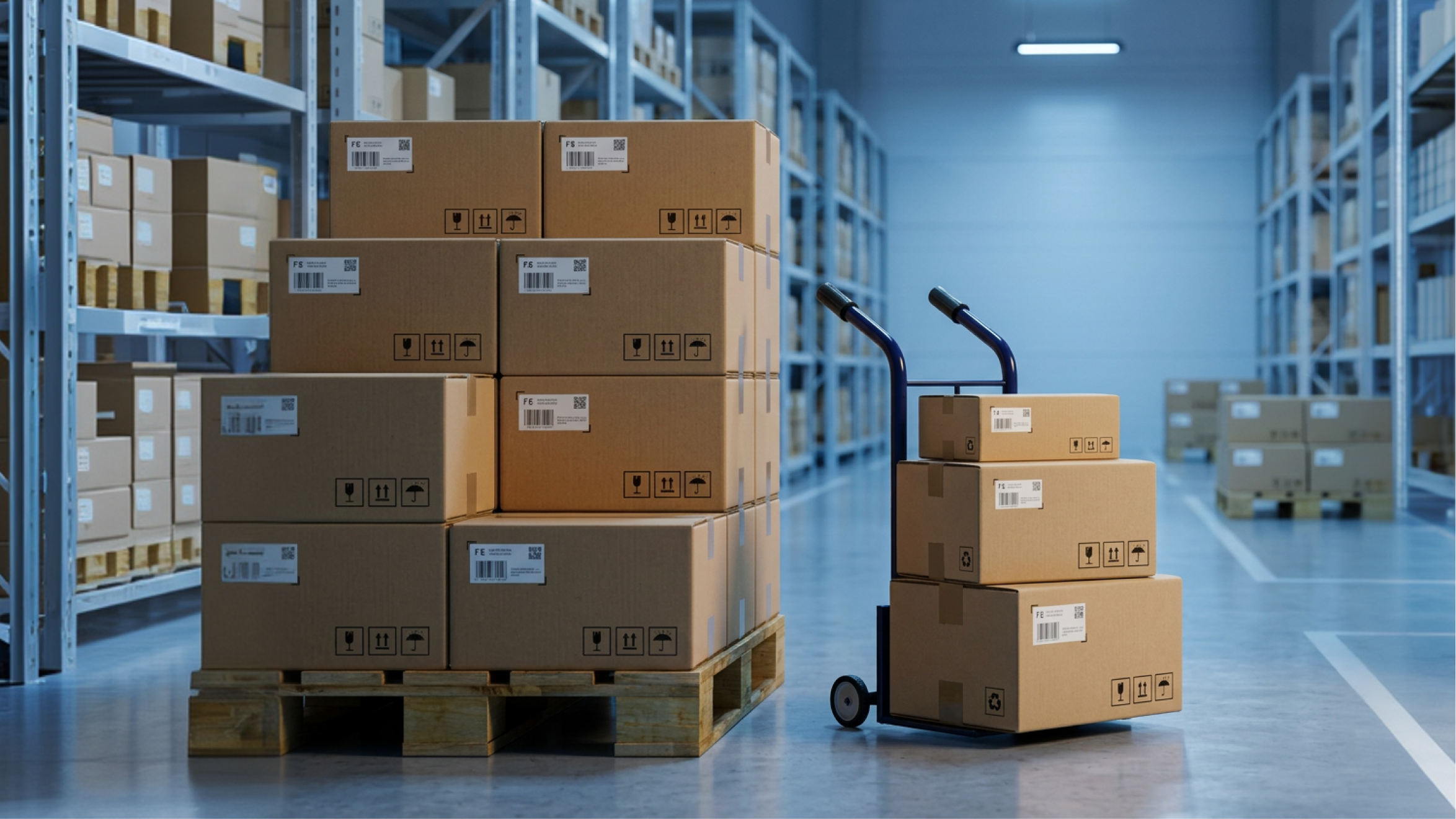
A customer clicks “buy”. What happens next decides whether their parcel arrives in days or weeks, whether the packaging feels right, and whether they trust your brand enough to order again.
That is ecommerce order fulfilment. It covers every step after checkout: syncing the order, checking stock, picking the right item, packing it correctly, running quality checks, dispatching the parcel, and keeping the customer updated until delivery.
For a DTC brand, fulfilment is not just a back-office function. It is the part of the buying experience your customer actually feels.
It is also a fast-growing market. The global ecommerce fulfilment services market was worth an estimated US$123.7 billion in 2024 and is projected to reach US$272.1 billion by 2030, growing at around 14% a year.
This blog walks through the fulfilment journey step by step, then looks at how that journey changes when your stock sits in China, and your customers are in Australia, the UK, or Europe.
What is E-commerce Order Fulfilment?
Ecommerce order fulfilment is the process of getting an online order from checkout to the customer’s door.
It includes receiving the order, checking inventory, picking the right stock, packing it to the brand’s rules, applying any quality checks, dispatching the parcel, and sending tracking updates back to the customer.
In simple terms, fulfilment is the operational promise behind your storefront. Your product page sets the expectation. Fulfilment proves whether you can deliver on it.
Most brands handle fulfilment in one of three ways.
Some fulfil orders themselves from their own space. Some use a third-party logistics provider, or 3PL, to store stock and ship orders on their behalf. Others ship directly from their manufacturing base, which is common for brands producing in China.
Many growing DTC brands move away from self-fulfilment once order volume increases. At that point, packing orders manually, updating tracking, fixing address errors, and chasing delayed parcels can start taking time away from product, marketing, and growth.
What Happens After a Customer Places an Online Order?
The moment a customer checks out, a chain of steps begins. In a well-connected setup, most of this happens without anyone retyping order details between systems.
First, the order syncs. The order leaves your store and flows into your order management system or fulfilment platform. There is no manual export, no spreadsheet update, and no copy-paste into a warehouse system.
Next, stock is checked, and the order is routed. The system confirms that the items are available, applies your packing and destination rules, and selects a suitable shipping route. Risky or unusual orders can be held for review before anything is picked.
Then, the stock is picked. A warehouse picker collects the correct items from the right locations, including the right size, colour, style, or bundle.
After that, the order is packed. Items are packed according to your brand’s rules. This may include branded boxes, tissue paper, stickers, inserts, or kitting.
Where quality control applies, the order is checked before the parcel is sealed. For apparel brands, this can include checking for defects, sizing issues, colour mismatches, stitching problems, or labelling errors.
Once packed, the parcel is dispatched on the selected shipping lane. A tracking number is issued and sent back to the customer.
If something goes wrong, the exception should be surfaced early. Failed delivery attempts, customs holds, address issues, and delays should be flagged before the customer has to chase your team.
The most important point is this: mistakes are cheaper to fix before dispatch. A wrong label, wrong route, or wrong address caught inside the fulfilment workflow can be corrected quickly. The same mistake caught after dispatch can turn into a refund, a support ticket, and a damaged customer relationship.
Ecommerce Fulfilment Process Flow
Here is the same journey in a simple flow:
- Order placed
The customer checks out on your online store. - Order synced
The order flows automatically into your order management or fulfilment system. - Stock checked and routed
Availability is confirmed, rules are applied, and the shipping lane is selected. Risky orders can be held for review. - Picked
The correct SKUs are pulled from stock. - Packed
Items are packed according to your brand’s requirements. - Quality checked
Defects, sizing, colour, and labelling checks are applied where required. - Dispatched
The parcel ships and tracking are issued. - In transit and delivered
The parcel moves through the carrier network and reaches the customer. - Exceptions managed
Delays, failed deliveries, and customs holds are flagged and resolved.
This is where warehousing and order fulfilment meet software. The warehouse handles the physical work: receiving, storing, picking, packing, and shipping. The system handles the order data, stock states, routing, approvals, tracking, and exceptions.
When both sides are connected, fulfilment runs cleanly. When they are not, orders get emailed around, stock counts drift, and errors slip through.
How Fulfilment Affects Delivery Speed, Packaging, and Customer Trust
Fulfilment affects three things customers care about: speed, presentation, and trust.
Delivery Speed: The Promise Customers Judge You Against
Delivery speed depends on where your stock starts, how quickly the order is processed, and which shipping lane it takes. A slow intake process or manual approval delay can add days before the parcel even moves.
The delivery promise shown at checkout becomes the standard your customer judges you against. If the parcel arrives later than expected, the customer does not see a warehouse issue. They see a brand that did not deliver what it promised.
Packaging: The Part of Fulfilment Customers Can See
Packaging matters because the unboxing moment is part of the product, especially for apparel, accessories, and premium DTC brands.
Generic pick-and-pack can miss tissue paper, inserts, branded boxes, or bundle rules. Consistent packing rules protect the experience you are charging for, so every order feels like it came from your brand, not just from a warehouse.
Customer Trust: Built After Checkout
Customer trust is built after checkout. In DHL’s 2026 E-Commerce Trends Report, seven in 10 shoppers said they would not buy from an online retailer if they did not trust the delivery or returns provider.
Accurate orders, clear tracking, and proactive updates help turn a first order into a second. When customers know what is happening with their parcel, they have fewer reasons to chase your team or doubt the brand.
When Fulfilment Fails, Customers Notice
Good fulfilment is mostly invisible. Customers only notice it when it fails.
By then, it is already a refund, a complaint, or a poor review. That is why fulfilment is not just a logistics function. It is part of the customer experience.
Why China-Based Fulfilment Can Support Global Ecommerce Growth
If you manufacture in China, your stock is already close to production. Shipping directly from China to your customers can remove the extra step of freight inventory to a local warehouse before it can be sold.
The traditional model looks like this: produce in China, ship stock by sea to a warehouse in your target market, pay to store it, then fulfil orders locally.
That model can work at scale, but it also means committing cash to inventory, storage, and infrastructure before demand is proven.
A China-based fulfilment model changes the flow. Stock moves from the factory to a China fulfilment facility, then ships directly to customers in supported markets. For brands selling into Australia, the UK, or Europe, this can reduce the delay between production and sale while keeping fulfilment closer to where the stock starts. In fact, China sits at the centre of this market. Moreover, the Asia Pacific was the largest region for ecommerce fulfilment in 2024, accounting for more than 27% of global revenue.
This is where the right 3PL fulfilment in China matters. Your partner should not only store and ship stock. They should give you visibility into what is available, what is reserved, what is on hold, and what is already moving to customers.
The right China 3PL setup turns your manufacturing base into your fulfilment base.
What to Look for in an Ecommerce Fulfilment Partner
Not every 3PL is built for the same job. If you are a DTC brand manufacturing in China, assess the partner against your actual operating model, not just their warehouse locations.
Fit for your fulfilment model
A generic 3PL with warehouses in many countries solves a different problem from a partner built for China-origin DTC fulfilment. Start with where your stock is made, then decide where it should be held and shipped from.
Order and inventory visibility
You should be able to see SKU-level stock states, including incoming, reserved, available, and on hold. If you cannot see what is sellable right now, overselling becomes much easier.
Connected systems
Orders, products, and tracking should sync automatically between your store and the fulfilment platform. If a Shopify order has to be retyped into a warehouse system, errors are already built into the process.
Quality control before dispatch
For apparel brands, sizing, colour, labelling, and defect issues can damage margins fast. Ask how issues are caught, what evidence you receive, and whether stock can be held before it reaches customers.
Transparent billing
Fulfilment costs should be itemised by category, including outbound, inbound, exceptions, services, and storage. A bundled number may look simple, but it can hide the costs that matter.
Control over what ships
Speed is important, but not if it removes your final say. You should be able to hold risky orders, approve exception charges, and review anything unusual before it creates a bigger problem.
A useful test is simple: can the fulfilment system tell you what is happening with your stock and orders right now?
If the answer is “I need to ask someone”, the visibility is not strong enough yet.
How Flowa Global Handles Quality-Controlled Ecommerce Order Fulfilment from China
Flowa Global is a cross-border fulfilment and control platform for DTC brands that manufacture in China and ship directly to customers in Australia, the UK, and Europe. It pairs a China-based fulfilment operation with an OMS/WMS control layer, so receiving, picking, packing, quality control, dispatch, and tracking run as one connected process rather than across spreadsheets, plugins, and email chains.
In practice, the journey looks like this. Stock arrives at Flowa Global's China facility and is made live to sell within 24 to 48 hours of arrival. Orders sync from Shopify the moment they are placed. Your packing rules apply automatically, including branded unboxing, wherever you use it. Higher-risk orders are held for your approval before anything is picked. Pick, pack, and dispatch can happen the same day for orders received before the cut-off, with tracking flowing back to the customer.
Quality control sits inside the dispatch process rather than after it. Inbound and pre-dispatch checks can catch sizing, colour, stitching, and labelling issues before a parcel ships, with photo evidence on every exception and a QA hold workflow for anything flagged. For apparel brands, that is the difference between catching a defective batch on the bench and discovering it through customer refunds.
You stay in control throughout. Incoming, reserved, available, and on-hold stock are visible in real time. Exceptions such as delivery delays, failed attempts, and customs holds are flagged before they become support tickets. Billing is itemised by category, and every exception fee requires your approval before it is processed. Where AI helps, it recommends routes across shipping lanes and flags risky orders, but your team approves before anything ships. The platform surfaces the decision faster; the human still makes it.
If your products are made in China and your customers are in Australia, the UK, or Europe, Flowa helps you keep fulfilment easier to manage from the start. No scattered tools, no back-and-forth email chains, and no disconnected warehouse updates.
Get in touch, and we’ll help you map your lane, estimate your landed cost, and understand what delivery could look like before you commit.*
*Delivery times depend on destination, parcel weight, and service level; not all routes are guaranteed within this window. "Live within 24–48 hours of arrival" is standard inbound and is subject to QA hold workflows and inbound volume. Same-day dispatch applies to orders received before the cut-off.
Read More
Dropshipping vs 3PL Fulfilment: The Ultimate Guide for Australian Fashion DTC Brands
Compare dropshipping and 3PL fulfilment for Australian fashion DTC brands, from inventory control and delivery speed to margins, QA, and brand experience.
Dropshipping and 3PL fulfilment are two different ways to get a product from a supplier to your customer.
With dropshipping, you never hold stock. A supplier ships each order on your behalf. With 3PL fulfilment, you hold your own inventory with a third-party logistics provider that stores it, picks and packs it, and ships it under your brand.
For a new ecommerce brand, dropshipping can feel like the easiest way to start. For a growing fashion brand, especially one manufacturing in China and selling into Australia, it can become the thing that limits quality control, delivery experience, and brand presentation.
That is one reason more brands are looking closely at third-party logistics. The global third-party logistics market was valued at USD 1,261.0 billion in 2025 and is projected to grow from USD 1,356.7 billion in 2026 to USD 2,502.2 billion by 2033, at a CAGR of 9.1%. Asia Pacific also led the market in 2025, with a revenue share of 43.7%.
This article explains what dropshipping is, what 3PL fulfilment is, and how the two compare. It also looks at where dropshipping tends to become limiting as you scale, and why a China-based 3PL can be a practical next step for Australian fashion brands that already source or manufacture in China.
What Is Dropshipping?
Dropshipping is an ecommerce retail model where you sell products without keeping them in stock.
When a customer places an order through your online store, you purchase that item from a third-party supplier. The supplier then picks, packs, and ships the product directly to your customer.
You do not store the inventory yourself, and you do not handle the physical fulfilment. Your profit comes from the difference between the price your customer pays and the cost you pay the supplier, after accounting for expenses such as marketing, platform fees, and transaction costs.
The appeal is clear. You can list and sell products without buying stock upfront, which keeps starting costs low and reduces the risk of being left with unsold inventory. This is why dropshipping using Shopify has become a common starting point for new ecommerce stores, including brands exploring dropshipping in Australia.
But the same thing that makes dropshipping easy to start, not holding your own stock, can also make it harder to control as you grow.
How Dropshipping Works for Ecommerce Brands
Dropshipping usually follows a simple flow.
- You set up an online store, often on Shopify, and list products from one or more dropshipping suppliers.
- A customer places an order and pays your retail price.
- You purchase the product from your supplier and send them the order details.
- The supplier picks, packs, and ships the order directly to the customer.
- You keep the margin between your retail price and the supplier cost, after other business costs are deducted.
For many ecommerce brands, dropshipping is attractive because you only buy the product after a customer has already placed an order. That makes cash flow easier to manage and keeps inventory risk low.
In practice, many dropshipping suppliers ship from overseas, including China. This can help keep product costs lower, but it can also mean longer delivery times, limited packaging options, and less control over what the customer receives.
That is the trade-off. Dropshipping lets you start selling quickly, but the supplier controls much of the fulfilment experience. They decide how the order is packed, how quickly it ships, and what the customer receives after checkout.
You own the brand and the customer relationship, but you do not fully control the fulfilment.
Why New Ecommerce Brands Often Start with Dropshipping
New brands often start with dropshipping because it lowers almost every barrier to getting started.
There are three main reasons it is such a popular first step.
Low upfront cost
You do not have to buy inventory before you sell it. That means you can test products without committing thousands of dollars to stock that may or may not sell.
Low inventory risk
Because you only order once a customer has paid, you are not left holding unsold stock. For a founder testing demand, that can be reassuring.
Speed to launch
You can build a store and start selling quickly, often in days. There is no warehouse to set up, no stock to receive, and no fulfilment process to build.
For validating a product idea or testing which designs resonate, dropshipping can be a sensible way to learn before investing. Many successful fashion brands began exactly this way.
The important point is that dropshipping is usually a starting model, not a scaling model. What works when you are proving demand often starts to strain once demand is real.
What Is 3PL Fulfilment?
3PL fulfilment is when an ecommerce brand outsources its logistics operations to a third-party logistics provider.
Instead of storing products, packing orders, and managing shipping yourself, you send your inventory to the 3PL’s warehouse. When a customer places an order, the 3PL picks, packs, and ships the item on your behalf. Depending on the provider, they may also support returns, quality checks, custom packaging, kitting, and other fulfilment services.
3PL stands for third-party logistics. A third-party logistics provider is a company that manages warehousing and order fulfilment for other businesses, so brands do not have to run their own warehouse or fulfilment team.
The key difference from dropshipping is ownership. With 3PL fulfilment, the stock is yours. You buy or manufacture the product, send it to the 3PL, and decide how it should be stored, packed, and presented to your customer.
The 3PL provider is not selling you someone else’s product. They are executing fulfilment for the products you own.
This is the model many brands move to once they have steady order volume and want more control over cost, quality, delivery, and customer experience.
Dropshipping vs 3PL Fulfilment: What Is the Difference?
The core difference is who owns the stock and who controls the fulfilment experience.
With dropshipping, the supplier owns the stock and ships each order directly to your customer. With 3PL fulfilment, you own the stock, and the 3PL stores, picks, packs, and ships it according to your rules.
Here is how the two compare across the points that matter most to a growing brand.
Neither model is simply better than the other. They suit different stages.
Dropshipping reduces risk when you are still working out what sells. 3PL fulfilment gives you more control once you know what sells, want stronger margins, and need a fulfilment process that can support your brand as it grows.
Where Dropshipping Can Become Limiting for Growing Brands
Dropshipping can start to hold a brand back once orders grow and the customer experience starts to matter more.
The problems usually show up in five areas.
Weaker control over quality
You do not inspect the product before it ships. If a supplier sends a faulty item, a wrong size, or a poor-quality batch, you often only find out when the customer complains.
Generic packaging
Most dropshipping suppliers ship in plain, unbranded packaging. For a fashion brand, that means the unboxing moment, one of the strongest ways to build loyalty, is out of your hands.
Inconsistent inventory
When you do not hold stock, you are relying on a supplier's stock levels staying accurate. Products can go out of stock without warning, leaving you selling items you cannot actually fulfil.
Slow and variable shipping
Because many dropshipping suppliers ship individually from overseas, delivery times can be long and hard to predict. That works against the fast, reliable delivery promise customers increasingly expect.
A thin, fragile customer experience
Put these together and the pattern is clear. You own the brand and the marketing, but you do not control what the customer actually receives or when.
As order volume grows, that lack of control turns into refunds, support tickets, and lost repeat business.
For a brand that wants to build something lasting, that is the point where dropshipping usually stops being enough.
Why Fashion Brands Need More Control Over Quality, Sizing, and Packaging
Fashion is one of the categories where control matters most, because the things that go wrong are the things customers notice first.
Sizing, colour, fabric, labelling, and finish all affect whether a customer keeps a product or returns it. A dropshipped supply chain gives you very little ability to check any of these before an order ships.
Sizing is a good example. Apparel returns are often driven by fit. If a size run is mislabelled or inconsistent, you can end up with a wave of returns before you even realise there is a problem.
Packaging matters too. For a fashion brand, the parcel and the unboxing are part of the product. Generic dropshipping packaging can undercut the premium feel a brand is trying to build, and it is hard to charge a premium price for an experience that arrives in a plain polybag.
Then there is labelling. Some markets have specific requirements for apparel, especially for children's clothing, including care labelling and fibre content. Catching a labelling issue before goods ship is far cheaper than dealing with it after they have reached customers.
The common thread is that fashion brands often need to inspect and control the product before it goes out, not after. That is difficult in a pure dropshipping model, and it is one of the clearest reasons growing fashion brands move to holding their own stock with a 3PL.
How 3PL Fulfilment Supports Better Inventory and Order Control
3PL fulfilment gives a growing brand more control because you own the stock and set the rules for how it is handled.
That control shows up in a few practical ways.
You can hold your own inventory, which means you decide what to stock and in what quantity, rather than depending on a supplier's stock levels. Good 3PL providers give you real-time visibility of what is in stock, what is reserved, and what is on hold.
You can apply quality checks on the way in. Many 3PL services include inbound QA, so size, colour, labelling, and defect issues can be caught at the warehouse before orders ship.
You can set packaging and presentation rules once, and have them applied to every order. Custom packaging, inserts, and branded unboxing become standard rather than something you hope a supplier remembers.
You can manage exceptions before they reach the customer. A capable 3PL provider will flag problems such as delays, failed deliveries, and customs holds, and hold risky orders for review rather than letting them ship blind.
The result is a fulfilment process that behaves consistently. You are no longer reacting to problems after customers report them. You are setting the standard and shipping to it.
For a brand that is scaling, that shift from reacting to controlling is often what makes growth manageable.
Why China-Based 3PL Makes Sense for Brands Sourcing from China
If you already manufacture or source in China, a China-based 3PL can keep your stock close to production and cut out unnecessary movement.
Think about the usual alternative. Products are made in China, then shipped in bulk by sea to a local warehouse in Australia. There, they go through customs, receiving, storage, and local fulfilment before finally reaching the customer.
That path means paying to move stock across the world before you know exactly what will sell. It can also mean paying duties, taxes, storage, and local warehouse fees on inventory that has not generated any revenue yet.
A China-based 3PL can change that structure. Instead of pushing stock into a local warehouse and waiting, you hold inventory close to the factory and ship orders directly to customers as they come in.
For brands selling into more than one market, this can be especially useful. One pool of stock in China can serve orders into Australia, the UK, and Europe, rather than splitting inventory across several local warehouses and trying to guess demand in each one ahead of time.
There is a quality benefit too. If a sizing, colour, or labelling issue is caught at the China facility, it can be dealt with before the product travels any further. That is very different from discovering the problem after a container has already landed in Australia.
This is where 3PL China fulfilment becomes relevant for fashion brands. 3PL in China is not only about cheaper shipping. It is about holding stock closer to where it is made, shipping direct to customers, and keeping control over quality before goods leave the country.
It is worth noting that the US is a different case. US Customs has suspended de minimis treatment for low-value shipments, so direct-from-China parcels into the US now need to account for duties and customs entry. For the US market, brands need a compliant, duty-aware lane rather than assuming the old low-cost direct model still applies. Australia, the UK, and Europe remain more straightforward corridors for direct-from-China fulfilment.
When Should a Brand Move from Dropshipping to 3PL?
A brand is usually ready to move from dropshipping to 3PL fulfilment when control and consistency start to matter more than avoiding inventory risk.
There is no single order count that applies to everyone, but a few signals tend to appear together.
- Your order volume is steady and predictable enough to justify holding stock.
- Returns or complaints about quality, sizing, or packaging are rising.
- Slow or unpredictable delivery is costing you sales or repeat customers.
- You want branded packaging and a consistent unboxing experience.
- Thin dropshipping margins are limiting how much you can spend to grow.
- You are ready to build a brand, not just test products.
If several of these are true, dropshipping is likely holding you back more than it is protecting you.
Moving to a 3PL does mean carrying inventory, which is a real commitment. The way to manage that risk is to hold the right amount of stock close to production and ship it efficiently, rather than over-ordering into a distant warehouse before demand is proven.
For brands manufacturing in China, that is exactly where a China-based 3PL can make the transition less daunting.
How Flowa Global Helps Fashion DTC Brands Build a More Scalable Fulfilment Model
Flowa Global is a cross-border fulfilment and control platform for D2C fashion and apparel brands that manufacture in China.
Flowa is not a dropshipping service, and it is not a generic global 3PL. It works with brands that hold their own inventory at Flowa's China-based fulfilment centre, then ship direct to customers in Australia, the UK, Europe, and other supported markets.
For a fashion brand moving on from dropshipping, that model is built around three things: speed, cost control, and quality control.
Ship direct-to-consumer from Flowa's China-based fulfilment centre in 4–7 days on supported lanes, at up to 40% lower logistics costs than traditional freight.*
On a supported China-to-Australia apparel lane, brands have saved up to A$11 per order, moving from roughly A$16.45 to A$5.42 per order.*
Control is where the model differs most from dropshipping. Inbound quality checks help catch size, colour, labelling, and defect issues before orders ship. Custom packing rules, inserts, and branded unboxing can be applied to every order. Risky orders can also be held for manual approval before dispatch.
The platform gives your team one place to view inventory states, orders, routing, and exceptions. Billing is itemised by category, including outbound, inbound, storage, services, and exceptions. Every exception fee requires your approval before it is processed, so there are no silent surprises at invoice time.
Route recommendations across supported lanes are AI-assisted, but your team stays in control. AI recommends. Your team approves.
Book a call to get a lane plan and landed-cost estimate for your China-to-market corridor before you commit. You can also test the model first, with Flowa's trial starting from $30 USD and converting to account credit on your first invoice.
Explore how Flowa works or view the platform.
Frequently Asked Questions
What is dropshipping, in simple terms?
Dropshipping is a retail model where you sell products without holding any stock. When a customer orders, a supplier ships the product directly to them on your behalf.
You keep the difference between your retail price and the supplier cost. It is popular because it has low upfront costs and low inventory risk, which makes it a common way to start an online store.
What is the difference between dropshipping and 3PL fulfilment?
The main difference is who owns the stock. In dropshipping, the supplier owns the stock and controls how orders are packed and shipped. In 3PL fulfilment, you own the stock and a third-party logistics provider stores, picks, packs, and ships it under your brand.
Dropshipping suits early testing. 3PL fulfilment suits brands that want control over quality, packaging, and delivery as they scale.
What is a third-party logistics provider?
A third-party logistics provider, or 3PL, is a company that manages warehousing and order fulfilment for other brands. Typical 3PL services include receiving inventory, storing it, picking and packing orders, shipping, and returns processing.
Using a 3PL provider means you can hold and ship your own inventory without running a warehouse yourself.
Is dropshipping or 3PL better for a fashion brand?
It depends on your stage. Dropshipping can be useful for testing designs with low risk. But fashion brands usually need to control sizing, colour, labelling, and packaging, which is hard in a dropshipping model.
Once a fashion brand is shipping consistent volume and wants control over quality and customer experience, 3PL fulfilment is usually the better fit.
Why use a China-based 3PL instead of a local Australian 3PL?
For brands that already manufacture in China, a China-based 3PL keeps stock close to production and ships direct to customers. This can reduce bulk sea freight, local warehouse dependency, and duplicate storage across markets.
A local 3PL in Australia still requires you to ship stock across the world in bulk and store it before it sells. A China-based 3PL can remove much of that upfront movement, and one pool of stock can serve Australia, the UK, and Europe.
When should I switch from dropshipping to 3PL?
A good time to switch is when your order volume is steady, quality or delivery complaints are rising, thin margins are limiting your growth, or you want branded packaging and a consistent customer experience.
If several of these apply, dropshipping is likely limiting your brand more than it is protecting it. Moving to a 3PL means carrying inventory, so the aim is to hold the right amount of stock close to production and ship it efficiently.
Disclaimer
*Delivery times depend on destination, parcel weight, and service level; not all routes fall within the stated window and no delivery time is guaranteed. Cost savings are based on actual data from one apparel brand shipping from China to Australia and vary by product type, destination, and service level. The up-to-40% figure is corridor and product specific and is not a blanket claim.
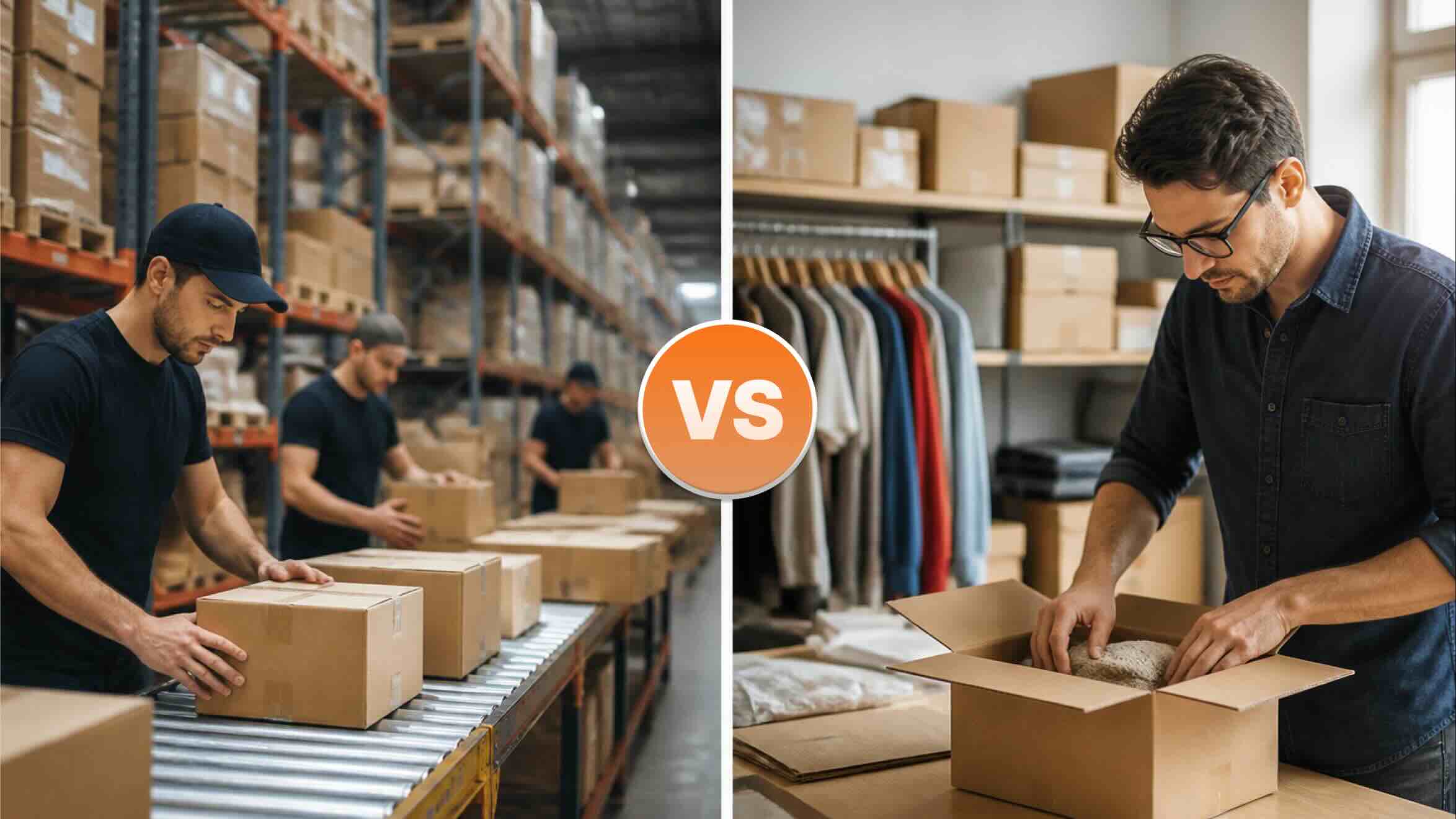
3PL Logistics vs In-House Logistics: Which is Right for Your Fashion Brand?
Compare 3PL logistics and in-house fulfilment to find the right model for your growing fashion ecommerce brand.
The global ecommerce logistics market generated USD 373.4 billion in revenue in 2023 and is projected to reach USD 1.53 trillion by 2030, growing at a compound annual growth rate of 22.3%, according to Grand View Research.
That growth reflects a simple reality. More products are being sold online, across more markets, and customers expect their orders to arrive quickly and correctly.
For fashion ecommerce brands, fulfilment can become especially complex. Each collection may include several sizes, colours and styles, while product launches and seasonal campaigns can create sudden changes in demand.
As order volumes grow, brands usually face two options: continue managing logistics in-house or move warehousing, order fulfilment and shipping to a 3PL logistics provider.
In-house logistics offers direct oversight, but the brand must build and manage the entire operation. A 3PL gives the business access to established fulfilment infrastructure without having to create every capability internally.
This blog compares both models and explains why 3PL logistics is often the more flexible choice for growing fashion ecommerce brands
What is 3PL logistics?
3PL stands for third-party logistics. It is a model where an external provider manages some or all of a brand’s warehousing, order fulfilment and shipping operations.
When a customer places an order, the information is sent to the 3PL provider. The warehouse team picks and packs the products, arranges delivery and sends the tracking details back to the brand or ecommerce platform.
Depending on the provider, 3PL services may include:
- Receiving and recording inventory
- Storage
- Ecommerce order fulfilment
- Picking and packing
- Domestic and international shipping
- Inventory reporting
- Branded packaging and inserts
- Product kitting
- Quality checks
- Returns processing
- Delivery exception management
However, not every provider offers the same level of service. Some focus on storage and basic dispatch. Others combine physical fulfilment with technology that shows brands what is happening across their inventory, orders and deliveries.
This difference matters. A low pick-and-pack fee may look attractive, but it has limited value if the brand cannot see stock accurately or respond quickly when an order needs attention.
What is in-house logistics?
In-house logistics means the brand manages its own warehousing and fulfilment.
For a new ecommerce business, this may involve storing products in an office, spare room or small storage unit. As the business grows, it may move into a dedicated warehouse and hire people to receive stock, pick orders and prepare parcels for collection.
The brand is also responsible for inventory records, packing materials, carrier relationships, returns and delivery problems.
At first, this setup can be practical. Order volumes are manageable, and the founder has direct control over how each parcel is packed.
However, growth changes the equation. New fashion collections require more space, while additional sizes, colours and styles increase the number of SKUs the team must manage.
Seasonal campaigns or product launches can also create sudden peaks. During quieter months, the brand continues paying for warehouse space and capacity it may not need.
The real question is not whether your brand can continue managing fulfilment in-house. It is whether doing so remains the best use of your people, time and money.
How the two fulfilment models differ
The main difference is responsibility. With in-house logistics, the brand builds and manages the operation. With 3PL logistics, the provider supplies the warehouse capacity, people, systems and fulfilment processes.
In practice, that difference affects several parts of the business.
The cost structure is different
In-house logistics requires the brand to invest before the capacity is needed. Warehouse rent, salaries, software and equipment must be paid for whether the business ships 500 orders or 5,000.
A 3PL usually charges according to the space and services used. This shifts more fulfilment spending from fixed overheads to operating costs that move with order activity.
That does not mean every 3PL will be cheaper. However, it can help the brand avoid committing to a larger warehouse or fulfilment team before demand is consistent enough to support them.
Control comes from different places
An in-house warehouse provides direct physical control. The brand can train its own staff, inspect products and change packing instructions internally.
With a 3PL, control depends on the provider’s systems and processes. Brands should still be able to see inventory levels, review order statuses, apply packing rules and respond to delivery problems.
For fashion brands, this visibility should extend to individual SKUs and variants. The team needs to know which sizes and colours are incoming, available, reserved or being held for inspection.
Outsourcing should change how control is managed, not remove it. A strong 3PL gives the brand clear operational visibility without requiring someone from the business to be physically present in the warehouse.
Capacity can adjust more easily
An in-house operation has a limited amount of space and labour. When orders rise sharply, the brand may need temporary staff, extra shifts or additional storage.
When demand slows down, those fixed costs remain.
By contrast, an established 3PL can allocate capacity as order volumes change. This is particularly useful for fashion brands managing seasonal collections, limited drops or demand spikes after a successful campaign.
However, capacity should still be confirmed before signing. Ask how the provider prepares for peak periods and whether any seasonal restrictions or additional charges apply.
The expertise already exists
Warehouse operations involve more than packing parcels. The team must maintain stock accuracy, schedule staff, manage carrier collection times, handle returns and respond when an order cannot be dispatched as expected.
Fashion fulfilment adds further complexity. Picking the wrong size, colour or style can lead to an exchange, refund and disappointed customer. Branded packaging and collection-specific inserts must also be applied correctly.
International fulfilment adds another layer. Brands must consider route options, customs documentation and destination-specific requirements.
A 3PL already has people and processes focused on these tasks. The brand will still need to manage the provider relationship, but that is very different from running the warehouse itself.
Technology is usually part of the service
An in-house operation needs systems for inventory, orders, shipping labels, tracking and returns. The brand must select, integrate and maintain these tools.
Many 3PL warehousing and logistics providers include this technology within their service. Orders can move from the ecommerce store to the warehouse automatically, while tracking information flows back to the brand and customer.
Still, access to a dashboard is not enough. The information must be accurate, current and detailed enough for the brand to make decisions.
For fashion brands, the system should show inventory at the SKU and variant level. It should also make it easy to review orders that need attention, update packing rules and identify delivery exceptions.
If you are ready to move beyond supplier-led fulfilment, read our guide on why 3PL can be a better alternative to dropshipping for fashion brands.
Why the location of a China 3PL matters
Choosing a fulfilment model is not only about deciding who will manage the warehouse. You also need to consider where your inventory will be stored.
For fashion brands manufacturing in China, in-house fulfilment often means moving stock from the factory to a warehouse in the brand’s home country first. If the brand sells internationally, some of that inventory may then need to cross another border to reach the customer.
For example, an Australian fashion brand may manufacture its products in China, import every unit into Australia and then ship individual orders to customers in the UK or Europe. This adds another freight leg, another receiving process and more handling before the order reaches the customer.
A China 3PL creates a more direct route. Finished products can move from the factory to a fulfilment centre in China, where they are received, stored and prepared for customer orders. The provider can then ship those orders directly to customers across supported international markets.
Keeping inventory close to production may also make it easier to:
- Receive products from different factories
- Consolidate garments, accessories and packaging
- Record stock by size, colour and style
- Complete specified inbound quality checks
- Apply branded packaging before dispatch
- Replenish inventory without first moving it overseas
This can help fashion brands serve different markets from one stock pool instead of dividing inventory between several local warehouses before demand has been proven.
However, a China location will not be the right choice for every route. Brands should compare customer locations, expected delivery times, shipping costs, customs requirements and return options before deciding where to hold inventory.
If most sales come from one country, keeping some stock closer to that market may make sense. If customers are spread across several countries, fulfilling from China may provide a more flexible starting point.
Comparing the full cost of both models
Cost is often the deciding factor, but it is also where brands make the easiest comparison mistakes.
For example, comparing a 3PL pick-and-pack fee with the monthly rent of an in-house warehouse does not show the complete picture.
The full cost of in-house fulfilment may include:
- Warehouse rent and utilities
- Permanent and temporary staff
- Recruitment and training
- Warehouse software and ecommerce integrations
- Shelving, scanners, printers and packing stations
- Packaging materials
- Insurance
- Overtime during peak periods
- Returns processing
- Inventory damage or loss
- Order errors and reshipments
- Unused capacity during quieter months
- Management time
- Freight from the factory to the warehouse
- Customs clearance and import costs
A 3PL quote may include separate charges for:
- Onboarding and integration
- Inventory receiving
- Storage
- Picking and packing
- Packaging
- Shipping
- Returns
- Quality checks
- Kitting and branded packing
- Special handling
- Delivery exceptions
Although the itemised pricing can look more complicated, it shows which services the brand is using and paying for.
To compare both options properly, calculate the total fulfilment cost per order over several months. Make sure the period includes both busy and quiet months.
Fashion brands should also account for collection launches, seasonal demand and the cost of storing slower-moving sizes or colours.
Then consider the time your team spends managing the operation. Hours spent recruiting warehouse staff, correcting stock records or chasing carriers still carry a cost, even if they do not appear on a logistics invoice.
When reviewing a 3PL quote, ask for pricing based on your actual product dimensions, order volume, number of variants, packing requirements and customer locations.
The goal is not to find the lowest warehouse fee. It is to understand the complete cost of moving inventory from the factory to the customer.
Why 3PL logistics is often the better choice for growing brands
A growing fashion brand should not need to become a warehouse operator simply because more customers are placing orders.
3PL logistics allows the business to add fulfilment capacity without taking on another lease, recruiting a larger warehouse team or managing more operational systems.
It may be time to consider a 3PL if:
- Orders regularly take too long to dispatch
- Your current storage space is reaching capacity
- Inventory records no longer match physical stock
- The wrong sizes, colours or styles are being dispatched
- Fulfilment mistakes and customer complaints are increasing
- Seasonal peaks require repeated temporary hiring
- Your team spends too much time resolving delivery problems
- You want to enter new markets
- Customers are spread across several countries
- Expanding the current warehouse would require significant investment
- Managing new product drops is becoming difficult
At this stage, the value of a 3PL goes beyond reducing warehouse work. It gives the brand an operating model that can grow without requiring the same increase in internal infrastructure.
This can free the internal team to focus on areas that directly build the business, such as product development, merchandising, marketing and customer retention.
For fashion brands, however, the provider must understand the complexity of the product range. Managing several sizes, colours and styles requires accurate SKU-level inventory, clear packing rules and suitable quality-control processes.
Want to know what happens after your inventory reaches the warehouse? Read our guide to warehouse management and how it works.
What to look for in a 3PL provider
Once you decide to explore 3PL logistics, do not begin with price alone. Start by looking at how well the provider fits your products, production location, shipping routes and day-to-day requirements.
A suitable provider should offer:
- Experience with fashion ecommerce or your product category
- Warehouse locations that fit your supply chain
- Shipping routes to your priority markets
- Ecommerce platform integrations
- Inventory visibility by SKU and variant
- Clear order approval processes
- Quality-control capabilities
- Branded packing options
- Returns and delivery exception management
- Itemised pricing
- Suitable contract terms and minimum volumes
- Accessible human support
If you are considering a China 3PL, ask how the provider coordinates with local factories and suppliers. A bilingual team may be able to receive products from different manufacturers, resolve inbound issues and consolidate inventory before fulfilment.
You should also ask the provider to explain what happens when inventory arrives. Confirm:
- How products are recorded
- Whether barcodes are required
- How long receiving normally takes
- Which quality checks are available
- How failed checks are reported
- Whether stock can be held before dispatch
- How packing rules are applied
Warehouse location should always be considered alongside delivery performance. A facility close to the factory is only useful if the provider also has suitable routes to your customers.
Ask the provider to walk you through an order that does not follow the normal process. What happens if the address is incorrect, inventory is missing, a quality check fails or customs holds the parcel?
Most providers can handle a normal order. The real difference appears when something goes wrong.
A good 3PL should identify the issue, show the brand what has happened and provide a clear next step. It should not leave the team chasing updates through emails or disconnected systems.
Finally, ask whether you can test the service. Sending a small number of orders first lets you review inventory receiving, packing, tracking and delivery before committing more stock.
Curious about how fulfilment can support sales across different countries? Learn more about global 3PL fulfilment.
How Flowa supports fashion brands manufacturing in China
Flowa combines a fulfilment centre in China with a platform for managing inventory, orders, routes and delivery exceptions.
Fashion brands can keep inventory closer to production and ship directly to customers across supported international markets instead of moving all their stock through another warehouse first.
When inventory arrives, it is recorded by SKU and variant. Specified inbound checks can be completed before the products become available for sale, helping brands identify colour, sizing, labelling or product issues before dispatch.
Branded packing rules can also be applied, including specified packaging, inserts and kitting requirements. This helps brands maintain a consistent customer experience even when orders are fulfilled from China.
Standard inventory is typically available for sale within 24 to 48 hours of arrival, subject to inbound volumes and any required quality-assurance holds. Orders received before the relevant cut-off can be dispatched on the same day.
The platform shows whether units are incoming, available, reserved or on hold. If an order needs attention, the brand can review the issue before it progresses.
Flowa also provides AI-assisted route recommendations across supported shipping lanes. However, routes are reviewed and approved before dispatch, and flagged orders require human approval before moving forward.
Costs are itemised, and exception fees require approval before they are processed. This helps brands understand what they are paying for and prevents unexpected operational changes.
Brands can also test the process before making a larger commitment. Flowa’s paid trial starts from USD 30, and the full trial fee is converted into account credit on the first invoice if the brand continues.
Choosing the right model for your brand
In-house logistics may still make sense if your brand has stable order volumes, suitable warehouse infrastructure and an experienced fulfilment team.
It may also suit brands with most of their customers in one country and enough consistent demand to support a local warehouse.
However, if growth means constantly adding space, people and systems, 3PL logistics can provide a more practical next step. It allows the brand to increase capacity and reach more customers without building a larger warehouse operation internally.
For fashion brands manufacturing in China, the location of the fulfilment centre matters too. Keeping inventory closer to production can remove an additional warehousing stage and provide a more direct route to customers across supported markets.
Ultimately, compare the complete cost, shipping route, delivery time and internal responsibility involved in each model.
If running the warehouse is taking more attention than developing collections, reaching customers and building the brand, it may be time to let a 3PL handle the operational load.
Book a call with us to compare your current fulfilment setup and receive a lane plan and landed-cost estimate.
How Much Do 3PL Costs Run for Australian Ecommerce Brands?
Learn what Australian ecommerce brands should know about 3PL costs, pricing factors, and how China-based fulfilment can reduce unnecessary stock movement.
If you run an ecommerce brand, fulfilment is usually one of your biggest controllable costs after the product itself. It is also one of the easiest costs to underestimate.
3PL costs are the fees you pay a third-party logistics provider to receive, store, pick, pack, and ship your orders. But there is no single flat number. What you pay depends on your product type, order volume, storage needs, delivery speed, and where your stock is held before it ships.
For Australian ecommerce brands that source or manufacture products in China, location can make a major difference. The biggest cost lever is often not the pick-and-pack fee. It is how many times your stock has to move before it reaches the customer.
This blog breaks down what 3PL costs usually include, what affects 3PL pricing, and why China-based fulfilment can be a more practical option for brands already manufacturing in China.
What Are 3PL Costs?
3PL costs are what you pay a third-party logistics provider to manage fulfilment for your brand.
In practice, this can include receiving inventory, storing stock, picking and packing orders, packaging materials, shipping, last-mile delivery, returns processing, and any special handling your products need.
Most 3PL providers do not charge one simple all-in fee. Instead, 3PL pricing is usually split across several line items. That matters because two providers can give you a similar “per order” rate, but the final monthly bill can look very different once storage, inbound handling, returns, and exception fees are added.
So the better question is not just, “What is your pick-and-pack rate?” It is, “What exactly am I being charged for, and how is each cost calculated?”
For an ecommerce brand, 3PL costs are not just an admin expense. They directly affect your margin, delivery promise, and ability to scale into new markets.
What Factors Influence 3PL Pricing?
3PL pricing usually depends on how much space, labour, handling, and distance your fulfilment setup requires. The same 3PL provider can quote two brands very differently depending on how their products move, how much stock they hold, and where their customers are.
Order volume
Higher and more consistent order volume can sometimes reduce your per-order cost because the 3PL provider can plan labour more efficiently. However, spiky order volume can be harder to manage. This is common for drop-led brands, seasonal campaigns, and product launches. When order volume rises sharply, providers may need extra labour, faster processing, or temporary capacity, which can affect pricing.
Product size and weight
Larger or heavier products cost more to store and more to ship. Apparel and accessories are usually lighter than many other product categories, which can help keep shipping costs more manageable. But bulky packaging, gift boxes, or oversized parcels can still increase both storage and freight costs.
SKU count and product variants
A brand with 30 simple SKUs is easier to manage than a brand selling the same style across multiple sizes, colours, and bundles. More variants mean more storage locations, more pick complexity, and more room for the wrong item to be packed. For fashion brands, this matters because size and colour mistakes can quickly turn into returns, refunds, and customer complaints.
Storage time
Fast-moving stock is usually cheaper to hold. Slow-moving stock costs more because you keep paying for the space it occupies. This is where 3PL warehouse costs can quietly eat into your margin, especially if you over-order inventory before demand is proven.
Destination and delivery speed
Where you ship to, and how fast you want the parcel delivered, will affect your final cost.
A parcel shipped within Australia from a local warehouse has one cost structure. A parcel shipped from China to Australia, the UK, or Europe has another. The right option depends on where your stock starts, where your customers are, and how quickly orders need to arrive.
Special handling
Custom packaging, inserts, kitting, branded unboxing, quality checks, and relabelling can all add value. But they also add labour. That does not mean you should avoid them. For many brands, these services protect the customer experience and reduce fulfilment mistakes. The key is making sure these costs are clearly priced before you commit.
For a clearer look at how orders move from checkout to doorstep, read our blog: How Ecommerce Order Fulfilment Works: From Checkout to Delivery for Growing DTC Brands
Common 3PL Cost Components Ecommerce Brands Should Know
Most 3PL services are billed across a similar set of cost components. Knowing each one makes it much easier to compare quotes properly.
Onboarding and integration
Some 3PL providers charge a setup fee to create your account, connect your ecommerce store, and configure your fulfilment rules. Others may include onboarding as part of the service. Before choosing a 3PL provider, check whether going live carries an upfront cost.
Receiving or inbound
Receiving is the cost of unloading, counting, scanning, and booking your stock into the warehouse when it arrives. This may be charged per unit, per carton, per pallet, or by time. If your provider offers inbound quality checks, those may also sit under this cost category.
Storage
Storage is the cost of keeping your inventory in the warehouse. It may be billed by pallet, shelf, bin, cubic metre, or another storage measure. This is usually charged weekly or monthly. For ecommerce brands, storage can become expensive when stock does not sell through quickly. The longer inventory sits, the more it costs you before it has generated revenue.
Pick and pack
Pick and pack is the core per-order fulfilment fee. It covers the labour required to pick items from storage, pack them, and prepare the parcel for dispatch. Many providers charge a base rate for the first item, then a smaller fee for each additional item in the same order.
Packaging materials
Boxes, mailers, tissue paper, inserts, tape, stickers, and other packaging materials may be charged separately. Some providers bundle basic packaging into the pick-and-pack fee. Others charge materials as a separate line item. For brands with custom packaging or branded unboxing requirements, this is worth checking carefully.
Shipping and last-mile delivery
Shipping is usually the largest line item in a 3PL bill. This includes the cost of moving the parcel from the warehouse to the customer. It is affected by parcel weight, destination, carrier, delivery speed, and route. For Australian ecommerce brands, this is also where fulfilment location becomes important. Shipping from a local warehouse and shipping direct from China create different cost structures.
Returns processing
Returns processing covers the cost of receiving returned products, checking their condition, restocking sellable items, or disposing of damaged stock. This cost is easy to overlook at the start, but it can become important as order volume grows.
Exception and surcharge fees
Exception fees include anything outside the standard fulfilment flow. This can include address corrections, redelivery, failed delivery attempts, oversized parcels, remote-area delivery, damaged packaging, urgent changes, or peak-season surcharges.
This is where many brands get frustrated. The issue is not always the fee itself. It is being charged without a clear explanation or approval. A good 3PL provider should make these charges visible before they become a surprise on your invoice.
To understand how inventory, warehouse processes, and fulfilment visibility work together, read our latest blog: What Is Warehouse Management? A Guide to Efficient Fulfilment for DTC Brands
How Fulfilment Location Affects Overall Cost
Where your stock sits changes almost every cost component. That is why fulfilment location can affect your total cost more than the headline per-order rate. For many Australian ecommerce brands, the traditional setup looks like this: Products are manufactured in China. Then stock is shipped in bulk to Australia by sea. Once it arrives, it goes through port handling, customs, transport, warehouse receiving, storage, pick and pack, and domestic delivery.
That means you pay to move stock into Australia before you know exactly what will sell.
You may also pay import duties, GST, storage, and local warehouse fees on inventory that has not yet generated revenue. If a size, colour, or product line sells slowly, that stock is now sitting in a local warehouse, costing you money each month.
Then the local 3PL fees begin. On top of the freight and duty already paid to land the goods, an Australian 3PL may charge for storage, receiving, pick and pack, packaging, domestic shipping, returns, and exceptions. None of this includes the cost of getting the stock to Australia in the first place.
In other words, you are paying twice. First, to move the goods across the world in bulk. Then, to store and ship them locally. A useful way to assess your fulfilment setup is to count how many times your product is handled and stored between the factory and the customer.
Every stop adds cost. Every delay ties up cash. Every hand-off creates another point where something can go wrong.
For a brand that already manufactures in China, a China-based 3PL can remove much of that extra movement. Instead of sending stock from the factory to port, then to ocean freight, then to an Australian warehouse, then to the customer, inventory can move from the factory to a China-based fulfilment operation and then ship direct to the customer.
This is where 3PL China fulfilment becomes especially relevant for brands selling into multiple markets.
It can reduce bulk stock movement, lower local warehouse dependency, and help one inventory pool serve orders into Australia, the UK, Europe, and other supported destinations.
Why China-Based Fulfilment Can Reduce Unnecessary Stock Movement
For brands already manufacturing in China, China-based fulfilment keeps stock closer to production.
That changes the cost structure. Instead of pushing inventory halfway around the world to wait in a local warehouse, brands can hold stock closer to the factory and ship orders directly to customers as they come in.
The saving is structural. It is not just a cheaper rate. A China-based 3PL can help reduce:
- Bulk sea freight before demand is proven
- Local warehouse dependency
- Duplicate storage across several markets
- Manual stock reconciliation between China and local warehouses
- Upfront duty and tax on inventory that has not sold yet
- Extra handling between factory, port, warehouse, and customer
It can also make stock easier to manage across markets.
For example, if the same product is selling into Australia, the UK, and Europe, holding one pool of inventory in China may be more flexible than splitting stock across several local warehouses.
This can be especially useful for fashion brands with multiple sizes, colours, and seasonal drops. Instead of guessing how much stock to send into each market ahead of time, brands can fulfil from a central China-based operation and respond more flexibly to demand.
There is also an operational benefit.
If a sizing, colour, labelling, or packaging issue is caught at the China facility, it can be dealt with before the product travels any further. That is very different from discovering the issue after a container has already landed in Australia.
For Australian fashion brands manufacturing in China, read our blog: Global 3PL Fulfilment: A Guide for Australian Fashion DTC Brands Shipping from China
How Flowa Global Helps Ecommerce Brands Manage Fulfilment Costs from China
Flowa Global helps D2C brands that manufacture in China ship directly to customers across Australia, the UK, Europe, and other supported markets.
Instead of moving stock from the factory to a local warehouse before it can be sold, brands can hold inventory at Flowa's China-based fulfilment centre and ship direct to customers from there.
For brands manufacturing in China, the model is built around speed, cost control, and visibility. Ship direct-to-consumer from Flowa's China-based fulfilment centre, in 3–7 days, at up to 40% less than traditional freight.*
Flowa's billing is itemised by category, including outbound, inbound, storage, services, and exceptions. Every exception fee requires approval before it is processed, so brands can see where their fulfilment spend is going instead of being surprised at invoice time.
The platform also gives teams one place to view inventory states, orders, routing, and exceptions. Risky orders can be held for manual approval before dispatch, while inbound quality checks help catch size, colour, labelling, and defect issues before they reach customers.
If you want to see the arithmetic for your own products, book a call to get a lane plan and landed-cost estimate for your corridor before you commit. You can also test the model first, with Flowa's trial starting from $30 USD and converting to account credit on your first invoice.
Explore how Flowa works, view the platform, or book a call to map your China-to-market lane.
Frequently Asked Questions
How much does a 3PL cost for an ecommerce brand?
There is no fixed rate. 3PL costs are usually made up of separate fees for receiving, storage, pick and pack, packaging, shipping, returns, and exception charges.
Your total cost depends on order volume, product size, SKU count, how long stock is stored, delivery destination, and the level of service you need.
What are the main 3PL cost components?
The main 3PL cost components are onboarding, receiving, storage, pick and pack, packaging materials, shipping and last-mile delivery, returns processing, and exception fees.
For brands comparing 3PL services, it is important to look beyond the per-order rate and understand the full cost structure.
What are 3PL warehouse costs?
3PL warehouse costs are the fees you pay to store inventory at your fulfilment provider's warehouse.
These may be charged by pallet, shelf, bin, cubic metre, or another storage measure. Costs can increase when stock moves slowly, takes up more space, or needs special handling.
Why can a China-based 3PL be cheaper for brands that manufacture in China?
A China-based 3PL can be cheaper because it keeps fulfilment closer to production.
Instead of paying to move inventory in bulk to a local warehouse before it sells, brands can hold stock in China and ship orders directly to customers. This can reduce bulk freight, local warehouse dependency, duplicate storage, and unnecessary stock movement.
Does shipping direct from China work for the US market?
It needs care.
US Customs has suspended de minimis treatment for low-value shipments, so direct-from-China parcels into the US must account for duties and customs entry requirements.
For US-bound fulfilment, brands need a compliant, duty-aware lane instead of assuming the old low-cost direct shipping model still applies.
What should Australian ecommerce brands check before choosing a 3PL provider?
Australian ecommerce brands should check how the provider prices receiving, storage, pick and pack, packaging, shipping, returns, and exception fees.
They should also ask where inventory will be stored, how quickly stock can go live, how orders are tracked, what happens when something goes wrong, and whether the 3PL provider can support their target markets without unnecessary stock movement.
Disclaimer
*Delivery times depend on destination, parcel weight, and service level; not all routes fall within the stated window and no delivery time is guaranteed. Cost savings are based on actual data from one apparel brand shipping China to Australia and vary by product type, destination, and service level; the up-to-40% figure is corridor and product specific and is not a blanket claim. Goods live within 24–48 hours and same-day dispatch are standard, subject to QA hold workflows, inbound volume, and carrier cut-off times. Order accuracy of 99.98% is a Flowa operational figure.

Book a call and get your lane plan, lead time estimates, and onboarding timeline — all in one conversation.